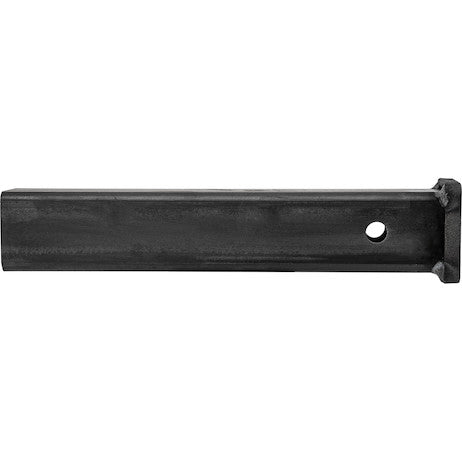
Receiver Tubes from Buyers Products are available in a variety of lengths, dimensions, and finishes to match your towing needs. The 2, 2-1/2, and 3 in. tubes have a cast steel collar. All tubes feature a solid stress collar opening. The 2, 2-1/2, and 3 in. tubes have a 5/8 in. hitch pin hole.
Specifications
| Finish | Plain |
|---|---|
| Length (in.) | 14.00 |
| Material | Carbon Steel |
| Mount Type | Weld On |
| Mounting Hole Size (in.) | 0.656 |
| Receiver Size (in.) | 2.00 |
Advanced Technical Overview: The 2-Inch Plain Receiver Tube with 14-Inch Shank
The 2-Inch Plain Receiver Tube with a 14-Inch Shank from Buyers Products represents a cornerstone component in custom towing and accessory mounting applications. Engineered for robust performance and designed to integrate seamlessly into a wide array of vehicle chassis, trailer frames, and custom fabrications, this receiver tube offers unparalleled versatility for professional installers and fabricators. Its core attributes – a 2-inch internal receiver dimension, a substantial 14-inch shank length, a durable carbon steel construction, a weld-on mounting methodology, and a practical plain finish – coalesce to form a product optimized for demanding operational environments.
Precision Engineering: The 2-Inch Receiver Standard
The selection of a 2-inch receiver size is not arbitrary; it adheres to the widely accepted industry standard for Class III and Class IV trailer hitches, as defined by the Society of Automotive Engineers (SAE) J684 standard for trailer hitches. This standardization ensures broad compatibility with an extensive range of towing accessories, including ball mounts, weight distribution hitches, cargo carriers, bike racks, winches, and recovery points. The precise internal dimensions of the 2-inch receiver tube are critical for minimizing play between the receiver and the inserted accessory, which translates directly into enhanced stability, reduced wear on components, and a safer towing experience. A tighter fit reduces dynamic forces and vibrations during transit, preserving the integrity of both the towing vehicle and the attached load. Furthermore, the robust design of this receiver tube, including its solid stress collar opening and cast steel collar (for the 2, 2-1/2, and 3-inch models), reinforces the integrity of the receiver opening, mitigating stress concentrations often experienced at this critical interface. This structural reinforcement is paramount, especially when subjected to cyclical loading, torsional forces, and abrupt impacts inherent in towing operations. The uniform wall thickness of the receiver tube further contributes to its overall strength and load-bearing capacity, ensuring consistent performance across its entire length. This adherence to industry standards and meticulous design consideration underscores the reliability and universal applicability of this essential component within diverse towing and hauling ecosystems.
Dimensional Specifications: The 14-Inch Shank Length
The 14.00-inch shank length of this receiver tube is a critical dimension that significantly influences its applicability and installation flexibility. This generous length provides ample material for integrating the receiver into complex structural frameworks, offering fabricators substantial latitude for custom placement and reinforcement. In applications such as chassis extensions, crossmember integration, or specialized equipment mounts, a longer shank allows for optimal positioning relative to the vehicle's structural components, ensuring that the receiver's attachment points can be welded to robust, load-bearing members. This extended length is particularly advantageous for achieving proper clearance around vehicle components like exhaust systems, spare tires, or differential housings, which might otherwise obstruct a shorter receiver tube. For custom fabrication projects, the 14-inch length permits cutting and trimming to exact specifications, enabling tailored installations without compromising structural integrity or requiring additional splicing. The ability to embed the receiver deeper into the vehicle or trailer's framework also contributes to enhanced rigidity and load transfer, distributing forces over a larger surface area and minimizing localized stress points. This characteristic is vital for applications where dynamic loads are expected, such as off-road recovery, heavy hauling, or commercial utility tasks. The thoughtful dimensioning of the shank length underscores its utility as a foundational component for high-strength, customizable towing solutions.
Material Excellence: Carbon Steel Durability
The choice of carbon steel as the primary material for this receiver tube is a deliberate engineering decision based on its exceptional mechanical properties relevant to heavy-duty applications. Carbon steel offers a superior combination of tensile strength, yield strength, and hardness, which are critical for resisting the extreme static and dynamic loads encountered during towing. Its high yield strength ensures that the material can withstand significant stress before permanent deformation occurs, maintaining structural integrity under peak operational demands. The material's inherent toughness allows it to absorb impacts and resist brittle fracture, a crucial attribute for components exposed to variable road conditions and operational stresses. Furthermore, carbon steel exhibits excellent weldability, a paramount characteristic for a weld-on mount component. This allows for the creation of strong, durable, and structurally sound welded joints when integrated into vehicle frames or custom fabrications. Proper welding procedures with appropriate filler materials ensure that the weld seam matches or exceeds the strength of the parent material, providing a monolithic connection that can withstand significant shear and tensile forces. While the "plain" finish necessitates post-installation corrosion protection, the underlying carbon steel provides a robust foundation. Common grades of carbon steel used in such applications, often conforming to ASTM standards like A36 or structural tubing standards like ASTM A500 Grade B/C, offer predictable and reliable performance. This material selection underscores Buyers Products' commitment to delivering components that are not only capable of performing under strenuous conditions but also provide a long service life with appropriate care and maintenance.
Mounting System: The Weld-On Advantage
The designation of this receiver tube as a "Weld On" component is a defining characteristic that differentiates it from bolt-on alternatives and highlights its suitability for custom and heavy-duty applications. Weld-on mounting offers several distinct advantages, particularly in scenarios where maximum strength, structural integration, and bespoke fitment are paramount. When properly installed by a certified welding professional, a weld-on receiver creates a connection that is often stronger and more resilient than a bolted joint. The fusion of the receiver tube directly to the vehicle's frame or structural crossmembers eliminates potential points of movement, shear, or loosening that can occur with bolted connections under dynamic loading. This monolithic integration minimizes stress concentrations and distributes towing forces more effectively across the vehicle's chassis, enhancing overall structural integrity and reducing the risk of component fatigue over time. The weld-on method also provides unparalleled flexibility for custom installations. Fabricators can precisely position the receiver to achieve optimal ground clearance, departure angles, or specific functional requirements that might be impossible with pre-drilled, bolt-on hitches. This makes it an ideal choice for specialty vehicles, custom builds, off-road applications, commercial equipment, or situations where no off-the-shelf hitch exists. However, the weld-on nature mandates professional installation by an experienced welder who understands frame dynamics, material compatibility, and proper welding techniques to ensure structural integrity and compliance with safety standards. Incorrect welding can compromise the vehicle's frame and the receiver's load-bearing capacity, underscoring the importance of expert execution. When executed correctly, the weld-on receiver provides a permanent, high-strength solution for demanding towing and accessory mounting needs.
Structural Integrity: The Solid Stress Collar and Cast Steel Collar
A critical design feature enhancing the durability and load-bearing capacity of this receiver tube is the incorporation of a solid stress collar opening and, specifically for 2, 2-1/2, and 3-inch tubes, a cast steel collar. These elements are strategically positioned at the opening of the receiver, the most critical interface where external accessories are inserted and where the highest stress concentrations typically occur during towing. The primary function of the solid stress collar is to reinforce this opening, distributing localized stresses over a broader area and preventing deformation or cracking. When a ball mount or other accessory is inserted, it applies significant leveraging forces, especially during acceleration, braking, and turning. Without proper reinforcement, these forces could lead to premature fatigue and failure of the receiver tube at its mouth. The cast steel collar, in particular, offers superior material density and strength compared to a formed or welded collar. Casting allows for complex geometries that optimize material distribution for stress management, providing a robust, monolithic reinforcement ring. This design mitigates the effects of torsional stress, vertical tongue weight, and horizontal pulling forces, all of which converge at the receiver opening. By strengthening this critical point, the cast steel collar significantly extends the operational lifespan of the receiver tube, ensuring consistent performance under repetitive and heavy loads. This attention to detail in reinforcing the most vulnerable part of the receiver tube is a testament to Buyers Products' commitment to engineering components that prioritize safety, reliability, and long-term durability in the most demanding applications.
Compatibility and Security: The 5/8-Inch Hitch Pin Hole
The inclusion of a 0.656-inch (approximately 5/8-inch) hitch pin hole is a fundamental aspect of this receiver tube's design, ensuring universal compatibility and secure attachment of towing accessories. This dimension is the widely adopted industry standard for 2-inch receiver tubes (Class III and IV hitches). The precise diameter of the hole is crucial for several reasons. Firstly, it ensures a snug fit with standard 5/8-inch diameter hitch pins, preventing excessive play or rattling between the receiver and the inserted accessory. A secure fit minimizes wear on both the pin and the receiver, prolonging the life of these critical components. Secondly, the consistency with industry standards means that users can confidently select from a vast array of readily available hitch pins, clips, and locking mechanisms, simplifying the process of securing their towing setup. This standardization also extends to anti-rattle devices and specialized locking pins that offer enhanced security against theft. The location of the pinhole is carefully engineered to align with the corresponding hole on standard ball mounts and accessories, ensuring proper engagement and load transfer. The integrity of this hole is paramount; therefore, the surrounding material, reinforced by the solid stress collar, is designed to withstand the shear forces exerted by the hitch pin under load. The selection of the 5/8-inch pin hole diameter represents an optimal balance between strength and compatibility, providing a robust connection point capable of handling significant towing forces while maintaining ease of use and accessory interchangeability. This meticulous attention to component compatibility streamlines the user experience and reinforces the overall safety of the towing system.
The 'Plain' Finish: Customization and Protection Protocols
The "Plain" finish of this 2-inch receiver tube is a deliberate and practical choice, catering specifically to its intended application as a weld-on component for custom fabrication. Unlike pre-finished, bolt-on hitches that typically feature powder coating or paint for immediate corrosion resistance, the plain finish implies an un-coated, raw carbon steel surface. This characteristic is advantageous for several reasons. Primarily, it facilitates optimal weld adhesion. The absence of any factory coating eliminates the need for grinding or stripping material prior to welding, ensuring clean, strong, and structurally sound welds. Coatings can introduce contaminants into the weld pool, leading to porosity, lack of fusion, or weakened joints. By providing a clean metal surface, the plain finish simplifies the fabrication process and contributes to the overall integrity of the welded assembly. Secondly, a plain finish offers maximum flexibility for post-installation treatment. Once the receiver tube is welded into place, the entire assembly – including the receiver and the vehicle or trailer frame – can be coated uniformly with a single, comprehensive corrosion protection system. This could involve painting, powder coating, galvanizing, or applying specialized undercoatings, allowing fabricators to match the finish to the existing vehicle aesthetics or to meet specific environmental protection requirements. This approach ensures complete and seamless rust prevention for the integrated structure, often providing a more durable and aesthetically pleasing result than trying to match or repair a pre-finished component. However, it is crucial to understand that a plain carbon steel finish offers minimal inherent corrosion resistance. Therefore, prompt and thorough application of a protective coating immediately after welding and fabrication is absolutely essential to prevent rust and ensure the long-term durability and appearance of the component, especially in environments exposed to moisture, road salts, or harsh chemicals. This finish empowers customizers with the freedom to create a fully integrated, protected, and bespoke towing solution.
Applications and Versatility: Beyond Basic Towing
The 2-Inch Plain Receiver Tube with a 14-Inch Shank is not merely a component for conventional towing; its weld-on nature and robust construction unlock a vast spectrum of applications for custom fabricators, commercial upfitters, and enthusiasts. While its primary role is to serve as the foundation for Class III and IV towing systems on trucks, SUVs, and custom vehicles, its versatility extends significantly further. In the commercial sector, these receiver tubes are invaluable for custom utility beds, service trucks, and specialized equipment trailers, where standard hitches may not meet specific load distribution or clearance requirements. They can facilitate the mounting of winches for recovery vehicles, auxiliary fuel tanks, air compressors, or even custom steps and access platforms. For agricultural machinery, they provide robust attachment points for various implements and support equipment. Off-road enthusiasts frequently employ these weld-on receivers to create custom bumpers with integrated recovery points, enabling the attachment of D-rings, shackle mounts, and high-lift jack points, enhancing vehicle recovery capabilities in challenging terrain. The 14-inch shank length is particularly beneficial here, allowing for deep integration into reinforced bumper structures. Furthermore, the plain finish allows for seamless integration into existing vehicle structures, enabling a cohesive aesthetic once painted or coated. RV and travel trailer manufacturers and customizers utilize these tubes for adding secondary hitches for bike racks, cargo carriers, or even small utility trailers, extending the functionality of their recreational vehicles. For specialized industrial equipment, these receivers can serve as mounting points for articulating arms, portable lighting towers, or communication antennas. The ability to weld this component directly into any structurally sound steel framework makes it an indispensable tool for engineers and fabricators seeking to design and implement highly customized, durable, and reliable attachment solutions that go beyond the limitations of standard, pre-manufactured components.
Installation Protocols and Safety Mandates
Given the "Weld On" nature of this 2-inch receiver tube, adherence to stringent installation protocols and safety mandates is paramount to ensure the structural integrity of the towing system and the overall safety of operation. Installation must be performed exclusively by certified and experienced welding professionals who possess a comprehensive understanding of metallurgy, welding techniques, and vehicle structural dynamics. Critical considerations include: 1) **Material Compatibility:** Ensuring that the carbon steel of the receiver tube is compatible with the vehicle frame or mounting surface material to achieve optimal weld fusion. 2) **Structural Reinforcement:** The mounting location on the vehicle frame must be robust enough to withstand the maximum anticipated towing loads. Often, additional frame reinforcement plates or crossmembers may be necessary to distribute stress effectively and prevent frame distortion or fatigue. 3) **Proper Weld Procedures:** The use of appropriate welding processes (e.g., MIG, TIG, Stick), filler metals, shielding gases, and parameters (amperage, voltage, travel speed) is crucial. Proper penetration, bead profile, and freedom from defects like porosity, undercut, or lack of fusion are non-negotiable for safety. 4) **Alignment and Clearance:** Meticulous measurement and alignment are required to ensure the receiver tube is level, centered, and provides adequate clearance for the hitch pin, safety chains, and any attached accessories, as well as vehicle components like exhaust systems. 5) **Corrosion Protection:** As the receiver tube has a plain finish, immediate and comprehensive application of a protective coating (paint, powder coat, or galvanization) after welding is essential to prevent rust and maintain structural integrity over time. 6) **Post-Installation Inspection:** A thorough inspection of all welds and surrounding frame areas for signs of stress or damage is critical. It is advisable to consult vehicle manufacturer guidelines and relevant SAE standards (e.g., J684 for trailer hitches) or local regulatory requirements for custom modifications. Failure to adhere to these professional installation standards can lead to catastrophic failure, severe injury, and significant liability. Prioritizing expert installation ensures that the high-quality engineering of the Buyers Products receiver tube translates into safe and reliable performance throughout its operational life.
Technical Specifications Summary and Concluding Remarks
The 2-Inch Plain Receiver Tube with a 14-Inch Shank from Buyers Products is a testament to purposeful engineering and robust construction, designed to meet the rigorous demands of custom towing and accessory integration. Its core technical specifications underscore its suitability for heavy-duty applications. The Receiver Size of 2.00 inches adheres to industry standards, guaranteeing broad compatibility with Class III and IV towing accessories. The generous Length of 14.00 inches provides fabricators with essential flexibility for optimal positioning and structural integration into diverse chassis configurations. Fabricated from high-grade Carbon Steel, this component ensures exceptional tensile strength, yield strength, and weldability, forming a resilient foundation capable of enduring significant static and dynamic loads. The Weld On Mount Type is fundamental to its design, offering superior strength and customization potential when professionally installed, creating a monolithic connection to the vehicle’s frame. Essential for securing attachments, the Mounting Hole Size of 0.656 inches (5/8 inch) is precisely machined for standard hitch pins, ensuring secure coupling and minimizing play. Crucially, the presence of a Solid Stress Collar Opening and a Cast Steel Collar significantly reinforces the receiver's critical entry point, effectively distributing stresses and preventing premature wear or deformation, thereby extending the product’s operational lifespan. The Plain Finish, while necessitating post-installation corrosion protection, is strategically chosen to facilitate optimal weld adhesion and provide maximum flexibility for unified, custom coating solutions. In conclusion, this Buyers Products receiver tube represents a professional-grade solution for custom vehicle builders, commercial upfitters, and industrial applications where reliability, strength, and adaptability are paramount. Its meticulously engineered attributes, combined with the necessity for professional welding and subsequent corrosion treatment, deliver a robust and highly versatile component for any demanding towing or accessory mounting scenario.