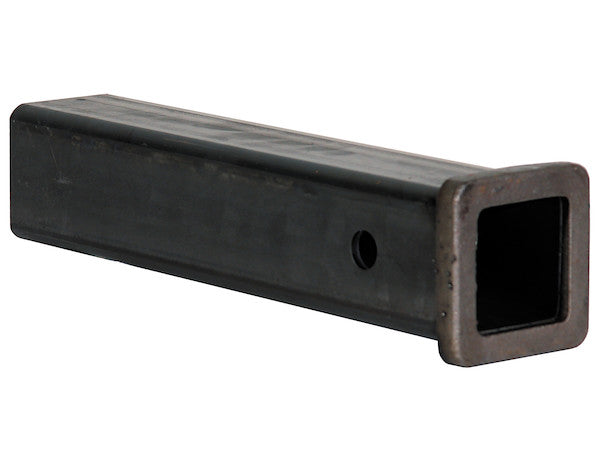
Receiver Tubes from Buyers Products are available in a variety of lengths, dimensions, and finishes to match your towing needs. The 2, 2-1/2, and 3 in. tubes have a cast steel collar. All tubes feature a solid stress collar opening. The 2, 2-1/2, and 3 in. tubes have a 5/8 in. hitch pin hole.
Specifications
| Finish | Plain |
|---|---|
| Length (in.) | 18.00 |
| Material | Carbon Steel |
| Mount Type | Weld On |
| Mounting Hole Size (in.) | 0.656 |
| Receiver Size (in.) | 2.00 |
Technical Overview: The 2-Inch Plain Receiver Tube - 18-Inch Shank for Engineered Towing Solutions
The 2-inch Plain Receiver Tube with an 18-inch shank represents a critical foundational component for professional fabricators, vehicle upfitters, and original equipment manufacturers (OEMs) engaged in the design and construction of custom towing and accessory systems. This product is meticulously engineered by Buyers Products to provide a robust, reliable, and highly adaptable interface for a diverse range of vehicular and industrial applications. Its designation as a "weld-on" component underscores its role in creating permanently integrated and structurally superior attachment points, offering unparalleled flexibility compared to bolt-on alternatives.
Engineered for Durability: Material Science and Construction
Carbon Steel Selection: The Backbone of Strength
The selection of Carbon Steel as the primary material for this receiver tube is a deliberate engineering decision rooted in its superior mechanical properties and economic viability for heavy-duty applications. Carbon steel offers an exceptional balance of high tensile strength, yield strength, and ductility, essential for enduring the complex static and dynamic loads inherent in towing operations. Specifically, the material typically conforms to standards such as ASTM A500 Grade B/C, ensuring a minimum yield strength of approximately 46,000 PSI (317 MPa) and a tensile strength of around 58,000 PSI (400 MPa). These properties are critical for resisting forces such as longitudinal tension and compression from towing, vertical shear and bending from tongue weight, and torsional stresses from uneven loading or dynamic maneuvers.
The inherent weldability of carbon steel is another paramount advantage. Unlike certain alloy steels or aluminum, carbon steel can be reliably joined using common industrial welding processes, including Gas Metal Arc Welding (GMAW/MIG), Shielded Metal Arc Welding (SMAW/Stick), and Gas Tungsten Arc Welding (GTAW/TIG). This ensures that a properly executed weld will create a monolithic structure, with the strength of the joint often exceeding that of the parent material itself. This characteristic is non-negotiable for safety-critical components like receiver tubes, where weld integrity directly impacts operational safety and longevity.
Manufacturing Precision: Ensuring Consistency and Performance
The manufacturing process for the 2-inch receiver tube emphasizes precision and consistency. Utilizing advanced forming techniques, whether cold-formed for superior surface finish and tighter tolerances or hot-rolled for larger sections, ensures the tube maintains its critical internal and external dimensions throughout its 18-inch length. Dimensional accuracy is vital for mating correctly with standard 2-inch hitch accessories, minimizing play, rattle, and premature wear on both the receiver and the accessory shank. Quality control measures, including rigorous material inspection and dimensional verification, are implemented throughout the production cycle to guarantee that each receiver tube meets the exacting specifications required for professional applications.
Critical Dimensions: The 2-Inch Receiver and 18-Inch Shank
The 2-Inch Receiver Size: A Standard of Versatility
The 2.00-inch internal dimension of the receiver tube is an industry-standard specification for Class III, IV, and V hitches. This standardization is fundamental to the universal compatibility of the product, enabling it to accept an extensive array of aftermarket accessories. From standard ball mounts and weight distribution systems to bicycle racks, cargo carriers, winch mounts, and specialized utility attachments, the 2-inch interface provides unparalleled versatility. This wide compatibility streamlines inventory management for fabricators and offers end-users a vast ecosystem of tools and attachments, enhancing the utility of their vehicles.
The precise bore of the receiver is engineered to provide a snug fit with accessory shanks, which typically have a slightly smaller external dimension (e.g., 1.980-1.990 inches). This controlled clearance is essential for minimizing free play, which can lead to accelerated wear, noise, and potentially compromise the structural integrity under dynamic loads. A tightly toleranced fit ensures that the forces transmitted through the hitch system are distributed efficiently and without undue stress concentrations.
The 18-Inch Shank Length: Adaptability in Fabrication
The 18.00-inch shank length provides substantial material for integration into diverse vehicle frames, chassis, and custom structures. This generous length allows fabricators the flexibility to:
- Accommodate varying frame widths and profiles, ensuring robust attachment across different vehicle platforms.
- Penetrate deeply into existing structural members for optimal load distribution and enhanced bending resistance.
- Provide sufficient material for strategic positioning relative to the vehicle's rear bumper or bodywork, ensuring proper ground clearance and departure angles while maintaining structural integrity.
- Be precisely cut down to specific lengths required for highly customized applications, minimizing waste while retaining ample weld surface for secure attachment.
Mounting Hole Specifications: Secure Pin Connection
The receiver tube features a precisely drilled mounting hole with a diameter of 0.656 inches. This dimension is specifically designed to accommodate standard 5/8-inch (0.625-inch) hitch pins with appropriate clearance. The minimal clearance between the pin and the hole is critical for:
- Ensuring a secure connection that prevents excessive movement and wear.
- Maximizing the shear strength of the hitch pin, as the forces are distributed evenly across the contact surface.
- Minimizing the potential for elongated holes or ovaling under repeated dynamic loading, thereby preserving the structural integrity of the connection over the lifetime of the product.
Design Superiority: Solid Stress Collar and Plain Finish
The Solid Stress Collar: Engineered Reinforcement
A standout design feature is the inclusion of a solid stress collar opening. For the 2-inch receiver tube, this component is specified as a cast steel collar. This collar serves a critical engineering function: reinforcing the opening of the receiver tube, which is typically the most vulnerable point to deformation under load. By distributing stresses more effectively around the aperture, the solid stress collar significantly enhances the resistance of the receiver to:
- Localized bending and flaring caused by rotational forces from the attached accessory.
- Deformation from repeated insertion and removal of hitch shanks.
- Fatigue cracking that might otherwise initiate at sharp corners or unreinforced edges under cyclic loading.
Plain Finish: The Fabricator's Strategic Advantage
The "Plain" finish of this receiver tube is not merely an aesthetic choice but a deliberate design decision optimized for fabrication processes. A plain finish signifies that the carbon steel surface is free from any pre-applied coatings such as paint, powder coat, or galvanization. This characteristic offers several significant advantages for the professional fabricator:
- Optimal Weld Preparation: The absence of coatings eliminates the need for extensive pre-weld grinding or chemical stripping, saving time and labor. Clean metal-on-metal contact is paramount for achieving strong, porosity-free welds with excellent fusion and penetration, crucial for safety-critical towing components.
- Customizable Finishing: Fabricators retain complete control over the final protective coating. After welding and any post-weld cleaning, the receiver tube can be prepped and coated with the client's preferred finish, whether it's a specific color of powder coat, a high-performance industrial paint, or even hot-dip galvanization for extreme corrosion protection. This allows for seamless integration into the vehicle's existing aesthetic or functional coating system.
- Reduced Environmental Impact: Eliminating the need to remove factory coatings contributes to a cleaner workshop environment by reducing airborne particulates and hazardous waste generated during stripping processes.
Weld-On Integration: A Technical Perspective on Fabrication
The "Weld On" Advantage: Uncompromised Strength
The designation of this receiver tube as a "Weld On" component highlights its fundamental advantage: the ability to create a permanent, high-strength structural connection to a vehicle's frame or chassis. Unlike bolted connections, which can be susceptible to loosening, shear stress on fasteners, or fatigue at bolt holes, a properly executed weld-on installation results in a continuous, monolithic structure. This method maximizes load transfer efficiency, minimizes stress concentrations, and provides the highest possible structural integrity for towing applications, often surpassing the strength attainable with bolted alternatives for custom applications.
Welding Best Practices for Optimal Performance
Successful installation of a weld-on receiver tube demands adherence to established welding engineering principles and best practices. Key considerations include:
- Joint Design and Preparation: Proper joint design (e.g., fillet welds, partial or full penetration groove welds) must be selected based on the anticipated loads and the thickness of the mating materials. Surface preparation, including cleaning to remove rust, scale, grease, and moisture, is critical for preventing weld defects.
- Process and Filler Material Selection: For carbon steel, GMAW (MIG) is often preferred for its speed and efficiency, while SMAW (Stick) offers versatility in varying conditions, and GTAW (TIG) provides superior control and aesthetics. The selection of filler material (e.g., ER70S-6 for MIG, E7018 for Stick) must be compatible with the base carbon steel, ensuring matching mechanical properties and preventing issues like hydrogen-induced cracking.
- Pre-heating and Interpass Temperature Control: For thicker sections or in colder environments, pre-heating the base metal can be essential to reduce the cooling rate of the weld, minimizing distortion and preventing brittle fracture. Maintaining proper interpass temperatures during multi-pass welding is also crucial.
- Heat-Affected Zone (HAZ) Management: Weld procedures should aim to control the size and properties of the Heat-Affected Zone, the area of the base metal whose microstructure and mechanical properties have been altered by the welding heat. Proper technique minimizes embrittlement or softening in this critical region.
- Post-Weld Inspection: Visual inspection by a certified welding inspector (CWI) is the first line of defense, looking for surface discontinuities such as cracks, undercut, overlap, and porosity. For critical applications, non-destructive testing (NDT) methods like magnetic particle inspection (MPI) or ultrasonic testing (UT) may be employed to detect subsurface defects.
- Mounting Considerations: Precise alignment and plumbness of the receiver tube are paramount for the proper function of attached accessories and the prevention of uneven wear or binding. Fabricators must ensure the vehicle's frame or mounting structure is adequately reinforced to handle the anticipated towing loads, often requiring additional gussets or cross-members. Ground clearance and departure angles must also be carefully considered to prevent damage to the receiver or vehicle during operation.
Diverse Applications and Performance Metrics
Beyond Standard Towing: Versatility in Application
While fundamentally designed for conventional towing, the 2-inch Plain Receiver Tube's robust design and weld-on nature make it indispensable for a wide array of specialized applications:
- Commercial Vehicle Upfitting: Integration into flatbeds, stake trucks, service vehicles, and dump trucks for auxiliary equipment, pintle hitches, or recovery points.
- Off-Road and Utility Vehicles: Creating robust recovery points, mounting points for auxiliary lighting, winches, or specialized implements on off-road rigs, ATVs, and UTVs.
- Agricultural Machinery: Custom fabrication of tool bars, implement hitches, and attachment points for various farm equipment, offering adaptable solutions for specific farming needs.
- Specialty Equipment Trailers: Custom build-outs for trailers carrying generators, compressors, mobile welding units, or other specialized industrial equipment.
- RV and Camper Modifications: Adding auxiliary carrying solutions for bikes, cargo, or generators to recreational vehicles where factory options may be insufficient or unavailable.
Performance Under Load: A Focus on Structural Integrity
When properly installed, the 2-inch Plain Receiver Tube is engineered to perform exceptionally under various load conditions:
- Static Vertical Load (Tongue Weight): The robust carbon steel construction and solid stress collar provide superior resistance to vertical deflection and bending moments introduced by the trailer tongue weight.
- Dynamic Longitudinal Loads: It effectively transmits both tensile forces (pulling the trailer) and compressive forces (braking) between the trailer and the tow vehicle, with the weld-on connection ensuring minimal energy loss or structural degradation.
- Torsional Rigidity: The heavy-duty tube and reinforced collar resist twisting forces that can arise from uneven terrain, trailer sway, or off-center accessory loads.
- Shear Strength at Pin Connection: The precisely toleranced 0.656-inch pinhole, coupled with the inherent strength of carbon steel, ensures optimal shear strength at the hitch pin, preventing premature wear or failure of the pin or the receiver opening.
Compliance, Safety, and Long-Term Value
Adherence to Industry Standards and Safety
The materials and dimensional specifications of this receiver tube align with common industry standards for towing components, ensuring compatibility and a baseline for performance. While the final hitch system must meet applicable regulatory and safety standards (e.g., SAE J684 for trailer hitch performance), this receiver tube provides a compliant and robust starting point. Safety in application is paramount, emphasizing the need for professional installation by certified welders who understand the intricacies of structural welding and vehicle frame integration.
Longevity and Maintenance
Once properly installed and protected with a suitable coating (paint, powder coat, or galvanization), the carbon steel receiver tube offers exceptional longevity. Its resistance to fatigue and deformation ensures years of reliable service under demanding conditions. Maintenance requirements are minimal, typically involving routine inspection for signs of wear, corrosion, or damage, particularly around the welded joints and the hitch pinhole. Prompt re-coating of any exposed plain steel after installation will prevent rust and extend its operational life significantly.
Economic Value and Customization
For fabricators and OEMs, the 2-inch Plain Receiver Tube offers significant economic value. It provides a cost-effective, off-the-shelf component that eliminates the need for expensive custom casting or complex machining of the receiver portion, allowing resources to be focused on the unique aspects of the vehicle integration. The inherent customizability of a weld-on solution provides an adaptable foundation for creating bespoke towing and accessory systems that perfectly match specific application requirements, ensuring optimal performance and user satisfaction.
Conclusion: The Professional's Choice for Custom Towing Solutions
The 2-inch Plain Receiver Tube with an 18-inch shank from Buyers Products is more than just a metal component; it is an expertly engineered solution for the most demanding custom towing and accessory fabrication projects. Its superior carbon steel construction, precise dimensions, robust solid stress collar (cast steel for this size), and weld-optimized plain finish converge to offer unmatched strength, versatility, and durability. For professionals who prioritize structural integrity, adaptability, and long-term reliability in their custom vehicle builds, this receiver tube stands as the definitive choice, underpinning safe and high-performance towing operations across a myriad of applications.