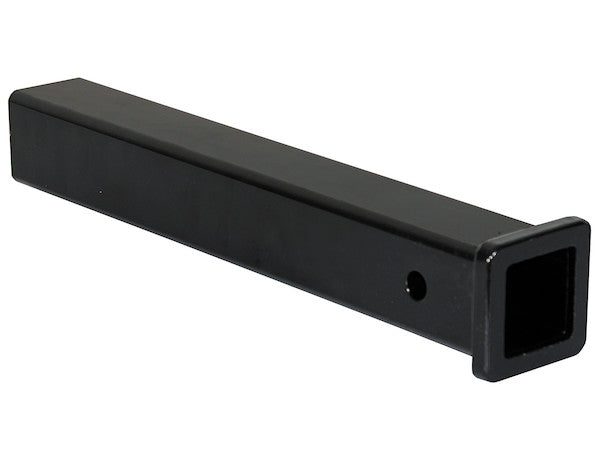
Receiver Tubes from Buyers Products are available in a variety of lengths, dimensions, and finishes to match your towing needs. The 2, 2-1/2, and 3 in. tubes have a cast steel collar. All tubes feature a solid stress collar opening. The 2, 2-1/2, and 3 in. tubes have a 5/8 in. hitch pin hole.
Specifications
| Color | Black |
|---|---|
| Finish | Powder-Coat |
| Length (in.) | 36.00 |
| Material | Carbon Steel |
| Mount Type | Weld On |
| Mounting Hole Size (in.) | 0.656 |
| Receiver Size (in.) | 2.00 |
The 2 Inch Black Receiver Tube with a 36 Inch Shank represents a paramount component in custom trailer hitch fabrication and specialized towing applications, engineered for superior durability and functional integration. This product, originating from Buyers Products, a recognized leader in towing solutions, is meticulously designed to meet the rigorous demands of various commercial, industrial, and recreational towing scenarios. Its robust construction, precise dimensions, and protective finishes make it an indispensable choice for professionals seeking to create or augment bespoke towing systems.
At its core, this receiver tube is characterized by its 2.00-inch receiver size, a dimension that adheres to the industry standard for light-duty to heavy-duty towing applications. The 2-inch standard is globally recognized for its versatility and compatibility with an extensive range of towing accessories, including ball mounts, cargo carriers, bike racks, and specialized attachments. This universal compatibility ensures that users can readily interface a multitude of implements without concern for proprietary sizing issues. The precision of the 2.00-inch internal dimension is critical; it minimizes play between the receiver tube and the inserted hitch accessory, thereby reducing wear, dampening vibrations, and enhancing the overall stability and safety of the towing connection. This tight tolerance contributes significantly to the control and predictable handling of the towed load, which is paramount in dynamic driving conditions.
A distinguishing feature of this particular model is its substantial 36.00-inch shank length. This extended length provides exceptional flexibility for custom fabrication, allowing for significant reach and precise positioning when integrating the receiver tube into diverse chassis designs, frame extensions, or specialized equipment. The generous length facilitates installation in situations where the mounting surface is recessed or requires an extensive cantilever to achieve the desired hitch point. For instance, in custom vehicle builds, agricultural machinery, or industrial equipment, the 36-inch shank allows fabricators to create a hitch point that clears obstacles, accommodates unique body designs, or provides optimal load distribution over a greater span. This capability is invaluable in ensuring that the towing mechanism can be strategically placed to comply with vehicle design parameters, maintain ground clearance, and optimize departure angles, all while preserving structural integrity. The extended length also offers latitude for cutting and customizing the tube to a shorter, application-specific dimension if a 36-inch length is more than required, thus providing greater utility than a shorter, fixed-length component.
The material composition of this receiver tube is high-quality Carbon Steel, a choice driven by its superior mechanical properties. Carbon steel is renowned for its excellent tensile strength, yield strength, and fatigue resistance, properties that are essential for components subjected to dynamic loads, torsional stresses, and shear forces inherent in towing operations. The specific grade of carbon steel utilized is selected to offer an optimal balance between strength and weldability. This ensures that the weld-on mount type can be executed with high integrity, forming a permanent and robust connection to the vehicle's frame or structural members. The metallurgical characteristics of carbon steel also contribute to its resilience against impact and abrasive wear, further extending the service life of the receiver tube under arduous conditions. Its inherent rigidity minimizes flex and deformation, maintaining the geometric precision of the hitch interface even under maximum rated loads, thereby safeguarding both the towed article and the towing vehicle.
Complementing its material strength is the durable Black Powder-Coat finish. This advanced coating technology provides a significant enhancement in corrosion resistance, which is critical for components exposed to harsh environmental elements, road salts, moisture, and abrasive debris. The powder-coat finish is electrostatically applied and then thermally cured, forming a tough, monolithic layer that is highly resistant to chipping, scratching, and fading. Unlike conventional liquid paints, powder coating offers superior protection against UV degradation, ensuring that the aesthetic integrity of the black finish is maintained over time. The black color itself is a practical choice, offering a professional appearance that integrates seamlessly with most vehicle undercarriages and frames. More importantly, this protective layer acts as a sacrificial barrier, preventing rust and oxidation from compromising the carbon steel substrate, thus preserving the structural integrity and extending the operational lifespan of the receiver tube far beyond that of an unfinished or minimally coated alternative. This finish is not merely cosmetic; it is a vital engineering specification designed for long-term reliability in demanding outdoor environments.
The mounting mechanism for this receiver tube is Weld On, indicating a permanent and structurally integrated attachment method. Weld-on installation is frequently preferred in heavy-duty and custom applications where maximum strength and rigidity are paramount. This method necessitates professional welding expertise to ensure a full penetration weld that fuses the receiver tube securely to the vehicle's frame or a robust cross-member. Proper welding techniques, including appropriate filler material selection, pre-heat, interpass temperature control, and post-weld inspection, are crucial to prevent stress concentrations, cracking, and premature failure. The advantage of a weld-on mount is its ability to distribute towing forces directly into the vehicle's chassis, effectively making the receiver tube an integral part of the vehicle's structural load path. This eliminates potential points of failure associated with bolted connections, such as fastener loosening or shear, and allows for greater design flexibility in custom fabrication projects where specific mounting geometries are required. When correctly installed, a weld-on receiver tube offers unparalleled stability and load transfer capabilities, making it the preferred choice for demanding towing and accessory mounting applications.
A key structural enhancement is the solid stress collar opening. This feature is meticulously integrated into the design to reinforce the receiver tube's critical opening, which is the primary point of force transmission during towing. The cast steel collar provides localized thickening and additional material around the aperture where the hitch accessory is inserted and secured by the hitch pin. This reinforcement is crucial for distributing the high localized stresses that occur at the interface of the hitch accessory and the receiver tube, particularly during sudden starts, stops, or changes in direction. Without such a robust collar, the thinner walled tube material could be prone to deformation, ovalization, or fatigue cracking over prolonged use, especially when subjected to dynamic loads or improper hitch pin engagement. The solid stress collar effectively mitigates these risks, maintaining the precise geometry of the receiver opening, enhancing the overall rigidity of the connection, and contributing significantly to the long-term durability and safety of the towing system. Its presence ensures that the structural integrity of the receiver is maintained even under severe operational conditions.
The 5/8 inch hitch pin hole, with a precise mounting hole size of 0.656 inches, is another critical specification engineered for compatibility and security. The 5/8-inch diameter is the industry standard for 2-inch receiver tubes, accommodating a vast array of standard hitch pins, locking pins, and anti-rattle devices. The precision-drilled hole ensures a snug fit for the hitch pin, minimizing undesirable movement between the receiver tube and the inserted accessory. This tight tolerance is vital for reducing wear on both the receiver tube and the hitch pin, preventing premature elongation of the pinhole, and maintaining a secure, rattle-free connection. Furthermore, the accuracy of the hole placement relative to the receiver opening is essential for correct engagement of the hitch pin, which serves as the primary mechanical lock for the towing system. The consistent 0.656-inch diameter ensures reliable integration with standard towing hardware, reinforcing the product's adherence to established industry norms for safety and functionality.
Beyond its individual features, the 2 Inch Black Receiver Tube with 36 Inch Shank finds extensive application in a diverse range of sectors. In the commercial vehicle industry, it is frequently utilized by upfitters and truck body manufacturers to integrate custom hitches for vocational trucks, service vehicles, and utility trailers that require unique mounting solutions or extended reach. Agricultural machinery benefits from its robust construction for attaching implements, ground-engaging tools, and pull-behind equipment. The construction industry employs such components in heavy equipment modifications, specialized material handling systems, and custom trailers designed for transporting non-standard loads. For recreational enthusiasts, it offers the foundation for bespoke RV modifications, overland vehicle builds requiring specialized recovery points, or custom hitches for ATVs and UTVs. Furthermore, professional fabricators and welders appreciate this component for its quality and consistency, enabling them to produce high-performance, durable towing solutions for clients with specific and challenging requirements. Its versatility makes it an ideal choice for any scenario where a robust, reliable, and customizable towing point is needed.
The engineering philosophy behind this receiver tube emphasizes critical considerations such as load bearing capacity, fatigue life, and material optimization. While specific load ratings are contingent upon proper installation and the structural integrity of the frame to which it is welded, the inherent design and material selection ensure a high base level of performance. Designers account for various forces including vertical static load (tongue weight), longitudinal tensile and compressive forces (towing and braking), and torsional forces. The carbon steel material, coupled with the reinforced collar, is chosen to manage these stresses effectively, preventing yielding, buckling, or fracture under anticipated operational loads. Manufacturing processes involve precision cutting and forming to maintain dimensional accuracy throughout the 36-inch length, followed by meticulous preparation for the powder-coat application. Quality control protocols are stringent, encompassing material verification, dimensional inspection, and adhesion testing of the powder-coat finish, ensuring that each receiver tube meets the rigorous standards set by Buyers Products. This commitment to engineering excellence and quality assurance provides end-users with a product that delivers reliable, long-term performance.
Proper installation of the weld-on receiver tube is paramount for safety and performance. This process requires a certified welder and adherence to established welding codes and best practices. Prior to welding, the mounting surface on the vehicle's frame must be thoroughly cleaned of any rust, paint, or contaminants to ensure a strong, defect-free weld. The receiver tube must be accurately positioned and squared to the vehicle's centerline and horizontal plane to ensure proper alignment with towed equipment. Appropriate welding techniques, such as proper amperage, voltage, travel speed, and filler material, must be employed to achieve full penetration and adequate bead profile, minimizing stress risers. Post-weld inspection, including visual inspection for porosity, undercut, and cracks, is essential. Grinding or dressing of welds should be done judiciously to avoid reducing the weld throat thickness. Following welding, any exposed bare metal areas should be properly prepped and coated to match or exceed the corrosion protection of the original powder coat, preventing premature rust and maintaining the aesthetic integrity of the installation. Consideration of the heat-affected zone (HAZ) on the frame material during welding is also crucial to avoid compromising the mechanical properties of the vehicle's structural members.
To ensure the longevity and continued peak performance of the 2 Inch Black Receiver Tube, regular inspection and maintenance are recommended. Users should periodically check the receiver opening for any signs of wear, deformation, or corrosion. The hitch pin hole should be inspected for elongation, which could indicate excessive play or improper pin usage. The integrity of the weld joint must be visually inspected for any signs of cracking, fatigue, or detachment, especially after heavy use or exposure to severe road conditions. While the powder coat finish offers excellent protection, any areas where it has been chipped or scratched should be promptly cleaned and touched up with a compatible rust-inhibiting paint to prevent localized corrosion from propagating. Ensuring that hitch pins are free of rust and operate smoothly will also contribute to the health of the receiver tube. Adhering to these simple maintenance practices will significantly extend the operational life of the component and maintain its critical safety functions.
In summary, the 2 Inch Black Receiver Tube with a 36 Inch Shank from Buyers Products represents a high-performance, technically superior component designed for the most demanding custom towing and accessory mounting applications. Its adherence to the 2-inch industry standard, combined with the significant advantages of its 36-inch carbon steel shank, black powder-coat finish, solid stress collar, and precise 5/8-inch hitch pin hole, establishes it as a robust and reliable foundation for any custom fabrication project. Engineered for strength, durability, and corrosion resistance, this weld-on receiver tube provides fabricators and end-users with the confidence that their towing solution will perform consistently and safely under rigorous operational conditions. Buyers Products' commitment to quality and functional excellence is clearly evident in this meticulously crafted component, making it the definitive choice for professionals who demand uncompromising performance and longevity from their towing hardware.