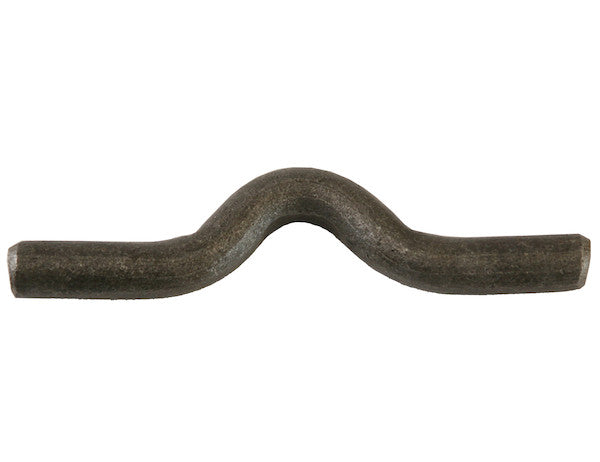
Buyers Products Weld-On Safety Chain Bar welds onto the trailer frame to securely hold a trailer chain in place. Choose from different sizes to accommodate your safety chain diameter.
Specifications
| Accommodates Chain Dia. (in.) | 3/8 |
|---|---|
| Finish | Plain |
| Material | Carbon Steel |
The Weld-On Safety Chain Bar, meticulously engineered by Buyers Products, represents a critical component in ensuring the secure and compliant operation of towed vehicles. Designed specifically to accommodate a 3/8-inch diameter safety chain, this robust carbon steel component provides a permanent, high-strength attachment point that integrates seamlessly with the structural integrity of the trailer frame. Its weld-on nature offers unparalleled stability and load-bearing capacity, distinguishing it from bolt-on alternatives where fasteners could potentially loosen under dynamic stress or fatigue over time. The plain finish signifies a product optimized for direct welding, allowing professional fabricators to achieve superior metallurgical bonds without the need for pre-treatment removal of coatings, ensuring optimal weld penetration and strength.
Safety chains are mandated by law across various jurisdictions for a fundamental reason: to maintain a connection between the towing vehicle and the trailer in the event of a primary coupling failure. The efficacy of these chains is directly dependent on the reliability of their attachment points. This Weld-On Safety Chain Bar is precision-fabricated to exceed the rigorous demands of this safety-critical application. Its 3/8-inch diameter capacity is specifically engineered to interface with chains typically rated for light-duty to medium-duty trailers, ensuring that the attachment bar is proportionally matched to the chain’s breaking strength, thus preventing the attachment point from becoming the weakest link in the safety system. Professional installation, involving appropriate welding techniques and adherence to industry best practices, transforms this component into an integral and permanent part of the trailer's safety architecture.
Advanced Material Science: Carbon Steel for Superior Performance
The selection of carbon steel as the primary material for this safety chain bar is a deliberate engineering choice, reflecting a profound understanding of the operational stresses and environmental challenges inherent in trailer applications. Carbon steel, broadly defined as steel with carbon content up to 2.1% by weight, offers an optimal balance of strength, ductility, and weldability, making it ideal for structural components that must withstand both static loads and dynamic forces. The specific grade of carbon steel utilized is typically selected for its favorable yield strength and tensile strength characteristics, ensuring that the bar can resist deformation under significant load and maintain its structural integrity even in emergency situations where extreme forces might be exerted upon it.
Yield strength, the point at which a material begins to deform plastically, is a crucial metric for safety components. For a safety chain bar, a high yield strength ensures that the component will not permanently bend or deform under the maximum anticipated load, preserving its shape and function. Tensile strength, representing the maximum stress a material can withstand before fracturing, provides an ultimate safety margin. Furthermore, the inherent toughness of carbon steel allows it to absorb energy without catastrophic failure, a vital characteristic for components subjected to impact or sudden shock loads during a trailer detachment event. Its metallurgical properties also facilitate excellent weld fusion, forming a monolithic bond with the trailer frame, which is paramount for a "weld-on" component where the strength of the joint is as critical as the strength of the material itself.
The "Plain" finish implies that the carbon steel is supplied in its raw, uncoated state. This absence of surface treatment is a direct advantage for welding applications. Coatings such as paint, galvanization, or primers typically contain elements that can interfere with the welding process, leading to porosity, lack of fusion, or the emission of hazardous fumes. By providing a plain finish, Buyers Products ensures that professional welders can achieve clean, strong, and defect-free welds directly onto the trailer frame. While a plain finish necessitates post-welding surface preparation and coating (e.g., painting, powder coating, or galvanizing) to prevent corrosion in the long term, this approach grants the installer complete control over the final protective treatment, allowing for seamless integration with the trailer's existing corrosion protection system or the application of a superior, purpose-specific coating.
Precision Engineering for 3/8-Inch Chain Accommodation
The specification of "Accommodates Chain Dia. (in.): 3/8" is a critical design parameter that reflects precision engineering for optimal safety chain integration. This exact dimension ensures that standard 3/8-inch safety chains, commonly found on trailers with Gross Vehicle Weight Ratings (GVWR) that align with their breaking strength, can be properly and securely attached. The internal dimensions and curvature of the bar are meticulously designed to allow the passage and secure retention of 3/8-inch chain links without excessive slop, which could lead to unwanted movement or potential entanglement, yet also without being so tight as to impede quick attachment or detachment. This precise fit minimizes wear on both the chain and the bar, extending the operational life of both components.
The sizing of the safety chain bar is directly correlated with regulatory compliance. The U.S. Department of Transportation (DOT) and various state and provincial regulations mandate specific breaking strengths for safety chains based on the trailer’s GVWR. A 3/8-inch chain typically possesses a working load limit (WLL) and breaking strength suitable for a wide range of utility and light-commercial trailers. By designing the bar to perfectly match this common chain size, Buyers Products ensures that the combined safety system adheres to these critical legal requirements, thereby safeguarding against non-compliance and enhancing overall road safety. The design also facilitates the correct "crossed" attachment method for safety chains, where the chains are crossed underneath the trailer tongue to create a cradle that can prevent the tongue from digging into the pavement in a detachment scenario.
Installation Best Practices: Achieving Optimal Weld Integrity
The installation of the Weld-On Safety Chain Bar is a procedure that demands professional expertise in welding and fabrication. The "weld-on" nature of this component means its performance is inextricably linked to the quality of the weld joint. Proper installation ensures maximum strength, durability, and compliance with safety regulations. Key steps and considerations for professional installers include:
- Surface Preparation: Before welding, both the safety chain bar and the area of the trailer frame where it will be attached must be meticulously cleaned. This involves removing all rust, paint, grease, oil, scale, and any other contaminants that could compromise weld quality. Grinding or wire brushing to achieve bare, bright metal is essential for optimal fusion and to prevent weld defects such as porosity or lack of penetration.
- Location Selection: The placement of the safety chain bar on the trailer frame is crucial. It must be positioned on a structurally sound section of the frame, typically a main beam or a reinforced cross-member, capable of withstanding the immense forces that could be generated during a primary coupling failure. The chosen location should also allow for the safety chains to be crossed underneath the trailer tongue without interference and with sufficient slack to permit full articulation during turns, but not so much slack that they drag on the ground.
- Welding Process and Technique: Common welding processes suitable for this application include Shielded Metal Arc Welding (SMAW or Stick), Gas Metal Arc Welding (GMAW or MIG), and Gas Tungsten Arc Welding (GTAW or TIG). The choice of process, electrode/wire type, shielding gas, current settings, and travel speed must be appropriate for the carbon steel materials involved (both the bar and the trailer frame) and the specific joint configuration. Full penetration welds are generally recommended to maximize strength, often requiring multiple passes depending on the thickness of the frame material. Proper preheating of thick sections may be necessary to prevent hydrogen-induced cracking.
- Filler Material Selection: The welding filler material (electrode or wire) should be carefully chosen to match the mechanical properties of the base metals. For carbon steel, common choices include E7018 electrodes for SMAW, ER70S-6 wire for GMAW, or ER70S-2 rods for GTAW, all designed to provide high-strength, ductile weldments.
- Post-Weld Inspection: After welding, the joint must be thoroughly inspected. Visual inspection for defects such as cracks, undercut, excessive spatter, incomplete fusion, or insufficient penetration is critical. Non-destructive testing (NDT) methods like magnetic particle inspection (MPI) or dye penetrant inspection (DPI) can be employed for critical applications to detect surface or near-surface discontinuities.
- Corrosion Protection: As the product is supplied with a plain finish, it is imperative to apply a protective coating to the newly welded bar and surrounding area of the trailer frame after welding and cooling. This could involve priming and painting with an industrial-grade enamel, powder coating, or specialized anti-corrosion treatments to prevent rust and maintain the structural integrity and aesthetic appeal of the component over its service life.
Adherence to these professional installation guidelines not only guarantees the structural integrity of the safety chain attachment point but also ensures compliance with all applicable safety standards and regulations, thereby providing peace of mind for both the operator and other road users.
Regulatory Compliance and Safety Mandates
The incorporation of the Buyers Products Weld-On Safety Chain Bar contributes directly to meeting rigorous regulatory compliance standards governing trailer safety. Federal, state, and provincial transportation authorities, such as the U.S. Department of Transportation (DOT), Transport Canada, and various state highway patrols, enforce strict rules regarding trailer safety chains. These regulations typically specify:
- Minimum Breaking Strength: Safety chains must have a breaking strength equal to or exceeding the Gross Vehicle Weight Rating (GVWR) of the trailer, or in some cases, a certain percentage thereof. The 3/8-inch diameter bar is designed to accommodate chains that meet these strength requirements for a significant range of trailers.
- Attachment Method: The chains must be securely attached to both the trailer frame and the towing vehicle. Weld-on attachment points are generally preferred for their permanent and robust nature, minimizing points of failure associated with fasteners.
- Number of Chains: Most regulations require at least two safety chains, typically crossed under the trailer tongue to form a cradle that can prevent the tongue from hitting the ground if the primary coupling fails.
- Slack Requirements: Chains must have sufficient slack to allow for full turning radius of the tow vehicle and trailer, but not so much that they drag on the ground or risk entanglement.
By providing a meticulously designed and manufactured weld-on component, Buyers Products empowers trailer manufacturers and owners to construct and maintain vehicles that not only comply with these vital safety laws but also exceed minimum performance expectations, thereby significantly reducing the risk of catastrophic incidents on public roadways.
Long-Term Durability and Maintenance
The inherent durability of carbon steel, coupled with a properly executed weld, ensures that the Weld-On Safety Chain Bar offers an extended service life under typical operating conditions. However, like all critical safety components, it benefits from periodic inspection and maintenance to ensure continued optimal performance. Operators should incorporate the following checks into their routine maintenance schedule:
- Visual Inspection for Damage: Regularly inspect the bar for any signs of bending, cracking, deformation, or excessive wear. Particular attention should be paid to the area where the chain links bear against the bar.
- Weld Integrity Check: Examine the weld joint for any signs of cracking, corrosion, or separation from the trailer frame. A healthy weld should appear continuous and free of defects.
- Corrosion Assessment: If the post-weld protective coating has been compromised, inspect for rust. While surface rust on carbon steel does not immediately compromise structural integrity, it can lead to pitting and material loss over time if left untreated. Any signs of significant corrosion should prompt immediate remediation, potentially involving wire brushing, rust treatment, and re-application of a protective coating.
- Chain Compatibility: Ensure that the chains being used are still of the correct 3/8-inch diameter and are free from excessive wear, stretched links, or corrosion themselves.
Proactive maintenance not only extends the life of the safety chain bar but, more importantly, sustains the high level of safety assurance it provides. Its robust construction minimizes the need for frequent replacement, offering a cost-effective and reliable solution over the long term.
Conclusion: An Indispensable Component for Trailer Safety
The Buyers Products Weld-On Safety Chain Bar 3/8 Inch Diameter stands as an indispensable component for any trailer requiring robust and compliant safety chain attachment. Its meticulous design, utilizing high-quality carbon steel with a plain finish, is optimized for superior weldability and maximum structural integrity. Engineered to precisely accommodate 3/8-inch diameter safety chains, it ensures proper fitment and interaction, crucial for fulfilling its life-saving role in the event of a primary coupling failure. The weld-on nature offers a permanent, high-strength solution, surpassing the resilience of many bolt-on alternatives under dynamic stress. While demanding professional installation and post-weld corrosion protection, these requirements underscore its commitment to providing an uncompromised level of safety. For trailer manufacturers and owners prioritizing compliance, durability, and ultimate road safety, this Weld-On Safety Chain Bar represents a critical investment in peace of mind and operational reliability, solidifying the vital connection between towing vehicle and trailer with engineered precision.