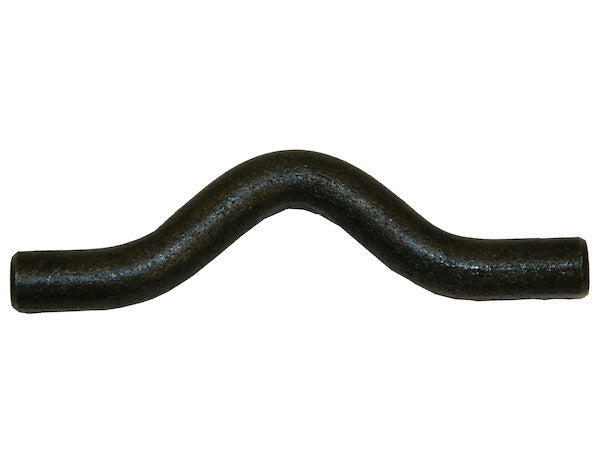
Buyers Products Weld-On Safety Chain Bar welds onto the trailer frame to securely hold a trailer chain in place. Choose from different sizes to accommodate your safety chain diameter.
Specifications
| Accommodates Chain Dia. (in.) | 7/16 |
|---|---|
| Finish | Plain |
| Material | Carbon Steel |
Advanced Technical Overview: Buyers Products Weld-On Safety Chain Bar 7/16 Inch Diameter
The Buyers Products Weld-On Safety Chain Bar, featuring a 7/16 inch diameter and constructed from robust carbon steel with a plain finish, represents a critical component in ensuring the secure and compliant operation of towed vehicles. This detailed technical description delves into the engineering principles, material science, installation methodologies, and regulatory implications that underscore the product's design and functionality.
Engineered for Unyielding Security: The Role of Safety Chain Bars
At its core, the safety chain bar serves as the primary attachment point for trailer safety chains to the trailer frame. Unlike bolt-on solutions, a weld-on design offers superior structural integration and load transfer capabilities, creating a permanent and exceptionally strong connection that becomes an integral part of the trailer's chassis. In the event of a primary hitch failure or accidental detachment of the trailer from the towing vehicle, the safety chains are engineered to maintain a physical link, preventing the uncontrolled separation and potential runaway of the trailer. The 7/16 inch diameter of this specific safety chain bar is meticulously chosen to accommodate a range of standard safety chain sizes, ensuring a snug and secure fit that minimizes slack and maximizes the effectiveness of the safety system under dynamic load conditions. The integrity of this attachment point is paramount, as it must withstand the full dynamic forces exerted by the trailer during an emergency disconnection, potentially including impacts, sudden accelerations, and braking forces. Therefore, the design and material selection of the Buyers Products safety chain bar are engineered to exceed typical operational stresses, providing a substantial margin of safety.
Material Science Deep Dive: Carbon Steel Construction
The selection of carbon steel for the construction of the Buyers Products Weld-On Safety Chain Bar is a deliberate engineering decision based on a confluence of factors including mechanical properties, weldability, and cost-effectiveness. Carbon steel, primarily an alloy of iron and carbon (typically up to 2.1% by weight), is renowned for its high tensile strength and yield strength, crucial attributes for load-bearing components in towing applications. The specific grade of carbon steel utilized is optimized to provide an excellent balance of ductility and hardness, ensuring that the bar can deform Plastically under extreme loads before catastrophic failure, rather than fracturing brittlely. This ductile behavior is a vital safety characteristic, as it allows for visual cues of overstress before total failure. Furthermore, carbon steel exhibits excellent weldability, which is a fundamental requirement for a "weld-on" component. Its metallurgical composition allows for stable arc formation, good penetration, and sound weld bead formation when proper welding procedures are followed. The plain finish, devoid of any pre-applied coatings like paint or galvanization, is specifically chosen to facilitate optimal welding. Pre-coated materials can introduce contaminants, fumes, or interfere with the welding process, potentially compromising the weld integrity. A plain finish ensures a clean substrate, allowing for direct metal-to-metal fusion, which is critical for achieving the highest possible bond strength between the safety chain bar and the trailer frame. While the plain finish is ideal for welding, post-installation protective measures, such as painting or powder coating, are highly recommended to mitigate corrosion in exposed environments, thereby extending the service life of the component.
Dimensional Precision: The Significance of a 7/16 Inch Diameter
The specified 7/16 inch diameter of the safety chain bar is a critical dimension that directly impacts compatibility and safety performance. This dimension corresponds to commonly available safety chain sizes and their associated working load limits (WLL) and minimum breaking strengths (MBS). Industry standards, such as those set by SAE International (e.g., SAE J684), dictate the requirements for safety chains based on the Gross Vehicle Weight Rating (GVWR) of the trailer. Ensuring that the safety chain bar's diameter is appropriate for the chain link size is essential to prevent excessive play, which could lead to premature wear or ineffective engagement during an emergency. A properly matched diameter ensures that the chain links sit snugly around the bar, distributing load efficiently across the contact area. This reduces stress concentrations and the likelihood of localized deformation or fatigue. Furthermore, the robust diameter of 7/16 inches provides ample cross-sectional area, directly contributing to the bar's inherent strength and resistance to bending or shearing forces. Engineers meticulously select such dimensions to provide sufficient material volume to withstand the dynamic forces encountered in a trailer separation event, which can be significantly higher than static loads due to kinetic energy and sudden impact forces. The tolerance and concentricity of the bar's diameter are also maintained to ensure consistent performance and ease of chain attachment across all manufactured units.
Weld-On Installation: Technicalities and Best Practices
The "weld-on" designation for this safety chain bar necessitates a professional and precise installation process to guarantee its intended safety function. The integrity of the weld joint is paramount, as it becomes the load-bearing interface between the safety chain bar and the trailer's structural frame. Recommended welding processes typically include Gas Metal Arc Welding (GMAW/MIG), Shielded Metal Arc Welding (SMAW/Stick), or Gas Tungsten Arc Welding (GTAW/TIG), depending on the specific application, welder skill, and available equipment. For optimal results, the following technical considerations and best practices should be adhered to:
- Surface Preparation: Both the safety chain bar and the trailer frame at the intended attachment point must be thoroughly cleaned. This involves removing all rust, scale, paint, oil, grease, and any other contaminants that could compromise weld quality. Grinding or wire brushing to achieve bare, bright metal is essential.
- Fit-Up: Proper fit-up ensures a consistent weld gap and optimal fusion. The bar should be positioned securely against the trailer frame, ideally with minimal gaps, to allow for a strong fillet weld. Tack welds can be used to hold the component in place prior to the full welding procedure.
- Welding Parameters: Appropriate welding parameters (amperage, voltage, wire feed speed for MIG; electrode type and amperage for Stick; current and filler rod for TIG) must be selected based on the thickness of the trailer frame material and the safety chain bar. Consulting welding procedure specifications (WPS) or manufacturer guidelines is recommended.
- Filler Material: The choice of filler wire or electrode should be compatible with carbon steel, ensuring metallurgical continuity and strength comparable to or exceeding the base materials. Common choices include ER70S-6 for MIG or E7018 for Stick welding.
- Weld Type and Coverage: A full perimeter fillet weld, or multiple pass welds depending on material thickness, is generally recommended to maximize the contact area and load-carrying capacity. The weld bead should be uniform, free from porosity, undercut, or excessive spatter, and exhibit good penetration into both the bar and the frame material.
- Heat Management: Managing heat input is crucial to prevent distortion of the trailer frame and to control the heat-affected zone (HAZ) of the steel, which can otherwise affect material properties. Interpass temperature control and proper cooling rates are important.
- Post-Weld Inspection: After welding, the joint should be visually inspected for defects. Non-destructive testing methods such as dye penetrant inspection (PT) or magnetic particle inspection (MT) may be employed for critical applications to detect surface and subsurface flaws.
- Corrosion Protection: Once the welding is complete and inspected, the plain carbon steel bar and the surrounding weld area should be treated with a suitable corrosion-resistant coating, such as industrial paint or powder coat, to protect against environmental degradation.
The inherent advantages of a weld-on design include superior strength and rigidity compared to mechanical fasteners, elimination of potential loosening over time due to vibration, and a cleaner aesthetic. However, these benefits are realized only through proper, skilled welding.
Regulatory Compliance and Safety Assurance
The Buyers Products Weld-On Safety Chain Bar is an integral component in adhering to stringent regulatory requirements governing trailer safety. Federal, state, and local regulations, along with industry standards, mandate the use of safety chains on virtually all trailers. In the United States, the Department of Transportation (DOT) and specific state motor vehicle codes, along with industry standards such as SAE J684 ("Trailer Couplings, Hitches, and Safety Chains – Automotive Type"), outline the requirements for safety chain systems. These standards typically specify that safety chains must be strong enough to retain the trailer in the event of primary coupling failure, often requiring a combined minimum breaking strength (MBS) equal to or exceeding the Gross Vehicle Weight Rating (GVWR) of the trailer. By providing a structurally robust and reliably attachable point for safety chains, this bar directly contributes to compliance with these critical safety regulations. The design ensures that the chain, when properly attached, forms a crossover pattern beneath the tongue, preventing the tongue from dropping to the road and providing steering capability in an emergency. The robustness of the 7/16 inch diameter bar ensures that the attachment point itself does not become the weakest link in the safety chain system, providing the necessary strength to transfer emergency loads from the trailer to the towing vehicle's hitch or frame.
Applications Across Diverse Trailer Types
The versatility of the Buyers Products Weld-On Safety Chain Bar makes it suitable for an extensive range of trailer types and applications. Its robust design is essential for trailers that experience significant dynamic loads, operate in demanding environments, or carry valuable cargo where safety is paramount. Common applications include:
- Utility Trailers: From small single-axle to larger tandem-axle utility trailers used for hauling landscaping equipment, construction materials, or general cargo.
- Cargo Trailers: Enclosed cargo trailers, including those used for commercial deliveries, recreational equipment transport, or mobile workshops.
- Boat Trailers: Ensuring the safe transport of marine vessels, where a secure connection is critical due to potential water crossings and varied road conditions.
- Recreational Vehicle (RV) Trailers: Fifth-wheel and travel trailers, where the mass and potential for high-speed travel necessitate uncompromising safety features.
- Equipment Trailers: Heavy-duty trailers designed for transporting excavators, skid steers, ATVs, and other heavy machinery, where the combined weight can be substantial.
- Agricultural Trailers: Farm trailers used for transporting produce, livestock, or implements across varied terrain.
- Commercial and Industrial Trailers: Custom-built trailers for specialized industrial equipment or materials, where bespoke attachment points are often required.
The weld-on nature allows for flexible placement on various trailer frame geometries, adapting to specific design requirements or repair scenarios where existing attachment points may be damaged or insufficient. This adaptability underscores its value as a foundational safety component across the towing spectrum.
Durability, Maintenance, and Longevity
While the plain finish is optimal for welding, the long-term durability and longevity of the carbon steel safety chain bar are significantly influenced by post-installation care. As plain carbon steel is susceptible to corrosion in the presence of moisture and oxygen, particularly in environments exposed to road salts, chemicals, or maritime air, the application of a high-quality protective coating immediately after welding and inspection is crucial. Industrial-grade paints, powder coatings, or even galvanization (applied post-weld) can create an effective barrier against rust and environmental degradation, thereby preserving the structural integrity and aesthetic appearance of the component over its operational lifespan. Regular inspection of the safety chain bar, along with the safety chains themselves, is a critical maintenance practice. Inspections should look for signs of:
- Corrosion: Heavy rust can reduce the cross-sectional area and weaken the material.
- Deformation: Bending, twisting, or elongation of the bar, indicating it has been subjected to forces exceeding its elastic limit.
- Weld Cracks: Any visible cracks in the weld bead or the heat-affected zone, signaling a compromised joint.
- Wear: Abrasion from chains rubbing against the bar during use.
Addressing these issues promptly, through repair or replacement by a qualified professional, is essential for maintaining the safety performance of the trailer. The robust design and material quality of the Buyers Products safety chain bar contribute to its inherent durability, but active maintenance ensures that it continues to perform its critical safety function reliably throughout the life of the trailer.
Conclusion: A Foundation of Towing Safety
The Buyers Products Weld-On Safety Chain Bar with a 7/16 inch diameter is more than just a piece of metal; it is a precisely engineered component fundamental to towing safety. Its carbon steel construction, optimized diameter, and weld-on design reflect a commitment to robust mechanical properties, secure integration, and compliance with vital safety standards. By providing an unyielding attachment point for trailer safety chains, this product plays an indispensable role in preventing catastrophic trailer detachments, safeguarding lives, and protecting property. Its plain finish facilitates a superior welded connection, and with appropriate post-installation corrosion protection and routine maintenance, it stands as a testament to durability and reliability in the demanding world of trailer operations. For any trailer requiring a permanent, high-strength safety chain attachment, this component offers a professional and technically sound solution, ensuring peace of mind for operators and contributing to safer roadways.