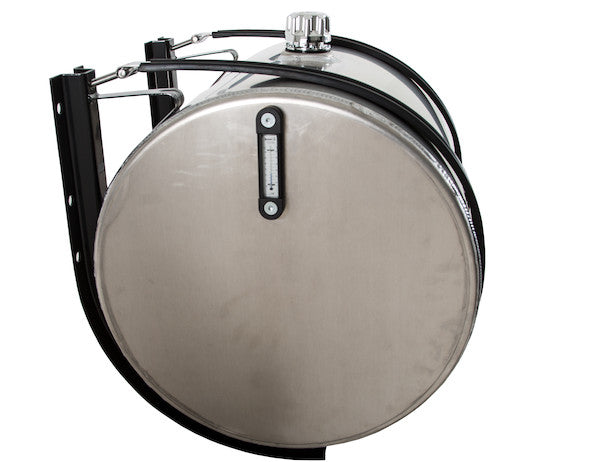
Buyers Products Side Mount Cylindrical Aluminum Reservoir with Rear Ports features dual rear 2 in. NPT female-threaded suction/return ports. It's internally baffled to suppress sloshing and lower operating temperatures. The reservoir's aluminum body is light weight and extremely resistant to corrosion. The included mounting brackets wrap under the tank for added stability and support. Rubber-insulated stainless steel straps are also included standard to keep it secure. Each unit includes a chrome-plated polymer filler-strainer breather cap and a level/temperature sight gauge that can be mounted on either end of the reservoir. Reservoirs are available in 35 or 50 gallon capacities.
Specifications
| Additional Port Size | 3/4 NPT; 2 NPT |
|---|---|
| Capacity | 70 |
| Color | Silver |
| Depth | 24.2 |
| Diameter O.D. | 24.21 |
| Diffuser Included (y/n) | No |
| Finish | Smooth |
| Hardware and Brackets Included (y/n) | Yes |
| Height | 24.2 |
| Included Valve (y/n) | No |
| Integral Brackets (y/n) | No |
| Integral Level Gauge (y/n) | Yes |
| Magnetic Drain Plug (y/n) | Yes |
| Material | Aluminum |
| Material Gauge | 11 |
| Mount Position | Side Mount |
| Number of Suction Ports | 1 |
| Oil Level Gauge (y/n) | Yes |
| Reservoir Shape | Cylinder |
| Return Line Filter Included (y/n) | No |
| Suction Port Size | 2 NPT |
| Temperature Gauge (y/n) | Yes |
| Usable Capacity | 70 |
| Width | 39.5 |
Advanced Technical Overview: 70 Gallon Side Mount Aluminum Hydraulic Reservoir with Optimized Rear Port Configuration
This comprehensive technical description details the engineering and functional superiority of the 70 Gallon Side Mount Cylindrical Aluminum Hydraulic Reservoir, explicitly designed for high-demand mobile and stationary hydraulic applications. Integrating robust construction with thoughtful design elements, this reservoir is engineered to be a critical component in systems requiring efficient fluid management, thermal regulation, and prolonged operational reliability.Exceptional Fluid Capacity and Thermal Management
At the core of this unit's capability is its substantial 70-gallon (265-liter) usable capacity, making it ideally suited for hydraulic systems with high flow rates or extended duty cycles. The generous fluid volume serves several vital functions beyond merely storing hydraulic fluid. Primarily, it significantly contributes to the system's thermal management. A larger volume of fluid provides a greater surface area for heat dissipation, allowing the oil to cool more effectively during its residence time in the tank. This is crucial for preventing thermal degradation of the hydraulic fluid, which can lead to reduced viscosity, oxidation, additive depletion, and ultimately, accelerated wear on pumps, valves, and actuators. The 24.21-inch outer diameter and 39.5-inch width ensure a considerable liquid-to-air interface, further enhancing natural convection and radiation cooling. The cylinder shape, with its smooth silver finish, also optimizes heat transfer to the ambient environment, contributing to lower overall operating temperatures for the hydraulic system. Maintaining optimal fluid temperatures is paramount for maximizing component lifespan and ensuring consistent system performance under varying load conditions.Precision-Engineered Aluminum Construction for Durability and Performance
The reservoir is meticulously constructed from 11-gauge aluminum, a material chosen for its superior properties in demanding hydraulic environments. The 11-gauge thickness (approximately 0.125 inches or 3.175 mm) provides an optimal balance of structural rigidity and weight reduction. This robust gauge ensures the reservoir can withstand the dynamic stresses associated with mobile applications, including vibration, shock loads, and fluid surges, without compromising structural integrity. The inherent advantages of aluminum as a construction material for hydraulic reservoirs are multifaceted:- Corrosion Resistance: Aluminum naturally forms a passive oxide layer, offering exceptional resistance to corrosion from atmospheric exposure, water contamination within the hydraulic fluid, and various chemical agents. This resistance is critical for maintaining fluid purity and extending the reservoir's service life, particularly in outdoor or harsh operating conditions where steel reservoirs might be susceptible to rust and scale formation.
- Lightweight: Compared to steel alternatives of similar strength, aluminum significantly reduces the overall weight of the hydraulic system. For mobile equipment such as heavy-duty trucks, construction machinery, and agricultural vehicles, this weight reduction directly translates to increased payload capacity, improved fuel efficiency, and reduced wear on the vehicle's chassis and suspension components.
- Thermal Conductivity: Aluminum possesses high thermal conductivity, approximately three to five times greater than steel. This property enhances the reservoir's ability to dissipate heat from the hydraulic fluid to the surrounding air, supporting the passive cooling capabilities inherent in the tank's design and volume. This efficiency in heat transfer directly contributes to maintaining stable operating temperatures.
- Smooth Finish: The smooth silver finish of the aluminum not only provides an aesthetically pleasing appearance but also contributes to ease of cleaning and inspection, resisting the accumulation of dirt and debris.
Optimized Port Configuration for Seamless System Integration
This reservoir features a highly functional rear port configuration designed for optimal hydraulic system plumbing. It includes dual rear 2-inch NPT (National Pipe Taper) female-threaded ports, specifically engineered to accommodate both suction and return lines. The 2-inch NPT size is a critical specification, ensuring minimal flow restriction for high-volume hydraulic pumps, thereby preventing cavitation on the suction side and reducing back pressure on the return side.The designation of these as "suction/return ports" provides system designers with flexibility. Typically, one 2-inch port would be allocated for the main pump suction line, while the other accommodates the primary return line from the hydraulic circuit. The generous sizing of these ports is essential for maintaining efficient fluid velocity within specified limits (e.g., typically 2-4 ft/s for suction lines and 10-15 ft/s for return lines) to minimize energy losses and fluid degradation.
Beyond the primary 2-inch ports, the reservoir also includes provisions for additional connections, indicated by 3/4 NPT port sizes. These auxiliary ports are invaluable for integrating various critical system components such as:
- Drain Lines: For convenient fluid draining and maintenance. The included magnetic drain plug further enhances fluid cleanliness by capturing ferrous wear particles.
- Filter Bypass Lines: For external return line filtration circuits.
- Auxiliary Pump Suction: For smaller, secondary hydraulic circuits.
- Sensor Mounts: For additional pressure, temperature, or level sensors not integrated into the sight gauge.
- Pilot Lines: For control or instrumentation circuits.
This comprehensive porting strategy allows for a clean and efficient layout of hydraulic hoses and components, contributing to the overall reliability and serviceability of the hydraulic system. The rear mounting of these ports is advantageous for chassis installations, allowing for neat routing of lines away from common interference points and providing protection from potential impacts.
Advanced Internal Design: Baffling for Performance and Fluid Longevity
A hallmark of this reservoir's advanced design is its internally baffled construction. The strategic placement of internal baffles is not merely a structural element but a critical engineering feature that profoundly impacts fluid dynamics within the tank, directly contributing to system efficiency and longevity.The primary functions of the internal baffling include:
- Suppression of Sloshing: Baffles break up large fluid movements, preventing excessive sloshing, especially in mobile applications. This stabilizes the fluid surface, reduces localized turbulence, and ensures a consistent head pressure for the suction line, preventing pump cavitation.
- Enhanced De-aeration: By forcing the return fluid to travel a longer, circuitous path through the reservoir, baffles provide adequate residence time for entrained air bubbles to rise to the surface and escape. This de-aeration process is vital, as air in hydraulic fluid (aeration) can cause several detrimental effects, including reduced bulk modulus (making the system spongy), increased noise, elevated temperatures due to adiabatic compression, and accelerated oxidation of the fluid.
- Improved Heat Dissipation: The extended flow path created by the baffles maximizes the fluid's exposure to the reservoir walls, enhancing conductive heat transfer to the aluminum structure and subsequently to the ambient air. This contributes significantly to the overall thermal management capabilities of the tank.
- Isolation of Suction and Return Zones: Baffles effectively separate the return flow from the suction flow. This ensures that the pump draws cooler, de-aerated, and relatively quiescent fluid, preventing the immediate recirculation of hot, aerated fluid directly back into the system. This separation is fundamental to maintaining stable system performance and extending fluid life.
- Sedimentation Assistance: The reduced turbulence and extended residence time in quiescent zones created by baffles allow heavier contaminants and wear particles to settle at the bottom of the reservoir, away from the suction port, where they can be collected by the magnetic drain plug.
The intentional design choice of not including an internal diffuser implicitly directs the system designer to consider external return line diffusers if the application demands a highly controlled return flow or if high-velocity return streams are expected. This provides flexibility for customized filtration and de-aeration solutions.
Robust Mounting System for Secure Integration
Recognizing the demanding environments in which hydraulic reservoirs operate, this unit is equipped with a comprehensive and robust mounting system. The included mounting hardware and brackets are engineered for secure, long-term attachment to vehicle frames or stationary equipment.- Wrap-Under Brackets: The mounting brackets are designed to wrap underneath the cylindrical tank. This "cradling" design distributes the reservoir's weight and the dynamic loads of the fluid evenly, providing exceptional stability and support. This prevents localized stress concentrations on the reservoir body and ensures secure retention even under severe vibration or shock.
- Rubber-Insulated Stainless Steel Straps: The reservoir is further secured by rubber-insulated stainless steel straps. Stainless steel provides superior strength and corrosion resistance, while the rubber insulation serves a dual purpose: it protects the aluminum surface of the reservoir from abrasion and acts as a vibration dampener. This dampening effect significantly reduces noise transmission and mitigates fatigue stresses on both the reservoir and the mounting structure, enhancing the overall durability of the installation.
- Side Mount Position: The side mount configuration is widely favored in mobile hydraulic applications due to its optimal use of chassis space, ease of access for maintenance, and lower center of gravity for improved vehicle stability. The design integrates seamlessly with the existing structure of heavy-duty vehicles, allowing for efficient plumbing and minimal interference with other vehicle systems.
Integrated Monitoring and Maintenance Features
This reservoir incorporates several essential features designed to facilitate system monitoring and routine maintenance, directly contributing to the longevity and reliability of the hydraulic system.- Chrome-Plated Polymer Filler-Strainer Breather Cap: The filler cap assembly is a critical barrier against contamination. The integrated strainer prevents particulate matter from entering the reservoir during fluid top-offs, while the breather element allows the tank to "breathe" as the fluid level fluctuates due to system demands and temperature changes. The breather ensures that the internal pressure remains at atmospheric levels, preventing vacuum conditions (which can cause pump cavitation) or excessive positive pressure buildup. The chrome-plated polymer construction offers durability and resistance to environmental elements.
- Level/Temperature Sight Gauge: A dual-function sight gauge is provided, allowing for simultaneous monitoring of the hydraulic fluid level and temperature. This is invaluable for preventive maintenance, enabling operators to quickly identify low fluid conditions (indicating leaks or evaporation) and elevated temperatures (suggesting cooling system issues or excessive system load). The ability to mount this gauge on either end of the reservoir provides installation flexibility, accommodating various chassis layouts and access requirements. Its "integral" nature signifies it is designed specifically for this reservoir, ensuring accurate readings.
- Magnetic Drain Plug: Located at the lowest point of the reservoir, the magnetic drain plug is a simple yet highly effective tool for maintaining fluid cleanliness. Its magnetic properties attract and hold ferrous wear particles that accumulate in the hydraulic fluid over time. Regular inspection and cleaning of this plug during fluid changes can provide early indicators of component wear within the system, allowing for proactive maintenance before more severe damage occurs.
System Integration Best Practices and Technical Considerations
While this reservoir provides a robust foundation for a hydraulic system, it is designed to be integrated into a larger, comprehensive hydraulic circuit. The specifications indicate that a diffuser and return line filter are not included as integral components. This is a deliberate design choice that empowers system integrators to select and position these components externally, optimizing them precisely for the specific application's flow rates, contamination control requirements, and space constraints.For optimal performance, a hydraulic system designer should consider:
- Return Line Filtration: Installing an appropriate return line filter with a specified micron rating is crucial for maintaining fluid cleanliness and protecting downstream components.
- Diffuser Placement: If high-velocity return flow is anticipated, an external diffuser at the end of the return line can minimize fluid agitation, aeration, and foaming, further enhancing the de-aeration efficiency provided by the internal baffles.
- System Relief Valve: While no valve is included with the reservoir, a properly sized system relief valve is essential for protecting the entire hydraulic circuit from overpressure conditions.
- Pre-Commissioning Procedures: Thorough flushing and cleaning of the entire hydraulic system, including the new reservoir, are vital before initial operation to remove any manufacturing debris or contaminants.
Conclusion
The 70 Gallon Side Mount Cylindrical Aluminum Hydraulic Reservoir with Rear Ports stands as a testament to intelligent engineering in hydraulic fluid management. Its expansive 70-gallon capacity, coupled with an 11-gauge aluminum construction, delivers superior thermal regulation, corrosion resistance, and structural integrity. The optimized dual 2-inch NPT rear ports and additional 3/4 NPT auxiliary ports provide unparalleled flexibility for diverse system configurations, while the internal baffling ensures excellent fluid de-aeration and temperature stability. Supported by a robust side-mount bracket system with rubber-insulated stainless steel straps and equipped with essential monitoring features like a level/temperature sight gauge and magnetic drain plug, this reservoir offers a reliable, high-performance, and easily maintainable solution for heavy-duty mobile and industrial hydraulic applications. It is engineered to maximize operational efficiency, extend component lifespan, and reduce maintenance overhead, making it an indispensable asset for demanding hydraulic systems.