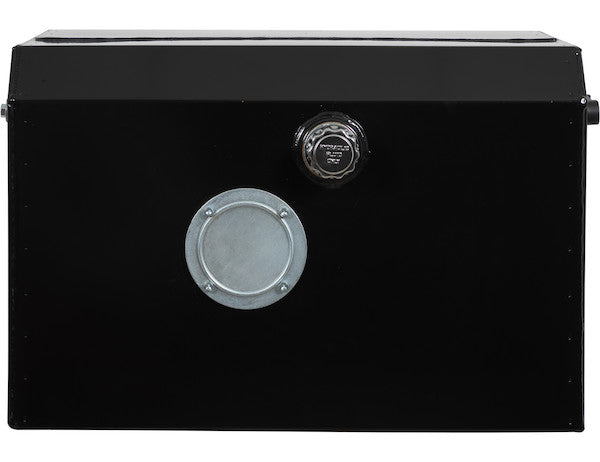
The 70 Gallon Side Mount Steel Reservoir from Buyers Products is built of tough 13 Ga steel and is designed to install on the side of your truck. The reservoir is fully baffled to control fluid movement and keep things cool. It features a black powder-coated finish for enhanced corrosion resistance. The tank has a 2 in. NPT return port/drain on its bottom. Each unit includes a sight level and temperature gauge and a quarter turn filler breather unit. Mounting brackets are sold separately (see "Accessories" below).
Specifications
| Capacity | 70 |
|---|---|
| Color | Black |
| Depth | 35.00 |
| Finish | Powder-Coat |
| Hardware and Brackets Included (y/n) | No |
| Height | 23 |
| Included Valve (y/n) | No |
| Integral Brackets (y/n) | Yes |
| Integral Level Gauge (y/n) | Yes |
| Material | Carbon Steel |
| Material Gauge | 13 |
| Mount Position | Side Mount |
| Oil Level Gauge (y/n) | Yes |
| Reservoir Shape | Rectangle |
| Suction Port Size | 2 NPT |
| Temperature Gauge (y/n) | Yes |
| Usable Capacity | 70 |
| Width | 23.020 |
Advanced Technical Overview: 70 Gallon Side-Mount Steel Hydraulic Reservoir
The 70 Gallon Side-Mount Steel Hydraulic Reservoir represents a critical component in mobile hydraulic systems, engineered to deliver robust performance, thermal management, and fluid integrity for a wide array of heavy-duty applications. Designed and manufactured by Buyers Products, this unit embodies precision engineering and material science to meet the demanding operational parameters of modern industrial and commercial vehicles. Its strategic design as a side-mount reservoir optimizes space utilization on chassis frames while providing a substantial fluid capacity essential for high-power hydraulic circuits.
Material Science and Structural Integrity: 13 Gauge Carbon Steel Construction
At the core of this reservoir's durability lies its construction from 13 gauge (Ga) carbon steel. Carbon steel is selected for its superior strength-to-weight ratio, excellent weldability, and cost-effectiveness, making it an ideal material for hydraulic fluid containment under dynamic operating conditions. The 13 Ga specification translates to a material thickness of approximately 0.090 inches (or 2.286 mm), providing a robust wall thickness capable of withstanding internal fluid pressures, external impacts, and the vibrational stresses inherent in mobile equipment operations. This gauge ensures structural rigidity without incurring excessive weight, which is a critical consideration for truck-mounted accessories where payload capacity and fuel efficiency are paramount. The inherent characteristics of carbon steel also contribute to the reservoir's ability to dissipate heat effectively, leveraging the material's thermal conductivity to aid in cooling the hydraulic fluid.
Optimized Side-Mount Configuration and Dimensions
The side-mount design of this 70-gallon reservoir is strategically chosen for integration into the restrictive envelopes of truck and vehicle chassis. By positioning the reservoir alongside the frame rails, it minimizes interference with other vehicle systems, such as exhaust, fuel tanks, and drivelines, while maintaining a low center of gravity. This placement contributes to vehicle stability, particularly crucial for heavy-duty trucks operating on uneven terrain or engaged in dynamic tasks like dumping or lifting. With dimensions of 35.00 inches in depth, 23 inches in height, and 23.020 inches in width, the rectangular form factor is optimized for efficient volume packaging within the typical clearances available on commercial truck frames. The "Integral Brackets (y/n): Yes" specification indicates that the reservoir body incorporates mounting points or flanges directly into its structure, designed to interface seamlessly with external mounting brackets (sold separately). This modular approach allows for customization of mounting solutions to suit various truck chassis configurations and ensures a secure, vibration-resistant attachment critical for safety and operational longevity.
Hydraulic System Capacity and Sizing Principles
The substantial 70-gallon capacity (with a usable capacity matching the total, indicating efficient internal design) is a pivotal feature for demanding hydraulic applications. Proper reservoir sizing is critical for the overall efficiency, reliability, and lifespan of a hydraulic system. A 70-gallon capacity is typically selected for systems characterized by high flow rates, significant heat generation, or applications requiring a large volume of fluid for extended operation without immediate replenishment. The primary functions influenced by reservoir capacity include:
- Heat Dissipation: A larger surface area, combined with a sufficient volume of fluid, allows more effective heat transfer from the hydraulic fluid to the ambient air. This helps maintain optimal operating temperatures, preventing fluid degradation, seal damage, and component wear.
- De-aeration: Adequate fluid retention time within the reservoir allows entrained air bubbles (from return lines, cavitation, etc.) to rise to the surface and escape. This prevents aeration-related issues such as spongy controls, noisy pumps, reduced fluid lubrication properties, and accelerated component wear.
- Contaminant Settling: A larger volume provides a quiescent zone where heavier particulate contaminants can settle to the bottom, reducing the load on filtration systems and extending fluid life.
- Fluid Volume Changes: The reservoir must accommodate volume fluctuations due to cylinder extension/retraction, thermal expansion/contraction of the fluid, and potential leakage without overflowing or allowing the fluid level to drop below the pump suction inlet.
- Fluid Retention Time: This refers to the duration a specific volume of fluid spends in the reservoir before being recirculated. For most hydraulic systems, a retention time equivalent to 3 to 5 times the pump's flow rate per minute is recommended to facilitate de-aeration and cooling. For a 70-gallon reservoir, this implies compatibility with systems having significant flow demands, such as those found in large dump trucks, refuse compactors, cranes, and snowplow applications, where the hydraulic system performs heavy work cycles.
Advanced Fluid Dynamics: The Role of Baffling
The designation "fully baffled" signifies a sophisticated internal design feature that is paramount to the reservoir's performance and the longevity of the entire hydraulic system. Baffles are internal partitions strategically placed within the reservoir to optimize fluid flow patterns and prevent detrimental conditions. Their primary technical functions include:
- Controlled Fluid Movement: Baffles prevent excessive sloshing and turbulence, particularly critical in mobile applications where vehicle movement can create significant fluid agitation. Uncontrolled turbulence can lead to rapid aeration and foaming.
- Enhanced Heat Dissipation: By directing the flow of return fluid, baffles ensure that fluid circulates throughout the entire reservoir volume, maximizing contact with the cooler tank walls. This increases the effective heat exchange surface area, significantly improving the reservoir's thermal management capabilities.
- Optimized De-aeration Path: Baffles create a tortuous path for the returning fluid, promoting a longer, slower flow. This extended retention time allows air bubbles to coalesce and rise to the surface before the fluid reaches the pump's suction port, thereby minimizing pump cavitation and system noise.
- Contaminant Isolation: Baffles help create a quiescent zone where solid contaminants can settle out of suspension, preventing them from being re-entrained into the active flow and drawn into the pump. This protects the pump and other sensitive components from abrasive wear.
- Separation of Return and Suction Flows: Crucially, baffles typically separate the return fluid inlet from the pump suction outlet. This prevents the direct short-circuiting of hot, aerated return fluid straight back into the pump, ensuring the pump draws cooler, de-aerated, and relatively clean fluid. This separation is vital for maintaining fluid quality and system efficiency.
The "fully baffled" characteristic indicates a comprehensive internal architecture designed to manage fluid dynamics optimally under all operating conditions, directly contributing to the hydraulic system's stability and performance.
Port Configuration: 2 in. NPT Suction/Return/Drain Port
The reservoir features a 2-inch National Pipe Taper (NPT) port, explicitly described as a "return port/drain on its bottom" and further specified as having a "Suction Port Size: 2 NPT." This multi-functional bottom port, therefore, serves several critical roles:
- Suction Port: As the primary outlet for hydraulic fluid to the pump, the 2 NPT suction port size is suitable for accommodating significant flow rates, minimizing pressure drop at the pump inlet, and preventing cavitation. The NPT threading ensures a secure, leak-free connection when properly sealed, critical for maintaining system integrity and preventing air ingress.
- Return Port: While typically return ports are positioned higher on the reservoir to facilitate de-aeration and prevent direct impingement on the suction line, a bottom-mounted port can function as a return when combined with internal baffling and/or diffuser tubes. These internal components direct the returning fluid downwards and away from the suction line, allowing it to de-aerate and cool before reaching the pump inlet. This design optimizes space and simplifies external plumbing.
- Drain Port: The bottom location inherently makes it ideal for draining the reservoir for maintenance, fluid changes, or system flushing. The 2 NPT size allows for efficient evacuation of fluid and settled contaminants.
The versatility of a single, well-designed 2 NPT bottom port allows for flexible system integration, provided appropriate internal fluid management (baffling, diffusers) is in place to prevent undesirable conditions like aeration and hot spots. For optimal system performance, care should be taken during installation to ensure that the pump suction line draws from a consistently full and de-aerated fluid column, and that return flow does not directly impinge upon the suction inlet.
Integrated Fluid Monitoring: Sight Level and Temperature Gauges
Integrated fluid monitoring is critical for preventative maintenance and ensuring the long-term health of a hydraulic system. This reservoir includes both a sight level gauge and a temperature gauge, providing operators with immediate, visual feedback on two vital operational parameters:
- Sight Level Gauge: This transparent indicator provides a clear visual representation of the hydraulic fluid level within the reservoir. Maintaining the correct fluid level is paramount. Too low a level can lead to pump cavitation (drawing air instead of fluid), reduced cooling capacity, and potential system shutdown. An excessively high level risks overflow, particularly during thermal expansion or cylinder retraction. The sight gauge allows for quick pre-operational checks and ongoing monitoring, enabling timely fluid replenishment and preventing costly system damage.
- Temperature Gauge: Hydraulic fluid temperature is a key indicator of system health. Elevated temperatures accelerate fluid degradation, reduce viscosity (leading to increased internal leakage and decreased pump efficiency), damage seals, and shorten the lifespan of all hydraulic components. The integrated temperature gauge allows operators to monitor fluid temperature in real-time, identify potential overheating issues early, and take corrective action, thus preserving fluid quality and extending component life. It's a vital diagnostic tool for troubleshooting system inefficiencies.
Fluid Integrity: Quarter-Turn Filler Breather Unit
The inclusion of a quarter-turn filler breather unit underscores the commitment to maintaining fluid integrity and system efficiency. This component performs multiple critical functions:
- Hydraulic Fluid Filling: The filler cap provides a convenient and secure access point for adding or topping off hydraulic fluid, minimizing spillage and ensuring clean introduction of fluid. The quarter-turn mechanism allows for quick, tool-free access while ensuring a positive seal to prevent contamination ingress during operation.
- Air Exchange (Breathing): As the hydraulic fluid level fluctuates (due to cylinder movement, thermal expansion/contraction), air must be allowed to enter or exit the reservoir. The breather element facilitates this exchange, preventing vacuum formation (which can cause pump cavitation) or pressure buildup (which can stress seals).
- Air Filtration: Crucially, the breather unit incorporates an air filter element. This filter prevents airborne contaminants, such as dust, dirt, and moisture particles, from entering the reservoir during air exchange. Unfiltered air is a significant source of particulate contamination, which can lead to abrasive wear, fluid degradation, and premature component failure. By filtering the incoming air, the breather unit ensures that the internal environment of the reservoir remains clean, directly contributing to the longevity and reliability of the hydraulic system. The quarter-turn design also ensures that the breather is easily accessible for periodic inspection and replacement of the filter element, a critical maintenance task.
Enhanced Durability: Black Powder-Coated Finish
The black powder-coated finish applied to the steel reservoir provides a superior layer of protection against the harsh environmental conditions encountered by mobile hydraulic equipment. Powder coating is an advanced dry finishing process that offers distinct advantages over conventional liquid paints:
- Corrosion Resistance: The thick, durable polymer layer forms an excellent barrier against moisture, road salt, chemicals, and other corrosive agents, preventing rust and preserving the structural integrity of the steel. This is especially vital for truck-mounted components exposed to varied weather and road conditions.
- Abrasion and Impact Resistance: Powder coating is significantly more resistant to chipping, scratching, and abrasion than liquid paints, protecting the underlying steel from physical damage caused by road debris, impact from tools, or general wear and tear.
- UV Resistance: The finish resists fading and degradation from prolonged exposure to ultraviolet (UV) radiation, maintaining its aesthetic appearance and protective properties over time.
- Environmental Benefits: The powder coating process is more environmentally friendly, as it typically emits zero or near-zero volatile organic compounds (VOCs).
The uniform black finish also provides a professional appearance that complements the aesthetics of most commercial vehicles.
Installation and Maintenance Considerations
While mounting brackets are sold separately, the integral brackets on the reservoir streamline the installation process, allowing for flexibility in bracket selection based on specific chassis requirements. Proper mounting is crucial; the reservoir must be securely fastened to the vehicle frame to withstand vibration, shock loads, and fluid movement without compromising vehicle stability or component integrity. Regular maintenance, including checking fluid levels and temperature via the integrated gauges, inspecting and replacing the breather filter element, and periodic fluid changes via the convenient drain port, are essential for maximizing the operational life and efficiency of both the reservoir and the entire hydraulic system.
Versatile Applications
The 70 Gallon Side-Mount Steel Hydraulic Reservoir is ideally suited for a broad spectrum of heavy-duty mobile applications requiring reliable and robust hydraulic power. These include, but are not limited to:
- Waste Management Vehicles: Refuse trucks, compactors, and recycling vehicles.
- Construction Equipment: Dump trucks, excavators, loaders, and road machinery.
- Municipal Services: Snowplows, salt spreaders, street sweepers, and utility service vehicles.
- Transportation and Logistics: Heavy-duty tow trucks, car carriers, and specialized transport vehicles.
- Agricultural Machinery: Large tractors and implements with auxiliary hydraulic systems.
- Forestry Equipment: Log loaders and chippers.
Conclusion
The 70 Gallon Side-Mount Steel Hydraulic Reservoir from Buyers Products is a meticulously engineered component, designed to serve as the cornerstone of demanding mobile hydraulic systems. Its 13 gauge carbon steel construction, advanced baffling, integrated monitoring features, and durable powder-coated finish collectively ensure superior fluid management, thermal regulation, and structural integrity. This reservoir is not merely a container for hydraulic fluid; it is a vital contributor to the overall efficiency, longevity, and reliability of the hydraulic machinery it supports, making it an indispensable investment for heavy-duty operational excellence.