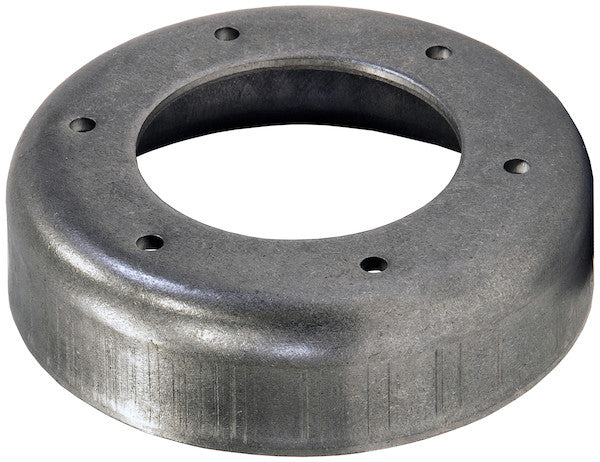
The Filler/Breather Weld Flange Adapter from Buyers Products allows you to install a filler/breather cap to the top of your hydraulic reservoir. It's ideal if you are fabricating your own reservoir. Made of steel or aluminum, the adapter welds to the top of your reservoir. It features standard 6-bolt, 2 in. center design to fit most standard filler/breather units, and provides a 1 in. rise.
Specifications
| Capacity | - |
|---|---|
| Color | Matte Black |
| Depth | - |
| Diameter I.D. | 2.125 |
| Diameter O.D. | 3.88 |
| Diffuser Included (y/n) | No |
| Finish | Smooth |
| Hardware and Brackets Included (y/n) | No |
| Height | 1.13 |
| Included Valve (y/n) | No |
| Integral Brackets (y/n) | No |
| Integral Level Gauge (y/n) | No |
| Magnetic Drain Plug (y/n) | No |
| Material | Carbon Steel |
| Material Gauge | 11 |
| Mount Position | Upright |
| Oil Level Gauge (y/n) | No |
| Reservoir Shape | - |
| Temperature Gauge (y/n) | No |
| Usable Capacity | - |
| Width | - |
Advanced Technical Overview: Steel Filler-Breather Weld Flange Adapter
The Steel Filler-Breather Weld Flange Adapter from Buyers Products represents a critical component in the design, fabrication, and maintenance of high-performance hydraulic fluid reservoirs. Engineered to provide a robust and precise interface for standard filler/breather caps, this adapter is indispensable for original equipment manufacturers (OEMs), custom fabricators, and heavy equipment maintenance professionals involved in the construction or modification of hydraulic systems. Its inherent design and material selection are optimized to ensure system integrity, operational longevity, and adherence to stringent industry standards.
Material Excellence: Carbon Steel (11 Gauge)
This specific Filler-Breather Weld Flange Adapter is meticulously crafted from high-grade Carbon Steel, specifically an 11-gauge material. The selection of carbon steel for such an application is predicated on its superior mechanical properties, which are critical for the demanding operational environments of hydraulic systems. Carbon steel offers an exceptional balance of strength, ductility, and weldability, making it an ideal choice for components that must withstand significant static and dynamic loads, vibration, and internal hydraulic pressures. The 11-gauge thickness, equating to approximately 0.120 inches (3.05 mm), provides substantial structural rigidity and resistance to deformation, ensuring that the adapter maintains its form and sealing integrity over its operational lifespan. This robust gauge is particularly important given that the adapter will be welded directly into a reservoir, requiring a material capable of forming a strong, permanent, and leak-proof metallurgical bond.
Furthermore, carbon steel exhibits excellent fatigue resistance, a vital characteristic for parts exposed to the cyclic loading inherent in hydraulic systems. While raw carbon steel is susceptible to corrosion, the "Matte Black" finish applied to this adapter serves not only an aesthetic purpose but also provides an initial layer of protection against environmental degradation. For long-term resilience in harsh conditions, particularly those involving moisture, salt, or corrosive chemicals, supplementary surface treatments such as primers, paints, or powder coatings can be readily applied to the carbon steel adapter and the reservoir itself, leveraging the material's excellent adhesion properties.
The choice of carbon steel also ensures thermal stability across a broad operational temperature range, a non-negotiable requirement for hydraulic components. Hydraulic fluid temperatures can fluctuate significantly during operation, and the adapter's material must expand and contract uniformly with the reservoir to prevent stress concentrations or crack propagation at the weld joint. The uniform "Smooth" finish further contributes to its suitability for welding, minimizing surface contaminants and imperfections that could compromise weld quality.
Precision Engineering and Standardized Design
The design of this adapter is characterized by its adherence to widely accepted industry standards, ensuring broad compatibility with a multitude of filler/breather caps. The core design feature is a "standard 6-bolt, 2 in. center design." This standardized bolt pattern and center spacing are prevalent across the hydraulic industry, allowing for seamless integration with a vast array of proprietary and aftermarket filler/breather units. This design consideration significantly simplifies procurement and maintenance, providing fabricators with flexibility in selecting their preferred cap system without concerns about fitment.
Dimensional precision is paramount for effective sealing and operational performance. The adapter features a "Diameter I.D. (Inner Diameter)" of 2.125 inches (approximately 54 mm) and a "Diameter O.D. (Outer Diameter)" of 3.88 inches (approximately 98.55 mm). The internal diameter is specifically dimensioned to accommodate the collar or base of standard 2-inch filler/breather caps, ensuring a snug fit that is crucial for maintaining proper filtration and pressure control. The outer diameter provides a substantial welding surface area, facilitating a strong and reliable bond with the reservoir material.
The adapter provides a "1 in. rise," translating to a total "Height" of 1.13 inches (approximately 28.7 mm). This elevation is a deliberate design feature, offering several practical advantages. The rise helps to distance the filler/breather cap from the reservoir surface, reducing the likelihood of fluid splash-back onto the cap during turbulent reservoir conditions or aggressive filling operations. It also creates a small stand-off, which can be beneficial for routing hoses or wiring near the reservoir top, and may help prevent direct pooling of contaminants around the cap seal area. The "Upright" mount position is the industry standard for filler/breathers, optimizing airflow for effective breathing and gravity-assisted fluid filling.
The Installation Process: Welding for Integral System Performance
The installation of this steel weld flange adapter is a critical step that requires precise welding techniques to ensure optimal system performance and leak prevention. As a "weld flange," it is designed for permanent integration into a steel hydraulic reservoir, demanding careful consideration of material compatibility and welding parameters.
Preparation:
Prior to welding, the mating surfaces of both the adapter and the reservoir must be meticulously cleaned. This involves removing any rust, scale, paint, oil, or other contaminants that could compromise weld quality. Grinding or sanding to achieve a bright, clean metal surface is recommended. Proper fit-up between the adapter and the reservoir cut-out is essential. The reservoir typically requires a circular aperture cut to match the adapter's inner diameter, ensuring proper alignment and minimizing gaps.
Welding Techniques:
Given the carbon steel construction, various welding processes can be employed effectively, each with its own advantages:
- Gas Metal Arc Welding (GMAW / MIG): This is often the preferred method due to its speed, ease of use, and ability to produce strong, clean welds. A solid wire electrode (e.g., ER70S-6) and a shielding gas mixture (e.g., 75% Argon / 25% CO2) are commonly used. MIG welding offers excellent control for achieving a consistent fillet weld around the circumference of the flange.
- Shielded Metal Arc Welding (SMAW / Stick): Suitable for heavier gauge materials and outdoor conditions where wind might affect gas shielding. Electrodes like E7018 are highly suitable for carbon steel and produce robust welds. This method requires a skilled operator to manage slag and ensure penetration.
- Gas Tungsten Arc Welding (GTAW / TIG): While slower, TIG welding provides the highest level of control over the weld puddle and produces extremely clean, high-quality welds with minimal spatter. It is often chosen for applications where cosmetic appearance and absolute weld integrity are paramount, and where thin-gauge reservoir materials might be involved (though 11 gauge is relatively thick).
Regardless of the chosen method, proper heat management is crucial to prevent distortion of the reservoir or the adapter. A continuous, uniform weld bead around the entire circumference is necessary to create a hermetic seal, preventing both fluid leakage and the ingress of airborne contaminants. Post-weld inspection, including visual examination for porosity, cracks, and undercut, is highly recommended. Pressure testing of the reservoir after welding can further confirm the integrity of the seal.
The Critical Functionality of the Filler/Breather System
The primary purpose of integrating this weld flange adapter is to facilitate the secure attachment of a filler/breather cap. The filler/breather cap is a deceptively simple yet profoundly critical component for the health and efficiency of any hydraulic system. Its functions are multifaceted and directly impact fluid cleanliness, system performance, and component longevity.
1. Clean Fluid Introduction and Maintenance:
The adapter provides a dedicated, accessible port for adding hydraulic fluid to the reservoir. This is essential for both initial system fill and subsequent top-offs during maintenance. The design ensures that filler/breather caps, which often incorporate internal strainers or filters, can be securely mounted. This containment mechanism prevents the introduction of large particulate matter during filling, which could otherwise contaminate the hydraulic fluid and damage sensitive system components like pumps, valves, and cylinders. A clean fill point is the first line of defense against particulate contamination, which is a leading cause of hydraulic system failure.
2. Reservoir Breathing and Pressure Equalization:
Hydraulic reservoirs are not sealed containers; they must "breathe." As hydraulic cylinders extend and retract, the fluid level within the reservoir fluctuates. Additionally, temperature changes cause the hydraulic fluid and the air above it to expand and contract. Without a proper breathing mechanism, these volumetric changes would lead to either a vacuum or excessive pressure buildup within the reservoir.
- Vacuum: A negative pressure (vacuum) can cause pump cavitation, leading to severe damage, reduced efficiency, and premature pump failure. It can also draw air and contaminants into the system through seals and weak points.
- Pressure Buildup: Conversely, excessive positive pressure can stress reservoir walls, distort seals, and potentially lead to leaks or even structural failure.
The filler/breather cap, mounted via this adapter, typically incorporates an atmospheric vent that allows air to enter and exit the reservoir freely, equalizing internal pressure with the ambient environment. This maintains optimal operating pressure, protects system components from undue stress, and ensures consistent pump inlet conditions.
3. Airborne Contamination Filtration:
Beyond simple breathing, most quality filler/breather caps include an integrated air filter element. As air moves in and out of the reservoir, this filter captures airborne particulates such as dust, dirt, pollen, and other environmental debris. These contaminants, if allowed to enter the hydraulic fluid, can be highly abrasive and cause wear to precision-machined components, clog filters, and degrade fluid properties. By providing a secure mounting point for a filtered breather, this weld flange adapter plays a direct role in maintaining hydraulic fluid cleanliness, extending the life of hydraulic pumps, valves, and actuators, and reducing overall maintenance costs. The specifications indicate "Diffuser Included (y/n): No," which means the diffuser (a component sometimes found inside the reservoir beneath the filler/breather to disperse incoming fluid or air and reduce foaming) is not integral to *this specific adapter*, but can be an external component of the filler/breather cap itself or added separately to the reservoir.
4. Moisture Control:
In addition to solid particulates, ambient air often contains moisture. Traditional breathers may allow this moisture to enter the reservoir, where it can condense and mix with the hydraulic fluid. Water contamination is extremely detrimental to hydraulic systems, leading to fluid degradation, corrosion of internal components, reduced lubricity, and compromised additive packages. Advanced filler/breather caps, often mounted using an adapter like this, can incorporate desiccant elements to actively remove moisture from incoming air, further safeguarding the hydraulic system. While this specific adapter does not include a valve, some filler/breathers include pressure/vacuum relief valves which provide an additional layer of protection against extreme pressure differentials.
Diverse Applications and Industries
The versatility of the Steel Filler-Breather Weld Flange Adapter makes it suitable for an expansive range of hydraulic applications across various industries:
- Heavy Equipment & Construction: For excavators, bulldozers, cranes, and other machinery where custom auxiliary hydraulic systems are added or existing reservoirs are repaired/modified.
- Agricultural Machinery: Tractors, harvesters, and irrigation systems often utilize custom hydraulic power units, benefitting from tailored reservoir solutions.
- Industrial Power Units: Manufacturing facilities, processing plants, and automation systems frequently require bespoke hydraulic power packs to drive machinery and actuators.
- Marine Applications: Custom hydraulic steering, winches, and lifting systems on commercial and recreational vessels often necessitate robust, corrosion-resistant reservoir components.
- Transport & Vocational Vehicles: Dump trucks, refuse vehicles, utility trucks, and snowplows often feature custom hydraulic systems for their specialized functions, where this adapter can integrate cleanly.
- Hydraulic System Prototyping & Education: Ideal for engineering labs, vocational schools, and R&D departments building and testing new hydraulic circuit designs.
Its primary value lies in empowering fabricators to construct hydraulic reservoirs precisely tailored to specific space constraints, volume requirements, and operational demands, all while maintaining the critical interface for proper fluid management and reservoir breathing.
Operational Advantages and System Longevity
Investing in a high-quality weld flange adapter for your hydraulic reservoir is an investment in the overall health and longevity of your hydraulic system. By ensuring that a proper filler/breather cap can be securely installed and maintained, this component contributes to:
- Extended Fluid Life: Reduced contamination and proper aeration/de-aeration lead to less fluid degradation, maximizing the lifespan of expensive hydraulic fluids.
- Reduced Component Wear: Cleaner fluid and stable reservoir pressure minimize wear on pumps, motors, valves, and seals, significantly extending their operational life and reducing the frequency of costly repairs or replacements.
- Consistent System Performance: Preventing vacuum or excessive pressure ensures optimal pump intake conditions, leading to more reliable and efficient hydraulic operation.
- Lower Maintenance Costs: Fewer component failures, longer fluid life, and easier access for refills translate into lower overall maintenance expenditures and reduced downtime.
- Enhanced Safety: A properly functioning breather system prevents dangerous pressure buildups and ensures safer operation and maintenance procedures.
The robust carbon steel construction and precise manufacturing of this adapter mean it is built to last. Its "Matte Black" color and "Smooth" finish are functional, allowing for easy integration and potential subsequent surface treatments that match the overall reservoir design and protective coatings.
Conclusion: A Foundation for Reliable Hydraulics
The Steel Filler-Breather Weld Flange Adapter is more than just a piece of metal; it is a foundational component for fabricating and maintaining high-quality hydraulic reservoirs. Its 11-gauge carbon steel construction ensures exceptional strength, durability, and weldability, capable of withstanding the rigorous demands of industrial and mobile hydraulic applications. The adherence to a "standard 6-bolt, 2 in. center design" guarantees broad compatibility with an extensive range of filler/breather caps, simplifying system design and maintenance. By providing a secure and precise interface for these essential components, the adapter facilitates clean fluid introduction, proper reservoir breathing, and effective airborne contamination filtration, all of which are paramount for maximizing the lifespan and efficiency of the entire hydraulic system.
For engineers, fabricators, and maintenance professionals seeking to build or repair hydraulic systems with uncompromising reliability, this Steel Filler-Breather Weld Flange Adapter offers the technical specifications and robust construction necessary to establish a dependable and long-lasting foundation for fluid management. Its design considers ease of integration, long-term performance, and crucial safety aspects, making it an indispensable choice for any demanding hydraulic application.