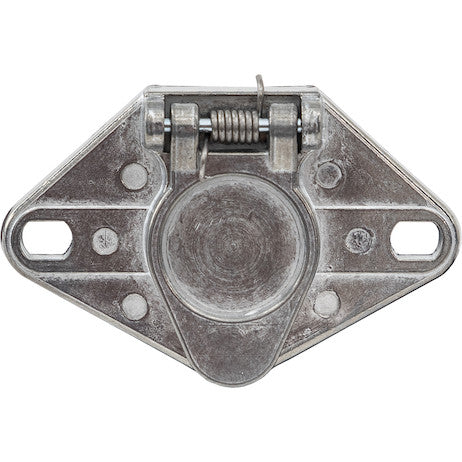
Buyers Products 6-Way Die-Cast Zinc Trailer Connector is a round terminal pin, truck-side connector. It attaches to your vehicle and is commonly used to make a power connection between the vehicle and a utility trailer. It features a durable, die-cast zinc construction with a spring-loaded door to protect the round terminal pins when not in use.
Specifications
| End Way (Number of Pins) | 6 |
|---|---|
| Mounting Type | Bolt-On |
| Pin Style | 6 Round |
| Start Way (Number of Pins) | 6 |
| Truck Side/Trailer Side | Truck Side |
The Buyers Products 6-Way Die-Cast Zinc Trailer Connector represents a robust and essential component in establishing a reliable electrical interface between a towing vehicle and a towed utility trailer. Engineered for durability and consistent performance, this truck-side connector is designed to meet the rigorous demands of various towing applications, ensuring critical safety and operational functionality during transit. Its sophisticated design integrates advanced material science with practical mechanical features to deliver a superior connection solution.
Advanced Engineering and Material Selection: Die-Cast Zinc Construction
At the core of this connector's exceptional performance is its die-cast zinc construction. Die casting is a metal casting process characterized by forcing molten metal under high pressure into a mold cavity. This method yields components with outstanding dimensional accuracy, excellent surface finish, and intricate details, making it ideal for precision parts like electrical connectors. Zinc, as the chosen material, offers a compelling combination of properties that are critically advantageous for this application.
Superior Mechanical Strength and Durability
Zinc alloys used in die casting, such as Zamak series alloys, possess impressive tensile strength and impact resistance. This inherent strength ensures that the connector can withstand the significant mechanical stresses encountered in towing environments, including vibrations, accidental impacts, and repeated mating/unmating cycles. Unlike plastic connectors that can become brittle over time or in extreme temperatures, a die-cast zinc housing maintains its structural integrity across a broad range of environmental conditions, significantly extending its operational lifespan. The rigidity of die-cast zinc also prevents distortion or deformation of the pin alignment, ensuring consistent and secure electrical contact.
Exceptional Corrosion Resistance
Towing equipment is frequently exposed to harsh outdoor elements, including moisture, road salts, chemicals, and abrasive debris. Zinc naturally exhibits excellent corrosion resistance, especially when compared to other common connector materials like steel, which can quickly succumb to rust. Furthermore, the die-casting process creates a dense, non-porous surface that further enhances its resistance to corrosive ingress. This inherent resilience against oxidation and galvanic corrosion is crucial for maintaining electrical continuity and preventing signal degradation over the long term, directly contributing to the safety and reliability of the trailer's lighting and auxiliary systems.
Thermal Stability and Conductivity
While not an electrical conductor for the primary current path, the thermal properties of die-cast zinc contribute to overall connector performance. Zinc has a relatively high thermal conductivity, which aids in dissipating any localized heat generated by electrical resistance within the connector itself, preventing thermal degradation of internal components or the surrounding wiring insulation. Its thermal stability ensures that the connector's physical dimensions remain consistent across varying ambient temperatures, preventing expansion or contraction that could compromise the electrical contacts or the integrity of the housing.
Manufacturing Precision and Consistency
The die-casting process allows for the production of components with extremely tight tolerances and intricate geometries. This precision is vital for ensuring that the round terminal pins are perfectly aligned and spaced, guaranteeing a secure and reliable connection with the mating trailer-side connector. High dimensional accuracy also ensures a consistent fit and finish for all units, signifying superior manufacturing quality and product reliability across the entire production run.
Functional Design: The Spring-Loaded Door Mechanism
A critical design feature that enhances both the durability and reliability of this connector is the integrated spring-loaded door. This mechanism is more than a mere cover; it is an engineered solution designed to protect the integrity of the electrical contacts and extend the service life of the connector.
Protection Against Environmental Contaminants
When the connector is not in use, the spring-loaded door provides a robust barrier against external elements. This includes dust, dirt, mud, sand, and other particulate matter commonly encountered on roadways or in off-road environments. By preventing these contaminants from entering the pin cavities, the door ensures that the electrical contact surfaces remain clean and free from insulating layers that could impede current flow or cause intermittent connections. Moisture ingress, whether from rain, snow, or high humidity, is also significantly mitigated, preventing corrosion and short circuits within the pin area.
Impact Resistance and Mechanical Shielding
The sturdy door, typically also made from die-cast zinc or a similarly robust material, acts as a physical shield for the delicate round terminal pins. It protects them from accidental impacts, scrapes, or bending that could occur during vehicle operation, parking, or maintenance activities. A bent or damaged pin can render the entire connector inoperable, making this protective feature indispensable for prolonged functionality.
Maintenance of Contact Integrity
Beyond environmental protection, the spring mechanism itself plays a subtle role in maintaining long-term contact integrity. By keeping the pins enclosed and clean, it ensures that when the connector is eventually mated with the trailer-side plug, the connection is free from impedance caused by contamination, leading to a more consistent and lower-resistance electrical path. The spring tension ensures the door remains firmly closed until intentionally opened, providing continuous protection.
The 6-Way Round Terminal Pin Configuration: Utility and Versatility
This connector features a 6-way configuration with round terminal pins, making it a highly versatile choice for a broad spectrum of utility trailers. The designation "6-way" refers to the six distinct electrical circuits that can be established between the towing vehicle and the trailer. The use of round pins is a common standard in many regions, known for providing robust and secure connections.
Standard Pin Assignments for 6-Way Connectors
While specific wiring color codes and functions can vary slightly by region or manufacturer, the following represents a common functional assignment for a 6-way round pin connector, particularly for utility trailers:
- Ground (White Wire): This is the essential common return path for all electrical circuits. A robust and properly connected ground is critical for the reliable operation of all trailer lights and auxiliary functions. Without a solid ground, circuits cannot complete, leading to flickering lights or complete system failure.
- Left Turn Signal and Brake Light (Yellow Wire): This circuit controls the left-side turn indicator and simultaneously activates the left-side brake light on the trailer. Modern trailer wiring often combines these functions into a single wire, requiring proper signal interpretation by the trailer's lighting system.
- Right Turn Signal and Brake Light (Green Wire): Analogous to the left-side circuit, this controls the right-side turn indicator and brake light.
- Tail Lights, Running Lights, and Marker Lights (Brown Wire): This circuit powers all necessary lights that illuminate when the vehicle's headlights or parking lights are on. This includes tail lights, side marker lights, and license plate lights, ensuring the trailer is visible from all angles during nighttime operation.
- Auxiliary Power (Blue Wire or Black Wire): This pin is typically used to provide a constant 12-volt power supply from the towing vehicle to the trailer. Its applications are varied and include powering interior lights on an enclosed trailer, charging a breakaway battery (if equipped), or operating a hydraulic pump for a dump trailer. For utility trailers, it's a common auxiliary power source.
- Electric Brake Control (Dark Blue Wire) / Reverse Lights (Purple Wire) / Auxiliary Charge Line: This sixth pin offers flexibility. For heavier utility trailers that might incorporate electric brakes, this pin would typically carry the signal from the towing vehicle's brake controller to the trailer's electric brakes. However, for smaller utility trailers without electric brakes, this pin might instead be used for reverse lights, providing illumination when backing up, or as an additional auxiliary power or charge line for specific trailer-mounted equipment. Given the product's description for "utility trailers," this pin most often serves an auxiliary power or reverse light function unless specifically configured for electric brakes.
The distinct separation of these six functions into individual pins ensures clear signal transmission and prevents interference between different electrical systems, which is paramount for safety and compliance with road regulations.
Round Pin Advantages
Round pins offer several advantages: they provide a substantial surface area for electrical contact, which minimizes resistance and heat generation. Their cylindrical shape facilitates easier alignment during connection compared to flat blade connectors, and they are generally more robust against bending or shearing forces. The precise fit within the corresponding female receptacles ensures a snug connection that resists vibration-induced disconnections.
Truck-Side Application and Compatibility
As a "truck-side" connector, this unit is designed to be permanently mounted on the towing vehicle. It serves as the output interface from the vehicle's electrical system, awaiting connection from the "trailer-side" plug. The design ensures seamless compatibility with standard 6-way round pin trailer-side connectors, facilitating quick and secure hook-ups.
Mounting Type: Bolt-On for Maximum Security
The "Bolt-On" mounting type specified for this connector underscores its commitment to security and reliability. Unlike some connectors that may clip or snap into place, a bolt-on installation provides a much more robust and permanent attachment to the vehicle's chassis, bumper, or custom bracket. This method minimizes the risk of the connector detaching due to severe vibrations, impacts, or accidental tugging on the trailer cable. Proper bolt-on installation ensures that the connector remains firmly anchored, maintaining the integrity of the wiring connections and preventing undue stress on the wiring harness.
Installation Principles and Best Practices
Proper installation is crucial for maximizing the performance and longevity of the 6-Way Die-Cast Metal Trailer Connector. While specific vehicle wiring configurations may vary, general principles apply:
- Secure Mounting: Utilize the bolt-on points to securely attach the connector to a rigid surface on the vehicle. Ensure that the mounting location is protected from direct impacts and excessive road debris, yet easily accessible for connecting the trailer.
- Wire Preparation: Strip wire insulation carefully to avoid damaging copper strands. Use appropriate crimp connectors or solder for wire terminals, ensuring all connections are robust and corrosion-resistant.
- Wiring Color Code Adherence: Match the vehicle's wiring to the standardized functions of the 6-way connector pins. Refer to the vehicle's owner's manual or a reliable wiring diagram to ensure correct pin-to-wire assignments. Common color codes (e.g., SAE J560) should be followed meticulously to prevent miswiring and potential damage or unsafe operation.
- Effective Grounding: The ground wire (typically white) must be connected to a clean, unpainted, and solid metal point on the vehicle's chassis. A poor ground connection is a common cause of trailer lighting malfunctions and should be meticulously established.
- Strain Relief: Ensure that the wiring harness entering the connector has adequate strain relief to prevent wires from pulling out of their terminals during vehicle movement or vibration.
- Environmental Sealing: After making all wire connections, ensure that any openings where wires enter the connector housing are properly sealed to prevent moisture and dirt ingress, further protecting the internal connections. Use dielectric grease on the pins to prevent corrosion and ensure smooth mating.
- Testing: Always perform a thorough test of all trailer functions (turn signals, brake lights, running lights, auxiliary power) with a test light or by connecting to a trailer before beginning any journey.
Applications and Operational Advantages
The 6-way connector is particularly well-suited for a variety of utility trailers where robust lighting functions and a dedicated auxiliary power circuit are required, but where electric trailer brakes might be less common or handled by a separate system (e.g., surge brakes).
Common Applications Include:
- Small to Medium Utility Trailers: For hauling equipment, landscaping materials, or general cargo, where essential lighting (tail, brake, turn) and perhaps an interior light or charge line are needed.
- Boat Trailers: Providing power for navigation lights (if applicable), brake/turn signals, and sometimes for charging a small battery on the boat.
- Horse Trailers (without electric brakes): For lighting and potentially powering small fans or internal lights.
- Agricultural Trailers: For lighting on farm wagons or implements that need to be road legal.
- Small RVs or Pop-Up Campers (without electric brakes): For all external lighting, and the auxiliary pin can power interior lights, water pumps, or charging the RV battery while driving.
The key operational advantage of this die-cast zinc connector lies in its unwavering reliability. Intermittent or failed electrical connections on a trailer can lead to serious safety hazards, including reduced visibility, miscommunication of turns or braking, and potential legal repercussions. By providing a consistently strong and protected electrical interface, this connector contributes directly to safer towing practices and enhanced peace of mind for the operator.
Maintenance and Longevity
While the die-cast zinc construction offers inherent durability, routine maintenance can further extend the lifespan and ensure optimal performance of the connector:
- Regular Inspection: Periodically check the connector housing for any signs of damage, cracks, or loose mounting bolts. Ensure the spring-loaded door operates smoothly and closes securely.
- Cleaning: Keep the pin cavities clean and free of debris. A small brush or compressed air can be used. Avoid abrasive cleaners that could damage the contact surfaces.
- Dielectric Grease: Apply a small amount of dielectric grease to the round terminal pins and within the pin cavities before connecting and after disconnecting the trailer. This non-conductive grease repels moisture, prevents corrosion, and facilitates smoother connections while ensuring proper electrical contact.
- Wiring Check: Inspect the visible wiring leading to and from the connector for fraying, cuts, or loose connections. Repair or replace damaged wiring promptly.
Conclusion: A Foundation for Reliable Towing
The 6-Way Die-Cast Metal Trailer Connector - Truck Side by Buyers Products is a meticulously engineered component that exemplifies durability, reliability, and precision. Its die-cast zinc construction provides unparalleled mechanical strength, corrosion resistance, and thermal stability, making it resilient in the most demanding towing environments. The protective spring-loaded door shields critical electrical contacts from environmental aggressors and physical damage, ensuring consistent signal integrity. With its standardized 6-way round pin configuration, it provides a versatile and secure electrical bridge for a wide range of utility trailers, empowering essential lighting functions and auxiliary power delivery.
For any towing operation, the integrity of the electrical connection is not merely a convenience but a fundamental safety requirement. This connector, through its superior design and material science, establishes that critical link with unwavering performance, contributing significantly to accident prevention and ensuring legal compliance on the road. Investing in such a high-quality truck-side connector means investing in the safety, efficiency, and longevity of your towing setup, guaranteeing reliable communication between your vehicle and trailer for countless journeys to come.