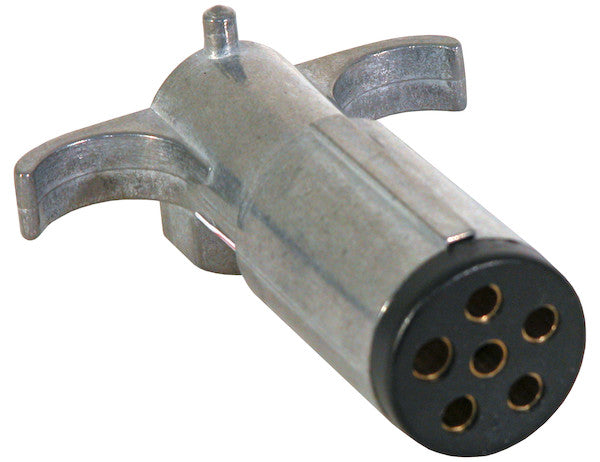
Buyers Products 6-Way Die-Cast Zinc Trailer Connector is a round terminal slot, trailer-side connector. It attaches to an existing trailer wiring lead, and is commonly used to make a power connection between the vehicle and a utility trailer. It features durable, die-cast zinc construction. The optional "spring style" cable guard helps protect your wiring.
Specifications
| End Way (Number of Pins) | 6 |
|---|---|
| Pin Style | 6 Round |
| Start Way (Number of Pins) | 6 |
| Truck Side/Trailer Side | Trailer Side |
In the demanding realm of commercial and utility towing, the integrity and reliability of electrical connections between a tow vehicle and its trailer are paramount. The 6-Way Die-Cast Metal Trailer Connector, specifically engineered as a trailer-side component by Buyers Products, represents a critical interface designed to facilitate robust power and signal transmission. This connector is not merely a conduit; it is a meticulously engineered component that ensures the seamless operation of essential trailer functions, from lighting systems to auxiliary power and critical braking mechanisms. Its design and construction emphasize durability, electrical efficiency, and user-friendly installation, making it an indispensable asset for a diverse range of utility trailers.
Advanced Material Science: The Die-Cast Zinc Advantage
The selection of die-cast zinc as the primary material for this trailer connector is a testament to Buyers Products' commitment to superior performance and longevity. Zinc, particularly when processed through the die-casting method, offers a unique combination of physical and mechanical properties that are exceptionally well-suited for the harsh operating environments encountered by trailer components.
Intrinsic Properties of Zinc for Electrical Connectors
- Corrosion Resistance: Zinc exhibits excellent inherent resistance to rust and oxidation, which is vital for components exposed to varying weather conditions, road salts, moisture, and other corrosive agents. The die-casting process further enhances this by creating a dense, non-porous surface that acts as a formidable barrier against environmental degradation.
- Mechanical Strength and Durability: Die-cast zinc possesses high tensile strength and impact resistance, allowing the connector to withstand physical abuses such as accidental impacts, vibrations from road travel, and repeated coupling/uncoupling cycles without compromising structural integrity. This resilience prevents deformation or cracking, which could otherwise expose internal wiring or impair connectivity.
- Electrical Conductivity: While copper is superior, zinc offers adequate electrical conductivity for the housing and structural elements, and critically, it provides a stable platform for the conductive internal terminals. Its thermal properties also aid in dissipating heat generated during current flow, contributing to the overall stability of the electrical connection.
- Dimensional Stability: Die-cast zinc components maintain precise dimensions across a wide range of temperatures, ensuring that the connector's form factor remains consistent. This precision is crucial for ensuring a tight, secure fit with the vehicle-side connector, preventing intermittent connections caused by loose tolerances.
The Precision of Die-Casting for Enhanced Performance
Die-casting is a manufacturing process that injects molten metal under high pressure into a mold cavity. For the Buyers Products 6-Way Trailer Connector, this method yields several distinct advantages:
- Exceptional Surface Finish: Die-cast parts emerge with a smooth, aesthetically pleasing surface finish, often eliminating the need for extensive secondary finishing operations. This smooth surface also contributes to better sealing and reduced accumulation of dirt and debris.
- Intricate Design Capabilities: The high-pressure injection allows for the creation of complex geometries and thin wall sections, which are often necessary for optimizing internal terminal placement, cable routing, and the ergonomic design of the connector housing.
- Tight Tolerances: Die-casting is renowned for producing parts with very tight dimensional tolerances. This precision is critical for electrical connectors to ensure reliable mating with their counterparts, preventing signal loss or power interruptions due to misalignment.
- Cost-Effectiveness for Mass Production: While the initial tooling costs for die-casting can be higher, the rapid production cycles, minimal post-processing requirements, and material efficiency make it a highly cost-effective method for large-volume manufacturing of high-quality, durable components.
In essence, the die-cast zinc construction of this trailer connector translates directly into a product that offers superior protection for internal wiring, maintains reliable electrical contact under challenging conditions, and exhibits an extended operational lifespan, thereby reducing maintenance requirements and total cost of ownership.
Electrical Interconnection Fundamentals: The 6-Way Round Configuration
The 6-way round terminal slot design is a widely recognized standard in utility trailer applications, offering a comprehensive set of electrical pathways for essential trailer functions. This specific configuration, being a "trailer-side" connector, is engineered to directly integrate with the trailer's existing wiring harness, establishing a robust link to the tow vehicle's electrical system.
Standard Pin Assignments and Functional Allocation
Understanding the standardized pin assignments is fundamental to the correct installation and operation of any trailer connector. For a typical 6-way round trailer connector, the pins are allocated to specific functions to ensure universally compatible and safe operation. While minor variations can occur, the most common assignments are:
- White Wire (Ground): This is the common return path for all electrical circuits on the trailer. A robust, low-resistance ground connection is paramount for the proper functioning of all lights and electrical accessories. Any compromise in the ground circuit can lead to erratic lighting behavior, dim lights, or complete system failures.
- Blue Wire (Electric Brakes): This circuit carries the controlled power signal from the tow vehicle's brake controller to the electric brake magnets on the trailer. Activation of the vehicle's brakes or manual override on the brake controller sends a modulated voltage through this wire to apply proportional braking force to the trailer.
- Green Wire (Tail/Running Lights): This wire energizes the trailer's tail lights, license plate lights, and all side marker lights. These lights are essential for night-time visibility and are activated whenever the tow vehicle's headlights or parking lights are on.
- Brown Wire (Right Turn/Stop Lights): This circuit controls the illumination of the trailer's right-hand turn signal and brake light. It synchronizes with the tow vehicle's right turn signal and activates when the vehicle's brake pedal is pressed.
- Yellow Wire (Left Turn/Stop Lights): Mirroring the brown wire, this circuit manages the trailer's left-hand turn signal and brake light, operating in unison with the tow vehicle's corresponding signals.
- Black Wire (12V Auxiliary Power / Reverse Lights / Charge Line): This versatile circuit can be utilized for several functions. Commonly, it provides a constant 12-volt power supply for auxiliary features within the trailer (e.g., interior lights, charging a trailer battery, or operating certain hydraulic pumps). Alternatively, it can be wired to control reverse lights on the trailer, or serve as a charge line for a trailer-mounted battery. The specific application depends on the trailer's configuration and the tow vehicle's wiring setup.
The round terminal slots are designed to securely house the corresponding wires, minimizing the risk of accidental disconnection or short circuits. The precision of the die-cast housing ensures that each terminal maintains its designated position, preventing cross-talk or interference between circuits.
Optimizing Electrical Continuity and Signal Integrity
Achieving optimal electrical continuity is critical for trailer performance and safety. The design of the Buyers Products 6-Way Connector focuses on several aspects to ensure reliable current flow:
- Secure Wire Termination: The connector provides robust points for securing the trailer's wiring leads. Proper crimping or soldering techniques, coupled with the connector's internal design, prevent wire pull-out and maintain low-resistance connections.
- Contact Pressure: The internal terminal design, in conjunction with the precise manufacturing tolerances of the die-cast housing, ensures adequate contact pressure between the trailer-side pins and the vehicle-side receptacles. This firm contact is essential for minimizing electrical resistance, preventing arcing, and ensuring consistent power and signal transfer, even under vibration.
- Protection Against Contaminants: The solid die-cast construction provides a protective enclosure for the electrical terminals, shielding them from moisture, dirt, dust, and debris. This environmental sealing is crucial for preventing corrosion on contact surfaces, which can rapidly degrade electrical performance.
Current and Voltage Considerations
Trailer electrical systems typically operate on a 12-volt DC standard. The 6-Way Die-Cast Connector is engineered to handle the cumulative current draws of typical utility trailer loads, which include multiple lighting circuits and potentially an electric brake system. The robust materials and design minimize voltage drop across the connection, ensuring that adequate power reaches all trailer components for optimal performance and brightness of lights. The choice of appropriate wire gauges during installation, matching the connector's capacity, is crucial to prevent overheating and ensure long-term reliability.
Mechanical Design and Operational Integrity
Beyond its electrical functionality, the mechanical design of the 6-Way Die-Cast Metal Trailer Connector underscores its suitability for rigorous operational demands. Every aspect, from the robust housing to the cable management features, is engineered to enhance durability, user safety, and ease of maintenance.
Robust Housing and Environmental Protection
The inherent strength and corrosion resistance of die-cast zinc provide a formidable protective housing for the delicate electrical connections within. This robust enclosure safeguards against:
- Physical Impact: The connector is resilient against knocks, scrapes, and minor impacts that are common during coupling, uncoupling, and general trailer usage.
- Vibration: Constant road vibrations can loosen connections and damage wiring. The solid construction and secure internal components of the die-cast connector mitigate these effects, maintaining connection integrity.
- Environmental Exposure: Rain, snow, sleet, mud, dust, and corrosive road chemicals are daily challenges for trailer connectors. The non-porous nature of die-cast zinc, combined with tight-fitting components, creates an effective barrier against ingress, protecting the terminals from oxidation and short-circuiting.
- Temperature Extremes: From freezing winter temperatures to scorching summer heat, the connector's material properties ensure stable performance without degradation or brittle failure.
Advanced Cable Management and Strain Relief
A critical feature that elevates the reliability of this connector is the optional "spring style" cable guard. This component serves a vital role in cable management and protecting the wire connection points:
- Strain Relief: The cable guard absorbs mechanical stress and flexing that would otherwise be directly transmitted to the internal wire terminals. By distributing bending forces over a larger area, it prevents premature fatigue, fraying, or breakage of individual wire strands where they enter the connector. This significantly extends the lifespan of the wiring harness.
- Protection Against Abrasion: As the trailer lead cable is often dragged or flexed against various surfaces, the spring guard acts as an outer protective layer, shielding the cable jacket from abrasion and cuts.
- Organized Cable Entry: It helps maintain an organized and tidy entry point for the wiring into the connector, reducing tangling and improving the overall professional appearance of the installation.
The integration of such a strain relief mechanism is a clear indicator of a design philosophy that prioritizes long-term operational integrity and safety.
Ergonomics and User-Centric Design
While durability and electrical performance are paramount, the practicality of installation and everyday use is also a key design consideration. The die-cast housing is typically shaped to provide a secure grip, facilitating easier coupling and uncoupling, even when wearing gloves or in adverse weather conditions. The round terminal slot design simplifies wire insertion and connection, contributing to a more straightforward and less error-prone installation process for technicians and users alike.
Application Spectrum and System Integration
The 6-Way Die-Cast Metal Trailer Connector is specifically engineered as a trailer-side component, making it the essential interface for connecting a wide array of utility trailers to their tow vehicles. Its versatility and robust design allow for broad application across various towing scenarios, ensuring safety and functionality.
Versatility Across Utility Trailer Categories
This connector is ideally suited for:
- Small to Medium Utility Trailers: Including single or tandem axle utility trailers, cargo trailers, landscaping trailers, ATV/UTV trailers, and small boat trailers. For these applications, the 6-way configuration typically covers all essential lighting functions (tail, stop, turn, markers) and often provides auxiliary power for minor loads or electric brakes, if equipped.
- Trailers with Electric Brakes: The inclusion of a dedicated pin for electric brake control makes this connector a standard choice for trailers requiring supplementary braking systems to comply with safety regulations and enhance stopping power.
- Trailers Requiring Auxiliary Power: For utility trailers equipped with interior lighting, small pumps, or a battery charging circuit, the auxiliary power pin provides the necessary 12V supply from the tow vehicle.
Its robust construction ensures reliable performance regardless of the specific cargo or typical operating environment of the trailer.
Installation Protocols and Best Practices
Proper installation of the trailer-side connector is crucial for ensuring system reliability and safety. Key steps and considerations include:
- Wire Identification: Accurately identify the function of each wire in the trailer's existing wiring lead, referencing standard color codes (White for Ground, Blue for Brakes, Green for Tail, Brown for Right Turn/Stop, Yellow for Left Turn/Stop, Black for Auxiliary). A multimeter can be used to verify circuit functions if color codes are ambiguous.
- Stripping and Termination: Carefully strip the insulation from each wire to the appropriate length. Wires should be securely terminated to the connector's terminals using high-quality crimp connectors or by soldering. Ensure a clean, secure electrical contact for each wire.
- Strain Relief Integration: If utilizing the optional "spring style" cable guard, ensure it is correctly positioned and secured to provide maximum strain relief for the cable as it exits the connector body.
- Secure Assembly: Assemble the connector housing securely, ensuring all seals (if present) are properly seated to prevent moisture and debris ingress.
- Testing: After installation, thoroughly test all trailer functions (tail lights, brake lights, turn signals, electric brakes, auxiliary power) by connecting to a compatible tow vehicle or a dedicated trailer light tester. Verify that each function operates correctly and without flickering or intermittency.
Adherence to these practices minimizes future troubleshooting and ensures consistent, safe operation.
Maintenance for Sustained Performance
While the die-cast zinc construction offers inherent durability, routine inspection and maintenance can significantly prolong the connector's lifespan and ensure uninterrupted electrical function:
- Regular Cleaning: Periodically clean the connector pins and receptacles to remove dirt, grease, and corrosion. A non-conductive contact cleaner can be used.
- Corrosion Inspection: Visually inspect for any signs of corrosion on the pins or within the housing. Mild corrosion can often be removed with a fine wire brush or abrasive pad.
- Cable Integrity: Check the trailer lead cable for any signs of fraying, cracking in the insulation, or damage, particularly where it enters the connector and along its length.
- Tightness of Connections: Ensure the connector housing remains securely fastened and that the wiring inside is not loose.
- Lubrication: Application of dielectric grease to the pins can further enhance protection against moisture and corrosion, improving electrical conductivity and easing coupling/uncoupling.
Proactive maintenance ensures that the connector remains a reliable link in the vehicle-trailer system, preventing unexpected electrical failures.
The Significance of a Reliable Trailer Connector
The Buyers Products 6-Way Die-Cast Metal Trailer Connector is more than just an electrical component; it is a fundamental element in ensuring the safe, efficient, and compliant operation of any utility trailer. Its technical design and material composition reflect a deep understanding of the challenges faced in towing applications.
Safety and Regulatory Adherence
The consistent and reliable transmission of signals for lighting and braking systems is directly tied to road safety. Malfunctioning lights or inoperative brakes due to a faulty connector can lead to severe accidents. By providing a dependable electrical link, this connector directly contributes to compliance with federal and local transportation regulations pertaining to trailer visibility and braking requirements. Its robust nature minimizes the risk of sudden electrical failures that could compromise operational safety.
Economic Benefits and Longevity
Investing in a high-quality, die-cast zinc connector translates into significant economic benefits over the product's lifespan. Its exceptional durability reduces the frequency of replacements and repairs, minimizing downtime for maintenance and associated labor costs. The superior corrosion resistance and mechanical strength mean the connector withstands harsh environments for longer periods, providing a lower total cost of ownership compared to less robust alternatives. This reliability ensures that commercial operations remain uninterrupted and efficient.
Conclusion
The Buyers Products 6-Way Die-Cast Metal Trailer Connector – Trailer Side stands as an exemplary product in its category, combining advanced material science with meticulous electrical and mechanical engineering principles. Its die-cast zinc construction provides unparalleled durability, corrosion resistance, and dimensional stability, crucial for components operating in challenging outdoor environments. The standardized 6-way round configuration, with its carefully defined pin assignments, ensures comprehensive functionality for lighting, braking, and auxiliary power systems. Furthermore, features like the optional spring-style cable guard underscore a commitment to long-term reliability by mitigating common points of failure such as wire strain and abrasion.
As a critical interface between a tow vehicle and a utility trailer, this connector plays an indispensable role in ensuring safe operation, regulatory compliance, and sustained electrical performance. For professionals and commercial operators who demand reliability and longevity from their equipment, the Buyers Products 6-Way Die-Cast Metal Trailer Connector offers a technically superior and economically advantageous solution, designed to endure the rigors of continuous use and contribute to seamless towing operations for years to come.