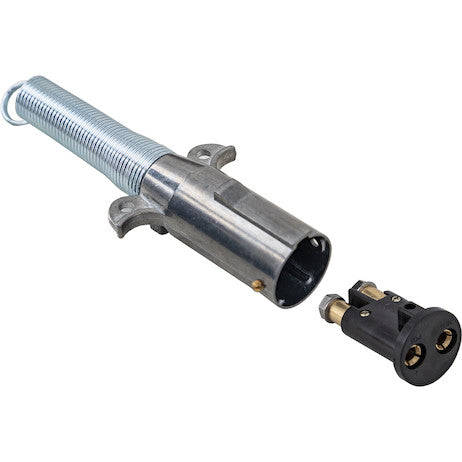
The 2 Way Trailer Connector from Buyers Products provides a secure electrical connection between your truck and your trailer. It's a round-pin connector ideal for a powering an electric tarp. The connector is available for either truck or trailer-side, in a vertical or horizontal pin arrangement. It features sturdy, die cast zinc construction. The trailer-side connector has a spring to protect wiring.
Specifications
| End Way (Number of Pins) | 2 |
|---|---|
| Pin Style | 2 Round Vertical |
| Start Way (Number of Pins) | 2 |
| Truck Side/Trailer Side | Trailer Side |
Advanced Technical Overview: The 2-Way Die-Cast Zinc Trailer Connector for Robust Trailer-Side Electrical Connectivity
In the demanding realm of commercial and heavy-duty trailering, the integrity of the electrical connection between a tow vehicle and its trailer is paramount. This 2-Way Die-Cast Zinc Trailer Connector, specifically engineered for the trailer side with vertical pins and an integrated spring, represents a pinnacle of reliable electrical interface technology. Designed to facilitate robust power transmission for critical trailer functions, particularly high-current applications such as electric tarp systems, this connector combines advanced material science with thoughtful mechanical design to deliver unparalleled durability and operational security.
Precision Engineering and Material Excellence: Die-Cast Zinc Construction
The foundational strength and resilience of this connector derive from its die-cast zinc construction. Die casting is a metal casting process that is characterized by forcing molten metal under high pressure into a mold cavity. This method yields components with exceptional dimensional accuracy, superior surface finish, and a high degree of structural integrity, which are critical for an electrical connector subjected to continuous environmental and mechanical stress.
Zinc alloys, specifically those formulated for die casting, possess a unique combination of desirable properties:
- High Strength and Hardness: Zinc alloys exhibit excellent tensile strength and hardness, making the connector highly resistant to mechanical deformation, impact, and crushing forces. This is particularly vital in trailer applications where connectors can be exposed to accidental bumps, scrapes, or direct impacts from road debris.
- Superior Corrosion Resistance: Unlike some other common metals, die-cast zinc inherently offers significant resistance to oxidation and corrosion, especially when exposed to moisture, road salt, chemicals, and other corrosive elements prevalent in outdoor and automotive environments. The formation of a stable, passive oxide layer on the surface of zinc provides a self-protective barrier, enhancing the connector's longevity and maintaining electrical conductivity over extended periods. Further surface treatments, often applied post-casting, can augment this resistance, providing an additional layer of defense against environmental degradation.
- Excellent Electrical Conductivity: While the primary current path is through the internal pins, the housing material's role in providing a stable, protective enclosure that does not interfere with electrical signals is crucial. Zinc's properties ensure no detrimental galvanic reactions with typical wiring materials, maintaining the integrity of the electrical circuit.
- Thermal Stability: Trailer connectors are often exposed to varying temperatures, from extreme cold to intense heat. Die-cast zinc maintains its mechanical properties across a wide temperature range, preventing material degradation, cracking, or softening that could compromise the connection.
- Damping Characteristics: Zinc alloys possess good vibration damping capabilities. In a high-vibration environment such as a moving trailer, this property helps to mitigate stress on the internal components and wire connections, reducing the likelihood of fatigue failures over time.
- Recyclability: From an environmental perspective, zinc is a highly recyclable material, aligning with sustainable manufacturing practices and potentially contributing to a lower overall environmental footprint over the product's lifecycle.
The choice of die-cast zinc for this trailer connector is not merely coincidental; it is a deliberate engineering decision based on a comprehensive understanding of the operational challenges faced by trailer electrical systems. This robust housing provides an impenetrable shield for the delicate internal electrical contacts, safeguarding against ingress of contaminants and physical damage, thereby ensuring a consistently secure and reliable electrical conduit.
Understanding the 2-Way Electrical Configuration
The term "2-Way" signifies that this connector is designed to facilitate the transmission of two distinct electrical circuits. In the context of trailer wiring, these two circuits typically correspond to a power supply and a ground return. This minimalist configuration is optimized for applications requiring dedicated, high-current power to a single function, where additional signaling or multi-functional control lines are not necessary. This design philosophy offers several advantages:
- Simplicity and Reliability: With fewer pins, the potential for miswiring is reduced, and the integrity of each individual circuit is maximized. The fewer points of contact, the less complex the system, leading to inherent reliability. This simplicity also makes troubleshooting more straightforward should an issue arise.
- Dedicated High-Current Capacity: Unlike multi-way connectors that distribute current across numerous smaller gauge wires for various signals (e.g., turn signals, brake lights), a 2-way connector can dedicate larger gauge wiring to handle substantial current loads. This is critical for power-intensive accessories like electric tarp motors, which can draw significant amperage during operation. The robust design ensures minimal voltage drop and efficient power delivery, preventing overheating and ensuring the motor operates at peak efficiency.
- Reduced Cross-Talk and Interference: By segregating the power and ground into a dedicated connector, the risk of electrical interference or cross-talk with other trailer electrical systems (e.g., lighting, ABS) is eliminated. This ensures that the powered accessory receives clean, uninterrupted power.
- Ease of Installation and Maintenance: The straightforward nature of a 2-way system simplifies installation procedures and subsequent maintenance tasks. Wiring connections are clearly defined, streamlining the process of integration into existing trailer electrical architectures.
The 2-way system embodied by this connector is therefore a deliberate engineering choice to provide a highly efficient, robust, and reliable power conduit for specific, high-demand trailer accessories.
Pin Configuration: 2 Round Vertical Pins for Optimal Contact
The precise configuration of the electrical contacts within a connector is pivotal to its performance and longevity. This connector features "2 Round Vertical Pins" on the trailer side, a design choice predicated on several functional benefits:
- Round Pin Robustness: Round pins are inherently strong and resistant to bending or breaking, especially when manufactured from high-quality conductive alloys. Their circular cross-section provides a larger surface area for contact within the receptacle, leading to lower contact resistance and improved current carrying capacity. Furthermore, the mating action of round pins often involves a wiping or self-cleaning effect, helping to clear away minor contaminants that could otherwise impede electrical flow.
- Vertical Orientation: The vertical alignment of the pins offers a deliberate advantage in specific mounting scenarios. This orientation can optimize space utilization on the trailer chassis and facilitate easier cable routing, particularly when integrated into existing wiring harnesses or mounted in constrained spaces. It also ensures consistent mating behavior with the corresponding truck-side connector, reducing the potential for misalignment.
- Trailer-Side Specific Design: As a "Trailer Side" connector, its internal wiring is designed to connect directly into the trailer's electrical system, typically drawing power from the main power feed that originates from the tow vehicle via the truck-side connector. This distinct designation ensures compatibility and proper electrical polarity when paired with its counterpart. The trailer-side connector will typically feature the male pins designed to insert into the female receptacles of the truck-side connector, forming a secure and positive electrical junction.
- Secure Mating Geometry: The design ensures a snug, friction-fit connection with the truck-side receptacle, resisting accidental disconnection due to vibration or minor pulling forces. The vertical alignment also contributes to a more intuitive mating process, reducing the risk of damage during connection.
The combination of robust round pins and a strategically chosen vertical orientation culminates in a contact system that prioritizes reliability, ease of use, and long-term electrical stability, even under the arduous conditions encountered during trailer operation.
The Critical Role of the Integrated Spring Mechanism
A distinctive and highly functional feature of this trailer-side connector is its integrated spring mechanism. This component is not merely an aesthetic addition; it serves a crucial engineering purpose in enhancing the durability and operational lifespan of the connector assembly and the attached wiring.
The spring is strategically positioned at the cable entry point of the connector housing, acting as a strain relief and protection device. Its primary functions include:
- Strain Relief: The spring absorbs and distributes mechanical stress that would otherwise concentrate at the vulnerable point where the cable exits the rigid connector housing. As the trailer maneuvers, vibrates, or experiences tension from the connected cable, the spring allows for controlled flexing and movement of the wire, preventing sharp bends, kinks, or pulls that can lead to conductor fatigue, insulation damage, or eventual wire breakage. This is especially critical in dynamic environments where cables are constantly subject to movement and vibration.
- Abrasion Protection: By providing a smooth, flexible transition zone, the spring shields the cable insulation from abrasion against the connector housing itself or surrounding components. Constant rubbing in a fixed, sharp angle can wear through insulation, exposing conductors and leading to shorts or electrical faults. The spring mitigates this risk by maintaining a gentle, curved path for the wire.
- Enhanced Durability: The cumulative effect of strain relief and abrasion protection is a significant enhancement in the overall durability and lifespan of the cable assembly. Wires that are adequately protected against mechanical stress are less prone to premature failure, reducing maintenance costs and downtime.
- Environmental Barrier: While not its primary function, the spring can also contribute to preventing the ingress of dust, dirt, and moisture into the cable entry point, particularly when properly sealed or combined with other sealing methods. By maintaining a snug fit around the cable, it reduces gaps where contaminants could enter and degrade electrical connections.
The inclusion of this integrated spring mechanism underscores the thoughtful engineering behind this connector, transforming a potential point of weakness into a robust, protective feature that significantly extends the operational integrity of the entire electrical interface.
Application Focus: The Ideal Connector for Electric Tarp Systems
The specific mention that this connector is "ideal for powering an electric tarp" highlights a critical application where its robust design characteristics truly shine. Electric tarp systems are increasingly common on dump trucks, open-top trailers, and other hauling vehicles, offering numerous advantages over manual tarping, including enhanced safety, reduced labor, and improved operational efficiency. However, these systems present unique electrical demands:
- High Current Draw: Electric tarp motors typically require substantial electrical current, especially during the initial deployment or retraction phases when overcoming inertia and aerodynamic resistance. A reliable 2-way connector with robust pins is essential to efficiently transmit this power without excessive voltage drop or heat generation. Inadequate connectors can lead to sluggish tarp operation, motor strain, or even premature motor failure.
- Frequent Cycling: Tarp systems are often actuated multiple times a day. This frequent cycling means the connector must endure repeated power surges and provide consistent, low-resistance contact throughout its operational life.
- Environmental Exposure: Tarp systems operate in direct exposure to the elements—rain, snow, dust, debris, and extreme temperatures. The die-cast zinc housing provides the necessary environmental protection, ensuring that the electrical connection remains uncompromised despite harsh external conditions.
- Vibration and Movement: The dynamic environment of a moving trailer, coupled with the mechanical action of the tarp system itself, generates considerable vibration and movement. The robust pin design and the integrated spring are critical in maintaining continuous electrical contact and preventing wire fatigue under these conditions.
By providing a dedicated, high-capacity, and environmentally protected electrical pathway, this 2-way die-cast zinc connector ensures that electric tarp systems receive the stable and consistent power they need to function reliably, maximizing operational uptime and safety for hauling operations.
Installation Best Practices and Compatibility Considerations
While the connector itself is designed for robustness, its optimal performance hinges on correct installation. Users should adhere to professional wiring standards and best practices:
- Wire Gauge Selection: Always match the wire gauge to the current draw of the electric tarp motor and the length of the cable run. Using undersized wire can lead to excessive voltage drop, heat buildup, and potential fire hazards. Consult the tarp system manufacturer's specifications for recommended wire gauges.
- Secure Terminations: Wires should be properly stripped, crimped with high-quality terminals, and soldered if appropriate, ensuring a mechanically and electrically sound connection to the connector's internal terminals. Use heat-shrink tubing or other sealing methods to protect these terminations from moisture and corrosion.
- Proper Mounting: The trailer-side connector should be securely mounted to a rigid part of the trailer chassis using appropriate fasteners. The mounting location should be chosen to minimize exposure to direct impacts and to allow for adequate cable routing without sharp bends or undue strain.
- Cable Management: After connecting the wiring to the trailer-side connector, ensure that the cable leading to the tarp motor is properly routed and secured. Use cable clamps or ties at regular intervals to prevent the cable from chafing, sagging, or snagging on moving parts. The integrated spring will provide strain relief at the connector exit, but additional support for the cable run is essential.
- Compatibility: This connector is designed to mate with a corresponding 2-Way Die-Cast Zinc Trailer Connector (Truck Side) with vertical pins. Ensuring compatibility between the truck and trailer connectors is fundamental for proper electrical function and a secure physical connection.
- Fuse Protection: Always install an appropriately rated fuse or circuit breaker in the power circuit as close to the power source (typically the truck's battery) as possible. This protects the wiring and the tarp motor from overcurrent situations and short circuits.
By following these guidelines, installers can ensure that the 2-Way Die-Cast Zinc Trailer Connector delivers its full potential in terms of reliability and safety.
Maintenance and Longevity
Despite its robust construction, periodic inspection and minor maintenance can further extend the lifespan and ensure the continued reliability of the connector:
- Regular Visual Inspection: Check the connector housing for any signs of physical damage, cracks, or deformation. Inspect the cable entry point and the integrity of the integrated spring.
- Pin Examination: Ensure the vertical pins are clean, free of corrosion, and not bent or damaged. Minor corrosion can often be removed with a fine-grit abrasive pad or specialized electrical contact cleaner.
- Cleanliness: Keep the connector free from excessive dirt, mud, and road grime. A simple wipe-down with a damp cloth can suffice. For stubborn buildup, non-abrasive cleaners can be used, ensuring they are suitable for electrical components.
- Dielectric Grease: Applying a small amount of high-quality dielectric grease to the pins can enhance protection against moisture and corrosion, and improve mating performance.
- Wiring Integrity: Periodically inspect the wiring leading to and from the connector for signs of chafing, fraying, or insulation damage. Address any issues promptly to prevent electrical faults.
Proactive maintenance, even if minimal, can significantly contribute to the connector's long-term performance and prevent unexpected electrical issues that could lead to costly downtime.
Compliance and Safety Assurance
While specific industry certifications are not detailed, the design principles inherent in this 2-Way Die-Cast Zinc Trailer Connector are aligned with fundamental safety and performance expectations within the heavy-duty vehicle industry. Connectors of this type are expected to meet certain standards for electrical isolation, current carrying capacity, and mechanical durability. A secure electrical connection is not just about functionality; it's a critical safety component, preventing:
- Electrical Shorts and Fires: A properly functioning, robust connector prevents exposed wires or unintended electrical pathways that could lead to short circuits and potential fires.
- Power Loss: Intermittent or complete power loss to vital accessories like electric tarps can disrupt operations, create safety hazards during loading/unloading, or lead to non-compliance with cargo containment regulations.
- System Damage: Unstable power delivery or voltage fluctuations due to poor connections can stress and potentially damage the electric motor and control systems of the tarp.
The construction and design of this connector contribute positively to the overall safety profile of the trailer's electrical system, supporting reliable operation and mitigating risks associated with electrical failures in demanding applications.
Conclusion
The 2-Way Die-Cast Zinc Trailer Connector with vertical pins and an integrated spring represents a meticulously engineered solution for critical trailer-side electrical connections. Its robust die-cast zinc housing provides unparalleled protection against environmental and mechanical stresses, while the dedicated 2-way round pin configuration ensures efficient, high-current power delivery, particularly for demanding applications like electric tarp systems. The integrated spring mechanism is a testament to its thoughtful design, significantly enhancing cable durability and preventing premature wire fatigue. By combining superior material science with practical mechanical features, this connector stands as a testament to reliability, longevity, and operational efficiency in the challenging world of commercial trailering, ensuring that vital trailer functions remain powered securely and consistently.