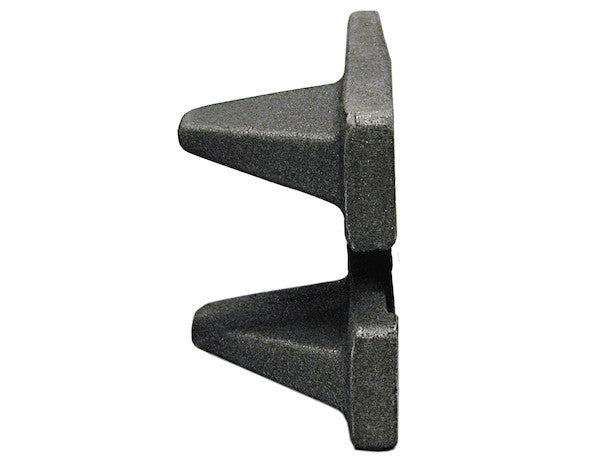
Buyers Products Forged Steel Tailgate Latch Bracket.
Specifications
| Description | Hardware kit for tailgate latch |
|---|---|
| Diagram No. | (1) |
Comprehensive Technical Overview: The Hardware Kit for Tailgate Latch with Forged Steel Bracket
The integrity and operational security of a vehicle's tailgate are paramount, especially in commercial, industrial, and agricultural applications where cargo retention and operator safety are critical. This product, identified as a Hardware Kit for Tailgate Latch, centered around the robust Buyers Products Forged Steel Tailgate Latch Bracket, represents a pinnacle in engineering for demanding environments. This detailed technical description will delve into the material science, design principles, components, applications, and performance advantages that collectively position this hardware kit as an indispensable solution for rigorous operational demands.
The Fundamental Importance of a Secure Tailgate Latch System
A tailgate latch system is far more than a simple fastening mechanism; it is a critical safety component designed to secure the tailgate, prevent the unintended ejection of cargo during transit, and protect personnel from potential hazards. In dynamic environments, such as those experienced by dump trucks, utility trailers, or heavy-duty pickups, the latch system must withstand constant vibration, shock loads, environmental exposure, and repetitive operational cycles. A failure in this system can lead to catastrophic consequences, including lost cargo, damage to other vehicles, environmental contamination, and severe personal injury. Consequently, the design, material selection, and manufacturing quality of each component within the hardware kit must meet stringent performance criteria.
Material Excellence: The Forged Steel Advantage
At the core of this kit's exceptional durability is the Buyers Products Forged Steel Tailgate Latch Bracket. The selection of forged steel is a deliberate engineering choice that confers superior mechanical properties compared to components manufactured through casting, machining from plate, or stamping. Understanding the metallurgy and manufacturing process is key to appreciating this advantage.
The Forging Process Defined
Forging is a manufacturing process that involves shaping metal using localized compressive forces. For steel, this typically occurs at elevated temperatures (hot forging), though cold forging processes also exist. During hot forging, the steel is heated above its recrystallization temperature, allowing for significant plastic deformation without fracturing. The key benefit of forging is the alignment of the steel’s internal grain structure with the component's contours, a phenomenon known as “grain flow.” Unlike cast components, which have a random grain structure and are prone to internal voids, or machined components that cut across grain lines, forged parts exhibit an optimized, directional grain flow that enhances strength and resistance to fatigue.
Mechanical Properties Conferred by Forging
- Superior Strength-to-Weight Ratio: Forged steel possesses higher tensile strength, yield strength, and impact strength than its cast or machined counterparts. This allows for components that are robust yet potentially lighter for their load-bearing capacity.
- Exceptional Fatigue Resistance: The continuous grain flow and refined microstructure inherent in forged steel significantly improve its resistance to fatigue failure. This is paramount for a tailgate latch bracket, which undergoes countless load cycles throughout its service life.
- Enhanced Impact Toughness: Forged components are less susceptible to brittle fracture under sudden shock loads, a common occurrence in vehicle applications due to road conditions, cargo shifts, or operational impacts.
- Reduced Internal Defects: The forging process eliminates internal gas porosity, shrinkage voids, and other metallurgical defects that can compromise the structural integrity of castings. This results in a consistently denser, more homogeneous material.
- Improved Wear Resistance: The compact grain structure and increased hardness (often further enhanced by subsequent heat treatment) contribute to superior wear resistance, ensuring longevity in friction-prone areas.
The use of forged steel for the primary latch bracket ensures that the most critical structural component of the tailgate system can withstand the harshest operational stresses, providing unparalleled reliability and an extended service life. Depending on the specific steel alloy chosen by Buyers Products, further heat treatment (e.g., quenching and tempering) may be applied to optimize properties such such as hardness, toughness, and ductility, making the bracket ideally suited for its high-stress application.
Components of a Comprehensive Hardware Kit
While the description highlights the "Buyers Products Forged Steel Tailgate Latch Bracket" and specifies a "Hardware kit for tailgate latch" with "Diagram No. (1)," a complete and robust kit typically includes a meticulously engineered suite of components designed to work in synergy for optimal performance. Based on industry standards and typical tailgate latch designs, such a kit would encompass the following critical elements:
1. The Tailgate Latch Bracket (Forged Steel)
As discussed, this is the anchor point, typically mounted to the tailgate or the vehicle's chassis. Its design incorporates precise mounting holes, pivot points for the latch arm, and often a robust striker surface or receiver for the mating latch pin. The forged steel construction ensures that this bracket can absorb and distribute significant loads without deformation or fracture.
2. Latch Pin or Striker Bolt
This component engages with the latch mechanism on the bracket. It is typically a hardened steel pin or bolt, often with a tapered end to facilitate easier engagement and proper alignment. The material selection here is crucial for wear resistance, as it repeatedly comes into contact with the latch bracket and bears the primary shear load when the tailgate is closed and under stress. Surface treatments like zinc plating or black oxide are common for corrosion resistance.
3. Latch Arm/Handle Mechanism
This is the component that the operator manipulates to open or close the tailgate. It can vary from a simple lever to a more complex over-center or cam-action mechanism. For durability, these components are often made from high-strength steel or ductile iron. Ergonomics play a role in design for ease of use, especially when operators might be wearing gloves or working in adverse conditions. The mechanism provides a positive locking action, ensuring the tailgate remains securely fastened until intentionally released.
4. Pivot Pins and Bushings
Crucial for smooth and wear-resistant articulation of moving parts within the latch assembly. Pivot pins are typically hardened steel, while bushings might be made from bronze, hardened steel, or composite materials to minimize friction and prevent galling. Precision manufacturing of these components ensures tight tolerances, reducing slop and preventing premature wear, which could lead to latch misalignment or failure.
5. Springs
Often, tailgate latch kits incorporate springs (e.g., torsion springs, compression springs) to provide automatic engagement of the latch, assist in handle return, or maintain tension against an anti-rattle mechanism. These springs are typically made from high-grade spring steel (e.g., music wire, chrome silicon) to ensure consistent force and fatigue resistance over countless cycles, even in extreme temperature fluctuations.
6. Mounting Hardware
A comprehensive kit includes all necessary fasteners for installation. This typically comprises high-strength bolts (e.g., SAE Grade 8 or metric Class 10.9), corresponding nuts (often self-locking or with prevailing torque features), and washers (flat and/or lock washers). These fasteners are typically zinc-plated or galvanized for superior corrosion resistance, particularly important for components exposed to road salts, moisture, and other corrosive agents. Correct torque specifications are vital for secure installation and preventing loosening due to vibration.
7. Retaining Pins/Cotter Pins
Used to secure pivot pins or other components within the assembly, preventing them from backing out due to vibration. Made from durable steel, often plated, they provide a simple yet effective secondary security measure.
Engineering for Performance and Reliability
Beyond the individual components, the overall engineering of the hardware kit dictates its ultimate performance. Key considerations include:
- Load Bearing Capacity: The entire system is engineered to withstand the maximum anticipated dynamic and static loads, factoring in potential cargo shifts, impacts, and vehicle accelerations/decelerations. Finite Element Analysis (FEA) is often employed during the design phase to optimize material distribution and predict stress points.
- Vibration Resistance: All connections and moving parts are designed to resist loosening or degradation due to continuous vibration. This includes precise machining, robust fasteners, and potentially anti-rattle features.
- Environmental Endurance: The kit is designed to perform reliably across a broad spectrum of environmental conditions, from extreme cold to scorching heat, high humidity, and exposure to dirt, dust, and corrosive substances. Protective coatings (e.g., electroplated zinc, powder coating, E-coating) are meticulously applied to all steel components to prevent rust and extend lifespan.
- Ease of Operation: While robust, the latch system must be easily operable by an individual, often with one hand. Smooth articulation, clear engagement feedback, and minimal operating force are design priorities.
- Maintainability: Design for easy inspection, lubrication, and potential replacement of wear parts contributes to the overall longevity and cost-effectiveness of the system.
- Compliance with Standards: Adherence to relevant industry standards, such as SAE International for automotive components, ASTM International for material specifications, and various regional safety regulations, ensures a product that meets or exceeds established benchmarks for quality and safety.
Applications and Operational Benefits
The robust design and material quality of this hardware kit make it suitable for a wide array of demanding applications:
- Commercial Trucking: For dump trucks, flatbeds, and box trucks, ensuring secure closure of tailgates under heavy loads and continuous operation.
- Utility and Municipal Fleets: For vehicles used by construction crews, landscapers, or public works departments, where equipment and materials must be transported securely.
- Agricultural Equipment: For trailers and vehicles used in farming, which often operate in harsh, muddy, and dusty environments, handling significant bulk weights.
- Heavy-Duty Trailers: For cargo trailers, equipment trailers, and specialty trailers requiring dependable tailgate retention.
- Construction Machinery: Certain types of construction equipment with material handling capabilities.
The operational benefits derived from deploying such a high-quality hardware kit are substantial:
- Enhanced Safety: Significantly reduces the risk of cargo loss and related accidents, protecting operators, other motorists, and pedestrians.
- Increased Operational Uptime: Durable components mean fewer failures, reducing maintenance downtime and associated costs.
- Reduced Long-Term Costs: The initial investment in a high-quality, forged steel kit is offset by its extended lifespan, minimizing the need for frequent replacements and repairs.
- Improved Efficiency: Reliable latching and unlatching mechanisms allow for quicker and safer loading/unloading operations.
- Compliance and Peace of Mind: Knowing that critical safety components meet rigorous standards provides confidence in fleet operation and regulatory compliance.
Installation and Longevity Management
For optimal performance and longevity, proper installation and routine maintenance are imperative. Installation should always follow manufacturer guidelines, including specified torque values for fasteners, ensuring proper alignment of components, and verifying smooth operation before commissioning. Regular inspections are recommended to check for signs of wear, corrosion, deformation, or loose fasteners. Lubrication of pivot points with appropriate grease can significantly extend the life of moving parts and maintain smooth action. Any damage to protective coatings should be addressed promptly to prevent the onset of corrosion. By adhering to these practices, the service life of the Hardware Kit for Tailgate Latch with its forged steel bracket can be maximized, ensuring sustained safety and operational efficiency.
Conclusion
The Hardware Kit for Tailgate Latch, featuring the Buyers Products Forged Steel Tailgate Latch Bracket, stands as an exemplar of engineering excellence dedicated to safety and reliability in the most demanding environments. The deliberate choice of forged steel for the primary bracket provides unmatched strength, fatigue resistance, and impact toughness. When combined with a comprehensive suite of meticulously designed and manufactured associated hardware, this kit offers a robust, long-lasting solution for securing tailgates across a vast range of commercial, industrial, and agricultural vehicles. Investing in such a high-quality, technically superior product is an investment in operational safety, efficiency, and long-term cost savings, reinforcing the commitment to uncompromising performance where it matters most.