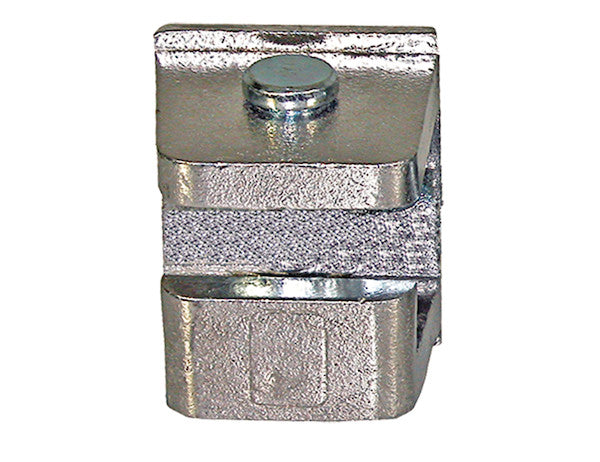
Buyers Products Clevis for Tailgate Latch
Specifications
| Description | Aluminum clevis for tailgate latch |
|---|---|
| Diagram No. | (2) |
Advanced Technical Overview: Precision-Engineered Aluminum Clevises for Tailgate Latch Systems
This document provides an in-depth technical examination of the Buyers Products Aluminum Clevis, specifically designed for robust integration into tailgate latch mechanisms. Identified by Diagram No. (2), this component is critical for ensuring reliable and secure operation of heavy-duty truck and trailer tailgates. Our analysis will delve into the material science, manufacturing processes, functional design principles, performance characteristics, and application considerations that underscore the superiority and necessity of this specific clevis in demanding industrial and commercial environments.
Material Science and Metallurgy: High-Strength Aluminum Alloy Selection
The selection of aluminum as the primary material for this clevis is a deliberate engineering choice, balancing strength, weight, and corrosion resistance. Specifically, the Buyers Products Clevis is fabricated from a high-strength aluminum alloy, likely from the 6XXX series (e.g., 6061-T6) or a comparable aerospace-grade alloy, which offers an optimal combination of mechanical properties for this application. Aluminum alloys of this caliber are renowned for their excellent strength-to-weight ratio, significantly reducing the overall mass of the tailgate assembly without compromising structural integrity. For comparison, a steel clevis of equivalent strength would be substantially heavier, impacting fuel efficiency and potentially increasing wear on associated components.
The specific heat treatment, denoted by the -T6 temper designation, involves solution heat treatment followed by artificial aging. This process precipitates fine intermetallic particles throughout the aluminum matrix, substantially increasing the alloy's yield strength, ultimate tensile strength, and hardness. Typical mechanical properties for 6061-T6 aluminum include a tensile strength of approximately 310 MPa (45,000 psi) and a yield strength of 275 MPa (40,000 psi), with an elongation of 12-17%. These values are critical for components subjected to repetitive loading cycles and sudden impacts, as is common in tailgate operations.
Furthermore, aluminum's inherent resistance to corrosion, particularly against atmospheric oxidation, is a significant advantage. Unlike carbon steel, which requires extensive surface treatments (e.g., galvanization, powder coating) to prevent rust, aluminum naturally forms a passive, tenacious oxide layer that protects the underlying metal from further degradation. In environments where exposure to moisture, road salts, or chemical agents is frequent, this intrinsic corrosion resistance translates into extended operational life and reduced maintenance requirements. The strategic choice of aluminum thus ensures not only immediate performance but also long-term durability and cost-effectiveness.
Precision Manufacturing Processes: Ensuring Dimensional Accuracy and Structural Integrity
The production of the Buyers Products Aluminum Clevis involves a series of advanced manufacturing techniques to ensure precise dimensional tolerances and optimal mechanical properties. The most probable manufacturing method for such a component is a combination of forging and subsequent precision machining, or direct CNC machining from billet stock, depending on production volume and specific design complexity.
Forging: If forged, the process would begin with heating an aluminum alloy billet to a specific temperature and then shaping it under compressive forces using dies. Forging enhances the material's grain structure, eliminating porosity and refining grain size, which significantly improves fatigue strength and impact resistance. The directional alignment of grain flow produced by forging makes the clevis more resilient to the cyclic stresses encountered in tailgate latch operations. This method is particularly beneficial for components requiring superior strength and durability.
CNC Machining: Following forging, or as a primary method from billet, advanced Computer Numerical Control (CNC) machining centers are employed. These machines execute highly precise cuts, drilling, and finishing operations based on digital design models. CNC machining ensures that critical dimensions, such as pinhole diameters, clevis jaw spacing, and overall geometry, conform to stringent specifications. The typical tolerance for such components might be in the range of ±0.05 mm (±0.002 inches), crucial for seamless integration with other latch components (e.g., pins, shackles) and for preventing play that could lead to premature wear or failure.
Surface Finish and Quality Control: The final stages of manufacturing often include deburring, cleaning, and potentially anodizing. Anodizing is an electrochemical process that thickens the natural oxide layer on the aluminum surface, further enhancing corrosion resistance and surface hardness. This treatment also provides a durable, aesthetically pleasing finish. Throughout the entire manufacturing process, rigorous quality control measures are implemented, including visual inspections, dimensional checks using coordinate measuring machines (CMMs), and material property verification through spectrographic analysis and mechanical testing (e.g., tensile and hardness tests) to ensure each clevis meets or exceeds industry standards and design specifications.
Functional Design Principles: Ergonomics, Security, and Longevity
The design of the Buyers Products Aluminum Clevis is not merely a geometric form but a product of extensive engineering analysis, optimizing for critical functional requirements in a tailgate latch system. The clevis functions as a pivotal link, connecting the movable latch mechanism to a fixed or semi-fixed anchor point, typically enabling rotation or linear translation while maintaining secure engagement.
Load Distribution: The clevis geometry is engineered to distribute the substantial forces exerted on the tailgate latch during operation. These forces include static loads (weight of the tailgate and any cargo resting against it), dynamic loads (impacts from road conditions, sudden stops/starts), and operational loads (forces applied during opening and closing). The specific radii, fillet sizes, and material thickness at stress concentration points (e.g., around the pinholes) are carefully calculated to minimize localized stress, thereby preventing fatigue crack initiation and propagation.
Pin-Clevis Interface: The interface between the clevis and its corresponding pin is a critical design consideration. The pinholes are designed for a precise fit with standard latch pins, ensuring minimal clearance to reduce wear from fretting corrosion and impact. The choice of aluminum, being a relatively softer metal than steel, necessitates careful consideration of wear at this interface. High-grade, hardened steel pins are typically used in conjunction with aluminum clevises, and in some designs, sacrificial bushings (e.g., bronze or polymer) may be incorporated into the clevis pinholes to absorb wear and allow for easy replacement, though the robust nature of the chosen aluminum alloy often makes this unnecessary for many applications.
Integration with Latch System: The clevis is designed to seamlessly integrate with a broader tailgate latch system, ensuring compatibility with various Buyers Products and other industry-standard latch components. Its dimensions and attachment points are standardized, simplifying replacement and maintenance. The specific 'Diagram No. (2)' designation indicates its precise position or variant within a larger system diagram, highlighting the modularity and interchangeability of these components.
Safety and Security: Beyond purely mechanical function, the clevis contributes significantly to the safety and security of the tailgate. A failure of this component could result in an unsecured tailgate, leading to cargo loss, accidents, and regulatory non-compliance. Therefore, its design incorporates factors of safety to withstand loads well beyond anticipated operational maximums, ensuring reliable performance under extreme conditions.
Performance Characteristics and Operational Advantages
The operational performance of the Buyers Products Aluminum Clevis is characterized by several key attributes that translate into significant advantages for end-users and fleet operators.
Exceptional Durability: The combination of high-strength aluminum alloy and precision manufacturing results in a component with superior resistance to wear, fatigue, and environmental degradation. This durability directly contributes to a longer service life, reducing the frequency of replacements and associated downtime. In demanding applications, where steel components might suffer from rust-induced failures or excessive wear, the aluminum clevis maintains its structural integrity and functional performance.
Reduced Weight: The inherent low density of aluminum translates into a lightweight component. While a single clevis’s weight reduction might seem minor, when scaled across multiple latch points on a tailgate, and across an entire fleet, the cumulative weight savings can be substantial. This contributes to improved fuel efficiency, increased payload capacity, and reduced wear and tear on suspension and braking systems. For operators, this directly impacts operational costs and profitability.
Corrosion Resistance: As discussed, aluminum's natural passivation against corrosion is a critical advantage, especially in environments exposed to moisture, road salts, chemicals, or abrasive materials. This resistance ensures that the clevis maintains its structural integrity and aesthetic appearance over time, preventing performance degradation that can arise from rust jacking, pitting, or general material loss common in unprotected ferrous metals.
Reliable Operation: The precise dimensional control and robust material properties ensure smooth and reliable operation of the tailgate latch mechanism. A clevis that maintains its geometry and strength prevents binding, excessive play, and misalignment, all of which can lead to premature failure of the latch system. This reliability is paramount for commercial vehicles where operational uptime is directly linked to productivity.
Application Context and Compatibility
The (2) Aluminum Clevis for Tailgate Latch is a versatile component designed for a broad range of heavy-duty applications where secure tailgate operation is essential. Its primary market includes:
- Commercial Trucks: Including dump trucks, flatbed trucks, service vehicles, and other vocational trucks utilizing robust tailgate systems.
- Utility Trailers: Heavy-duty utility, cargo, and equipment trailers.
- Agricultural Equipment: Certain farm equipment with integrated tailgate or access panel mechanisms.
- Specialty Vehicles: Custom-built vehicles and mobile equipment requiring reliable latching solutions.
Compatibility is a key feature of Buyers Products components. This clevis is engineered to integrate seamlessly into existing Buyers Products tailgate latch assemblies, as indicated by its Diagram No. (2). This ensures that it can be used as a direct OEM replacement part or for upgrades in various configurations. When selecting this clevis, it is crucial to consult the specific tailgate latch assembly diagrams provided by Buyers Products to ensure correct fitment and function within the overall system. While designed to be robust, proper installation, maintenance, and periodic inspection are essential to maximize the lifespan and ensure the safe operation of the clevis and the entire tailgate latch system.
Environmental Impact and Sustainability
From an environmental perspective, aluminum is a highly sustainable material. It is 100% recyclable without loss of its intrinsic properties. The recycling process for aluminum requires significantly less energy (up to 95% less) compared to primary production from bauxite ore. The use of aluminum in components like this clevis therefore contributes to a circular economy model, reducing raw material consumption and energy expenditure over the product's life cycle. Furthermore, the lightweight nature of aluminum components contributes to fuel efficiency in vehicles, leading to reduced greenhouse gas emissions and a smaller carbon footprint throughout the operational life of the equipment.
Conclusion: An Engineered Solution for Demanding Applications
The Buyers Products (2) Aluminum Clevis for Tailgate Latch represents a culmination of advanced material science, precision engineering, and rigorous manufacturing. Its selection of high-strength aluminum alloy, meticulous production processes, and optimized design principles provide a component that excels in durability, weight reduction, and corrosion resistance. These attributes directly translate into enhanced operational reliability, reduced maintenance costs, and improved overall efficiency for heavy-duty tailgate latch systems. Identified as Diagram No. (2), it is a critical, purpose-built component designed for seamless integration and long-term performance in the most demanding commercial and industrial applications, offering an unparalleled balance of strength, longevity, and economic benefit. For professionals seeking an uncompromising solution for their tailgate latch mechanisms, this aluminum clevis stands as a testament to superior engineering.