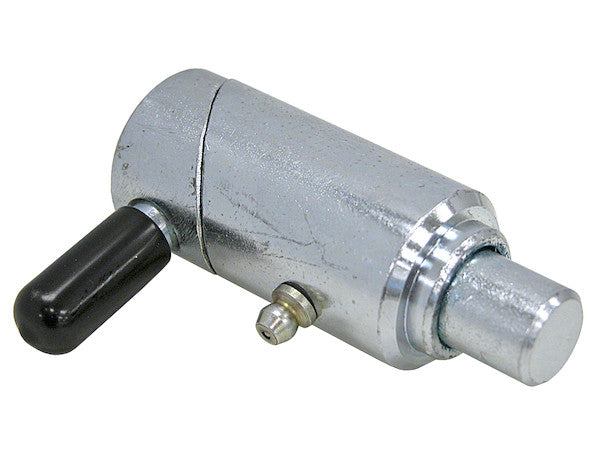
Buyers Products Twist Lock Plunger Pin is spring-loaded and available in three diameters. Each pin includes a grease fitting and is zinc-plated for corrosion protection. Install by drilling a hole to accept plunger pin and weld the barrel into place. Pin is ideal for dump kits, farm equipment, wrecker attachments, stabilizer legs, wheel lift arms, and more.
Specifications
| Length (in.) | 3-1/8 |
|---|---|
| Material | Carbon Steel |
| Outside Dia. (in.) | 1-1/4 |
| Pin Dia. (in.) | 3/4 |
Advanced Technical Overview: The Camlock / Twist Lock Plunger Pin with 0.750 Inch Diameter
The Camlock / Twist Lock Plunger Pin, specifically engineered with a 0.750 inch (3/4 inch) pin diameter, represents a critical component in mechanical fastening systems requiring robust, reliable, and easily actuatable locking mechanisms. This product is meticulously designed to meet the rigorous demands of industrial, commercial, and heavy-duty equipment applications, where both security and operational efficiency are paramount. Its unique combination of a spring-loaded mechanism, positive twist-lock functionality, durable material construction, and anti-corrosion treatment positions it as an indispensable solution for securing dynamic loads and ensuring precise component alignment across a multitude of operational contexts.
At its core, this plunger pin functions by providing a positive mechanical interlock between two or more components. The spring-loaded design ensures that the pin remains either engaged or disengaged with consistent force, preventing inadvertent movement caused by vibration, shock, or external forces. The "Twist Lock" or "Camlock" feature further enhances this security by requiring a deliberate rotational action to secure the pin in place, effectively creating a positive lock that resists axial and rotational displacement. This dual-action mechanism – spring-loading for constant tension and twist-locking for steadfast security – is fundamental to its superior performance in demanding environments.
Mechanical Design and Operational Principles
The operational efficacy of the Camlock / Twist Lock Plunger Pin stems from its sophisticated mechanical design. The spring-loaded mechanism is central to its functionality, utilizing a high-quality internal spring (typically tempered carbon steel) to exert a consistent axial force on the pin. This ensures reliable engagement with a receiving bore and maintains pressure against the retaining mechanism, mitigating the risk of disengagement under dynamic loads or vibrations. The selection of an appropriate spring constant is critical to balance ease of actuation with sufficient retaining force, providing an optimal user experience without compromising safety or reliability.
The "Twist Lock" or "Camlock" designation refers to the ingenious locking method. After the pin is inserted into its corresponding hole, a simple rotational movement of the pin or an integrated handle engages a camming surface or a locking lug. This action positively secures the pin, preventing it from retracting or rotating freely. This positive locking feature is particularly vital in applications where catastrophic failure could occur if a component were to become unsecured. The camming action typically involves a specific geometry designed to hold the pin firmly in its engaged position, requiring an intentional counter-rotation to release. This mechanism provides a higher level of security compared to simple spring-loaded pins, which may rely solely on spring pressure for retention.
Precision engineering plays a significant role in the smooth and reliable operation of this plunger pin. Components are manufactured to tight tolerances to ensure optimal fit, minimal play, and consistent engagement of the locking mechanism. This precision reduces wear and tear on mating parts, extends the overall lifespan of the assembly, and contributes to the pin's consistent performance across numerous actuation cycles. The interaction between the pin, its housing (barrel), and the internal spring and locking elements is carefully calibrated to ensure intuitive operation and dependable retention.
Material Science and Surface Engineering for Enhanced Durability
The selection of Carbon Steel as the primary material for this plunger pin is a deliberate choice driven by its exceptional mechanical properties and cost-effectiveness for heavy-duty applications. Carbon steel, a robust ferrous alloy, offers an excellent balance of high tensile strength, yield strength, and hardness, making it inherently resistant to the significant shear and bending stresses typically encountered in industrial environments. Its microstructure allows for good machinability and, crucially, excellent weldability, which is essential for the specified installation method of welding the barrel into place. The inherent toughness of carbon steel also contributes to its resistance against impact and fatigue loading, common stressors in machinery and equipment.
To further enhance the performance and extend the service life of the Camlock / Twist Lock Plunger Pin, a critical surface engineering treatment is applied: zinc plating. Zinc plating serves as a sacrificial cathodic coating, providing superior corrosion protection. When the underlying carbon steel is exposed to corrosive elements (e.g., moisture, road salts, chemicals, atmospheric pollutants), the zinc coating preferentially corrodes, thereby protecting the base metal from oxidation and degradation. This galvanic protection mechanism significantly delays the onset of rust and maintains the aesthetic and functional integrity of the pin, even when subjected to harsh outdoor or chemically active environments. The plating process also contributes to a smoother surface finish, which can reduce friction during operation and further enhance wear resistance.
The quality and thickness of the zinc plating are typically governed by industry standards, ensuring consistent performance and longevity. This protective layer is not merely cosmetic; it is a functional barrier crucial for maintaining the operational reliability of the pin over its expected lifespan, especially given its common deployment in outdoor or demanding industrial settings where exposure to corrosive agents is a constant factor. The combination of robust carbon steel and sacrificial zinc plating ensures that the pin maintains its structural integrity and operational smoothness, even after prolonged exposure to challenging conditions.
Critical Specifications and Their Engineering Implications
Each dimension and feature of the Camlock / Twist Lock Plunger Pin with a 0.750 inch pin diameter is meticulously specified to fulfill distinct engineering requirements and ensure optimal performance:
- Pin Diameter (0.750 inch / 3/4 inch): This is perhaps the most critical dimension, directly dictating the pin's load-bearing capacity and shear strength. A 0.750-inch diameter pin provides a substantial cross-sectional area, allowing it to withstand significant forces in shear and bending. This size is typically selected for applications requiring a strong connection, capable of handling moderate to heavy loads, and resisting substantial external forces. It strikes a balance between robust strength and a manageable footprint, making it suitable for a wide array of medium to heavy-duty applications without excessive bulk. The specific diameter ensures compatibility with corresponding receiver components designed to accept this standard size, facilitating interchangeability and system integration.
- Length (3-1/8 inch): The overall length of the pin and its barrel dictates the engagement depth and the structural integrity of the mounting point. A length of 3-1/8 inches provides sufficient material for the internal spring mechanism, the twist-lock features, and adequate projection for secure engagement. This dimension also influences the required thickness of the material into which the barrel is welded, ensuring a strong and stable installation capable of handling the forces transmitted through the pin.
- Outside Diameter (1-1/4 inch): This refers to the diameter of the barrel, which houses the internal mechanism and provides the mounting surface for welding. The 1-1/4 inch outside diameter indicates a robust barrel construction, capable of withstanding the stresses of welding and providing a stable foundation for the plunger mechanism. This dimension is crucial for calculating the required hole size for installation and for ensuring adequate weld area for structural integrity.
- Grease Fitting: The inclusion of a grease fitting is a testament to the product's design for long-term service and ease of maintenance. This feature allows for periodic lubrication of the internal moving parts of the plunger mechanism. Proper lubrication significantly reduces friction and wear between the pin, spring, and housing components, thereby extending the operational lifespan of the pin, maintaining smooth actuation, and preventing seizing due to corrosion or particulate ingress. Regular lubrication with appropriate grease types (e.g., lithium-based general-purpose grease) is a simple yet effective preventative maintenance measure that enhances reliability and reduces the total cost of ownership.
Installation, Integration, and Maintenance Protocols
The proper installation and consistent maintenance of the Camlock / Twist Lock Plunger Pin are paramount to achieving its intended performance and ensuring long-term reliability. The specified installation method involves drilling a hole to accept the plunger pin's barrel and subsequently welding the barrel into place.
Installation Procedure:
- Hole Preparation: A precise hole, accurately sized to the barrel's outside diameter (1-1/4 inch in this case), must be drilled into the mating structural component. Accuracy is critical to ensure proper alignment and a tight fit for welding. Any burrs or sharp edges around the hole should be removed to ensure a clean welding surface.
- Surface Preparation: The surfaces to be welded – both the barrel of the plunger pin and the receiving structure – must be thoroughly cleaned of any grease, oil, paint, rust, or other contaminants. This ensures optimal weld penetration and strength, preventing weld defects.
- Welding Technique: The barrel should be welded using appropriate welding techniques (e.g., MIG, TIG, or Stick welding, depending on material thickness and welder expertise) to achieve a full-penetration weld. A continuous, strong weld around the circumference of the barrel is essential for structural integrity, as this weld will bear the operational forces transmitted through the pin. Care must be taken to avoid overheating the internal components of the pin during welding, although the robust design typically allows for standard welding practices. Cooling methods or intermittent welding passes may be employed for sensitive applications.
- Alignment: Proper alignment of the plunger pin with its mating receiver bore or latch point is crucial. Misalignment can lead to excessive wear, binding, or failure to engage properly, compromising the locking mechanism's effectiveness. Jigs or fixtures may be beneficial during installation to ensure precise positioning.
System Integration: When integrating the plunger pin into a larger mechanical system, considerations must be given to the design of the receiving component. The hole or slot that the 0.750-inch pin engages must be dimensioned precisely to allow smooth insertion and full engagement of the twist-lock mechanism. The material of the receiving component should also be compatible with the forces exerted by the pin to prevent deformation or premature wear. The overall system should be designed to accommodate the actuation travel of the pin and the rotational movement required for locking.
Maintenance Protocol: The integrated grease fitting facilitates essential preventative maintenance. A regular lubrication schedule should be established based on the application's duty cycle, environmental conditions, and operational frequency. For demanding applications, lubrication might be required weekly or monthly, while less frequent operation may permit quarterly or semi-annual lubrication. Using a standard grease gun, apply an appropriate industrial-grade grease (e.g., lithium-complex grease with extreme pressure additives) until a slight purge is observed around the pin or barrel interface. This ensures that the internal spring, pin shaft, and locking mechanism remain adequately lubricated, preventing corrosion, reducing frictional wear, and maintaining smooth, reliable operation. Regular visual inspections for signs of wear, corrosion on the zinc plating, or spring fatigue are also recommended. Any signs of damage should prompt immediate attention or replacement to prevent system failure.
Diverse Application Spectrum and Enhanced Utility
The inherent versatility and robust design of the Camlock / Twist Lock Plunger Pin with a 0.750-inch diameter make it an ideal choice for a wide array of demanding applications across various industries:
- Dump Kits and Tailgates: In hydraulic dump systems, these pins provide critical locking for dump beds, tailgates, and other articulated components. Their ability to withstand heavy loads and resist vibration ensures that the dump bed remains securely latched during transport and operation, preventing accidental release.
- Farm Equipment: Agricultural machinery frequently utilizes such pins for securing implements, adjusting component positions, and stabilizing movable parts. From securing plows and tillers to locking articulated arms on loaders and tractors, the pins endure exposure to dirt, moisture, and variable temperatures, requiring superior corrosion resistance and durability.
- Wrecker and Towing Attachments: In the towing and recovery industry, the integrity of equipment is paramount. These pins are used in wrecker attachments, wheel lifts, and boom articulation points, providing strong, reliable locking for components that handle immense loads and operate under high stress, often in emergency situations.
- Stabilizer Legs: Heavy machinery such as cranes, excavators, and aerial work platforms rely on stabilizer legs for operational stability. Plunger pins secure these legs in their extended and retracted positions, providing the essential support structure to prevent tipping and ensuring safe operation, even on uneven terrain.
- Wheel Lift Arms: Found on tow trucks and other vehicle transport equipment, wheel lift arms use these pins to securely cradle and lift vehicles. The twist-lock mechanism ensures that the arms remain locked during transit, preventing load shift and enhancing safety.
- Construction Machinery: Beyond stabilizers, these pins are integral to various components on construction equipment, including securing buckets, blades, and articulating joints on backhoes, loaders, and excavators.
- Marine Applications: Given their corrosion-resistant zinc plating, these pins are suitable for certain marine environments, securing hatches, access panels, or adjustable components on vessels where exposure to saltwater spray is a concern.
- Industrial Fixtures and Jigs: In manufacturing settings, these pins can be used in adjustable fixtures, assembly jigs, and custom machinery where quick, repeatable, and secure positioning of components is required.
- Heavy-Duty Gates and Barriers: For industrial gates, security barriers, or removable fencing, the twist-lock mechanism offers enhanced security and reliability compared to simpler latching systems.
Value Proposition and Conclusion
The Camlock / Twist Lock Plunger Pin with a 0.750-inch pin diameter represents a meticulously engineered solution designed to deliver superior performance and reliability in the most demanding industrial and commercial applications. Its robust carbon steel construction, enhanced by sacrificial zinc plating, provides exceptional resistance to mechanical stress and environmental degradation. The sophisticated spring-loaded and twist-lock mechanism ensures consistent engagement, positive retention, and enhanced safety by preventing accidental disengagement under dynamic operational conditions.
The integration of a grease fitting underscores its design for extended service life and ease of maintenance, contributing to a lower total cost of ownership through reduced downtime and replacement cycles. For engineers, manufacturers, and equipment operators seeking a high-quality, durable, and reliable locking component that prioritizes both security and operational efficiency, this plunger pin offers an unparalleled blend of technical excellence and practical utility. Its widespread applicability across diverse sectors, from transportation and agriculture to construction and manufacturing, solidifies its position as an essential element in contemporary mechanical systems, providing peace of mind through its dependable and secure fastening capabilities.