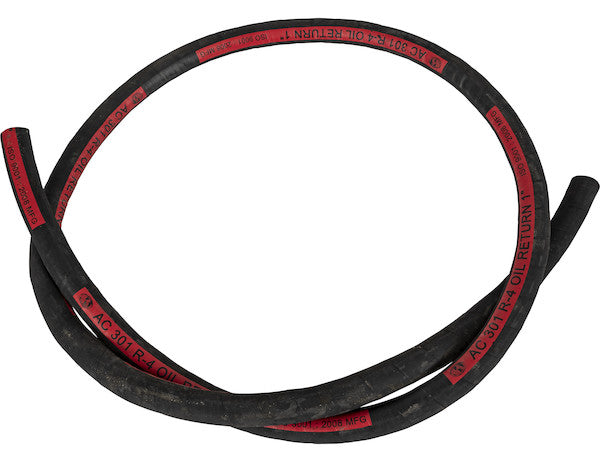
The Suction Hose from Buyers Products is built strong and internally reinforced for long-lasting performance. The SAE 100R4 hose has an internal wire wrap that prevents it from collapsing. It's available for either suction or return line functions, in a range of lengths. It should not be used in pressure applications.
Specifications
| Burst Pressure | 1000 |
|---|---|
| Fitting Side 1 | - |
| Fitting Side 2 | - |
| Hose Application | Suction |
| Hose Construction | Rubber/ reinforced |
| Inner Diameter | 1.00 |
| Length (in.) | 120 |
| Swivel Side 1 | - |
| Swivel Side 2 | - |
| Working Pressure (PSI) | 250 |
The 1 Inch I.D. Suction Hose, precisely 10 feet in length (120 inches), represents a crucial component in diverse hydraulic and fluid transfer systems. Engineered to meet the rigorous specifications of SAE 100R4, this hose is specifically designed for applications involving suction or low-pressure return lines. Its robust construction, featuring an internal wire wrap reinforcement, effectively prevents collapse under vacuum conditions, ensuring consistent fluid flow and safeguarding hydraulic pumps from cavitation. This detailed technical overview will delve into the design, material science, performance parameters, and critical application considerations for this essential industrial hose.
Understanding the SAE 100R4 Standard: A Foundation of Reliability
The Society of Automotive Engineers (SAE) J517 standard outlines comprehensive requirements for hydraulic hose performance. Within this standard, SAE 100R4 specifically defines hoses suitable for "Wire Reinforced, Textile Covered, Suction and Return Line Hydraulic Service." This designation is pivotal as it immediately differentiates the hose from those designed for high-pressure hydraulic circuits, such as 100R1 or 100R2. The key differentiator for an R4 hose is its ability to maintain its structural integrity under negative pressure (vacuum) and low positive pressure. This particular hose adheres to this standard, guaranteeing a level of quality and performance specifically tailored for its intended suction and return line applications.
Compliance with SAE 100R4 signifies that the hose has undergone extensive testing and meets strict criteria for dimensional stability, pressure resistance (both positive and negative), temperature range, and material compatibility. This standard ensures that the hose delivers reliable operation within specified limits, minimizing the risk of system failure and maximizing operational efficiency. The meticulous design mandated by SAE 100R4, particularly concerning the reinforcement layers, directly contributes to the hose's capacity to withstand the unique stresses of suction applications.
Advanced Construction and Material Science
The exceptional performance of this 1-inch I.D., 10-foot suction hose stems from its multi-layered, engineered construction. Each component is carefully selected and integrated to fulfill specific functional requirements:
Inner Tube (Core)
The innermost layer, or tube, is critical for fluid compatibility and flow efficiency. Typically manufactured from a high-quality synthetic rubber compound, such as Nitrile Butadiene Rubber (NBR) or a similar elastomer, it exhibits excellent resistance to a wide range of hydraulic fluids, including petroleum-based oils, water-glycol, and water-oil emulsions. The specific polymer blend is chosen for its low permeability, preventing fluid diffusion, and its ability to withstand degradation from the chemical composition and temperature of the transported fluid. The bore of the inner tube is designed to be smooth and consistent, minimizing friction loss and ensuring optimal laminar flow, which is crucial for efficient fluid transfer, particularly in suction applications where maintaining minimal pressure drop is paramount. This smooth internal surface also aids in preventing particulate accumulation, which could otherwise lead to system contamination.
Reinforcement Layers: The Structural Backbone
The reinforcement structure is where the SAE 100R4 hose truly distinguishes itself, providing both tensile strength and resistance to vacuum collapse.
- Textile Braid: Directly surrounding the inner tube, one or more layers of high-strength textile braid (e.g., polyester or rayon) are applied. These braids provide initial structural integrity, help to bond the inner tube to the outer layers, and contribute to the hose's flexibility. While textile braids offer some resistance to positive pressure, their primary role in an R4 hose is to provide a stable foundation for the crucial wire reinforcement.
- Internal Wire Wrap (Helical Wire Reinforcement): This is the defining feature of the SAE 100R4 suction hose. A robust, high-tensile steel wire is helically wound between or within the textile reinforcement layers. This wire helix acts as an internal skeleton, providing exceptional resistance to negative pressure. When a pump generates a vacuum, external atmospheric pressure attempts to collapse the hose. The rigid steel wire, designed to withstand compressive forces, effectively counters this external pressure, preventing the hose from kinking or flattening. This mechanism is vital for maintaining an unobstructed flow path to the pump, thereby preventing cavitation – a destructive phenomenon where air bubbles form and collapse, causing damage to pump components and reducing system efficiency. The precise pitch and gauge of the wire helix are engineered to optimize flexibility without compromising collapse resistance.
Outer Cover
The outermost layer, or cover, is engineered for environmental protection and durability. Composed of an abrasion-resistant synthetic rubber compound (e.g., a blend of SBR and CR, or similar weather-resistant polymers), it safeguards the underlying reinforcement layers from external damage. Key properties of the cover include:
- Abrasion Resistance: Essential for hoses operating in dynamic environments where contact with machinery, sharp edges, or rough surfaces is possible.
- Ozone and UV Resistance: Protects the rubber from degradation caused by exposure to sunlight and atmospheric ozone, which can lead to cracking and material breakdown over time.
- Oil and Weather Resistance: Ensures the hose maintains its integrity when exposed to oil spills, moisture, and varying weather conditions.
- Temperature Resilience: Contributes to the hose's overall operating temperature range by preventing material embrittlement in cold conditions or softening in high heat.
The combined effect of these carefully chosen materials and the meticulously engineered construction results in a suction hose that is robust, flexible, durable, and highly reliable under the demanding conditions of hydraulic suction and return line service.
Key Operational Parameters and Performance Characteristics
The specifications provided for this 1 Inch I.D. Suction Hose underscore its precise functional capabilities:
Inner Diameter (I.D.): 1.00 Inch
The 1-inch inner diameter is a critical hydraulic parameter. It directly influences the fluid velocity and potential pressure drop within the line. For suction lines, it is imperative to select an I.D. that maintains fluid velocity within an optimal range (typically 2-5 feet per second for suction lines) to prevent excessive pressure drop and subsequent pump cavitation. A 1-inch I.D. is well-suited for a variety of hydraulic systems requiring moderate flow rates, balancing flow capacity with spatial considerations and cost-effectiveness. Proper sizing minimizes energy losses and ensures the pump receives an adequate, uninterrupted supply of fluid.
Length: 10 Feet (120 Inches)
The 10-foot length provides sufficient reach for many common installations, offering flexibility in system design and routing while minimizing the need for multiple connections, which can be potential leak points. The length should always be chosen to allow for sufficient slack to accommodate system vibration, thermal expansion/contraction, and component movement, without creating sharp bends or excessive tension. While longer hoses inherently contribute to slightly higher pressure drops, the 10-foot length is practical for many medium-scale applications.
Working Pressure: 250 PSI
The stated working pressure of 250 PSI (Pounds per Square Inch) defines the maximum continuous operating pressure for which the hose is designed. This value is characteristic of SAE 100R4 hoses, which are intended for suction and low-pressure return applications. It signifies that the hose can reliably operate at or below this pressure without experiencing premature failure or degradation. It is crucial never to exceed the specified working pressure, as doing so can compromise the hose's integrity and lead to catastrophic failure.
Burst Pressure: 1000 PSI
The burst pressure of 1000 PSI represents the theoretical maximum pressure at which the hose is expected to rupture. This value, in conjunction with the working pressure, defines the safety factor. In industrial hydraulic applications, a typical safety factor of 4:1 is employed, meaning the burst pressure is at least four times the working pressure. For this hose, 1000 PSI burst pressure divided by 250 PSI working pressure yields a safety factor of 4:1, confirming adherence to industry safety standards. This substantial safety margin is designed to account for unforeseen pressure spikes or system anomalies, providing an extra layer of protection against failure.
Vacuum Rating
Although not explicitly listed as a number in the specifications table, the very nature of an SAE 100R4 suction hose implies full vacuum capability. This means the internal wire wrap reinforcement allows the hose to withstand a vacuum of up to 28-30 inches of mercury (Hg), or approximately 14.7 PSI below atmospheric pressure, without collapsing. This critical feature ensures the hydraulic pump's suction side always receives a steady, uninterrupted flow of fluid, preventing damaging cavitation.
Temperature Range
While not specified in the table, typical operating temperatures for SAE 100R4 hoses range from -40°F to +212°F (-40°C to +100°C). This broad range is crucial for applications in diverse climates and environments, ensuring the rubber compounds maintain their flexibility, sealing properties, and structural integrity across varying thermal conditions. Extreme temperatures outside this range can lead to material hardening, cracking, softening, or chemical degradation, compromising the hose's performance and lifespan.
Applications and Operational Contexts
The 1 Inch I.D. Suction Hose, 10 Feet long, is an indispensable component across a spectrum of industrial, mobile, and fluid transfer applications:
- Hydraulic Systems: Its primary role is in the suction lines connecting hydraulic reservoirs to the inlet port of pumps. By resisting collapse, it ensures that pumps receive a continuous, de-aerated flow of hydraulic fluid, crucial for their longevity and efficient operation. It is also extensively used as a return line hose, returning low-pressure fluid from system components back to the reservoir.
- Mobile Equipment: Construction machinery (excavators, loaders), agricultural equipment (tractors, harvesters), municipal vehicles (snowplows, refuse trucks), and heavy-duty trucks frequently utilize such hoses for their hydraulic auxiliary systems, power steering return lines, and lubrication systems.
- Industrial Machinery: In manufacturing plants, processing facilities, and automation systems, these hoses are employed in various non-pressure fluid transfer tasks, including coolant lines, low-pressure lubrication circuits, and general utility water lines where siphoning or gravity feed is involved.
- Fluid Transfer: Beyond hydraulics, the hose can be suitable for transferring other compatible fluids under non-pressurized conditions, such as certain industrial oils, chemicals, and water, provided the inner tube material is chemically resistant to the specific medium.
It is paramount to reiterate that this hose is expressly designed for suction and low-pressure return applications and must NOT be used in high-pressure hydraulic lines. Using an R4 hose in a pressure application for which it is not rated could lead to immediate and catastrophic failure, posing severe safety risks and equipment damage.
Installation, Maintenance, and Best Practices
Proper installation and routine maintenance are critical to maximizing the lifespan and ensuring the safe operation of any hydraulic hose, particularly suction lines:
-
Installation:
- Routing: Route the hose to avoid sharp bends that exceed the minimum bend radius, which could restrict flow or cause premature hose fatigue. Avoid twisting the hose during installation, as this can severely reduce its service life.
- Length: Ensure the hose length accounts for machine movement, vibration, and thermal expansion/contraction, preventing tension or compression.
- Protection: Protect the hose from external abrasion, heat sources, and chemical splashes. Use protective sleeves or guards where necessary.
- Fittings: While this product is sold without fittings, if crimped fittings are applied, they must be compatible with SAE 100R4 hose and installed according to manufacturer specifications to ensure a leak-free and secure connection.
-
Maintenance and Inspection:
- Regular Checks: Periodically inspect the hose for signs of wear, such as cuts, abrasions, cracks, bulges, cover delamination, kinking, or leakage. Pay close attention to the areas near fittings.
- Contamination: Ensure the fluid being transferred is clean and within specifications. Contamination can degrade the inner tube and entire hydraulic system.
- Temperature: Monitor operating temperatures to ensure they remain within the hose's specified range.
- Replacement: Hoses are wear items. Replace them proactively based on inspection findings, operational hours, or manufacturer recommendations, even if visible damage is not immediately apparent.
- Storage: Store hoses in a cool, dry, and dark environment, away from ozone-generating equipment, direct sunlight, and extreme temperatures to prevent premature aging of the rubber components.
Adherence to these best practices will significantly extend the service life of the 1 Inch I.D. Suction Hose and contribute to the overall reliability and safety of the hydraulic system.
Advantages and System Integration
Integrating this 1-inch I.D., 10-foot SAE 100R4 suction hose into a hydraulic or fluid transfer system offers several distinct advantages:
- Optimized Fluid Supply: The robust, wire-reinforced construction guarantees a stable, non-collapsing flow path to the pump, preventing fluid starvation and the detrimental effects of cavitation, thus protecting expensive pump components.
- Enhanced System Efficiency: By minimizing pressure drop and ensuring a consistent fluid supply, the hose contributes to the overall hydraulic system's efficiency and responsiveness.
- Durability in Demanding Environments: Built with high-quality synthetic rubber compounds and a durable outer cover, it withstands the harsh conditions typical of industrial and mobile applications, including exposure to oils, weather, and abrasion.
- Safety Compliance: Meeting SAE 100R4 standards provides assurance of tested and verified performance, adhering to industry safety and quality benchmarks. The 4:1 safety factor between working and burst pressure further enhances operational safety.
- Versatility: Its design makes it suitable for a range of non-pressure applications, offering flexibility in system design and material selection.
In conclusion, the 1 Inch I.D. Suction Hose, 10 Foot long, is an expertly engineered component specifically designed for the demanding requirements of hydraulic suction and low-pressure return lines. Its adherence to the SAE 100R4 standard, combined with its multi-layered construction, including critical internal wire reinforcement, ensures unparalleled resistance to vacuum collapse and a reliable operational life. With a working pressure of 250 PSI and a robust burst pressure of 1000 PSI, this hose provides a secure and efficient conduit for vital fluid transfer, making it an indispensable choice for professionals seeking uncompromised performance and durability in their fluid power systems. Proper application, installation, and maintenance will ensure that this hose delivers long-term, trouble-free service, safeguarding hydraulic pumps and optimizing system productivity.